
The 7 Largest Whales in Order: A Definitive Ranking
Discover the 7 largest whales in order, from the colossal Blue Whale to the acrobatic Humpback. Get precise stats on size, weight, and key facts.
The largest whales on Earth are measured in tens of meters and, in some cases, masses that exceed any other animal ever recorded. Ranking them sounds simple until you ask the scientific question that matters first. How do researchers measure an animal that spends most of its life partly submerged, rarely lies flat, and can be longer than a basketball court?
Marine biologists answer that question by combining independent lines of evidence rather than relying on a single sighting. Historical whaling records preserve length data from large sample sets, even if those records require careful scrutiny for bias and method. Modern studies add drone photogrammetry, which estimates length and body shape from calibrated overhead images, plus direct measurements from stranded whales, where researchers can record dimensions on land with far less uncertainty. Acoustic monitoring also helps confirm species identity and distribution, though it is less useful for exact body length.
Measurement method changes confidence. A whale seen from a vessel can appear longer or shorter because of viewing angle, sea state, and how much of the body surfaces. By contrast, a stranded specimen can be measured directly, and a drone image can be scaled with known flight altitude and camera parameters. Agreement across methods gives the final ranking much more weight than any isolated report.
The strongest evidence usually comes from three sources:
- Historical catch records: Large archives from commercial whaling document size ranges for several major species, though researchers must account for uneven reporting and damaged carcasses.
- Drone photogrammetry: Overhead imagery allows scientists to estimate total length and compare body proportions without handling the animal.
- Stranding analysis: Fresh strandings provide rare opportunities for direct measurements of total length, girth, and anatomical features.
This evidence base also explains why whale rankings are not based on length alone. Some species are longer but less massive. Others are shorter yet much heavier through the torso and head. That distinction becomes especially important once the list moves below the top tier.
Readers who arrived here from a search for the phrase what is a whale in crypto are dealing with a metaphor borrowed from biology. In marine science, however, a whale’s scale is established through measured anatomy, verified records, and repeated observation.
The list that follows ranks seven giants by the best-supported size evidence available, then closes with a comparison chart so the differences are easy to review at a glance.
1. Blue Whale (Balaenoptera musculus)
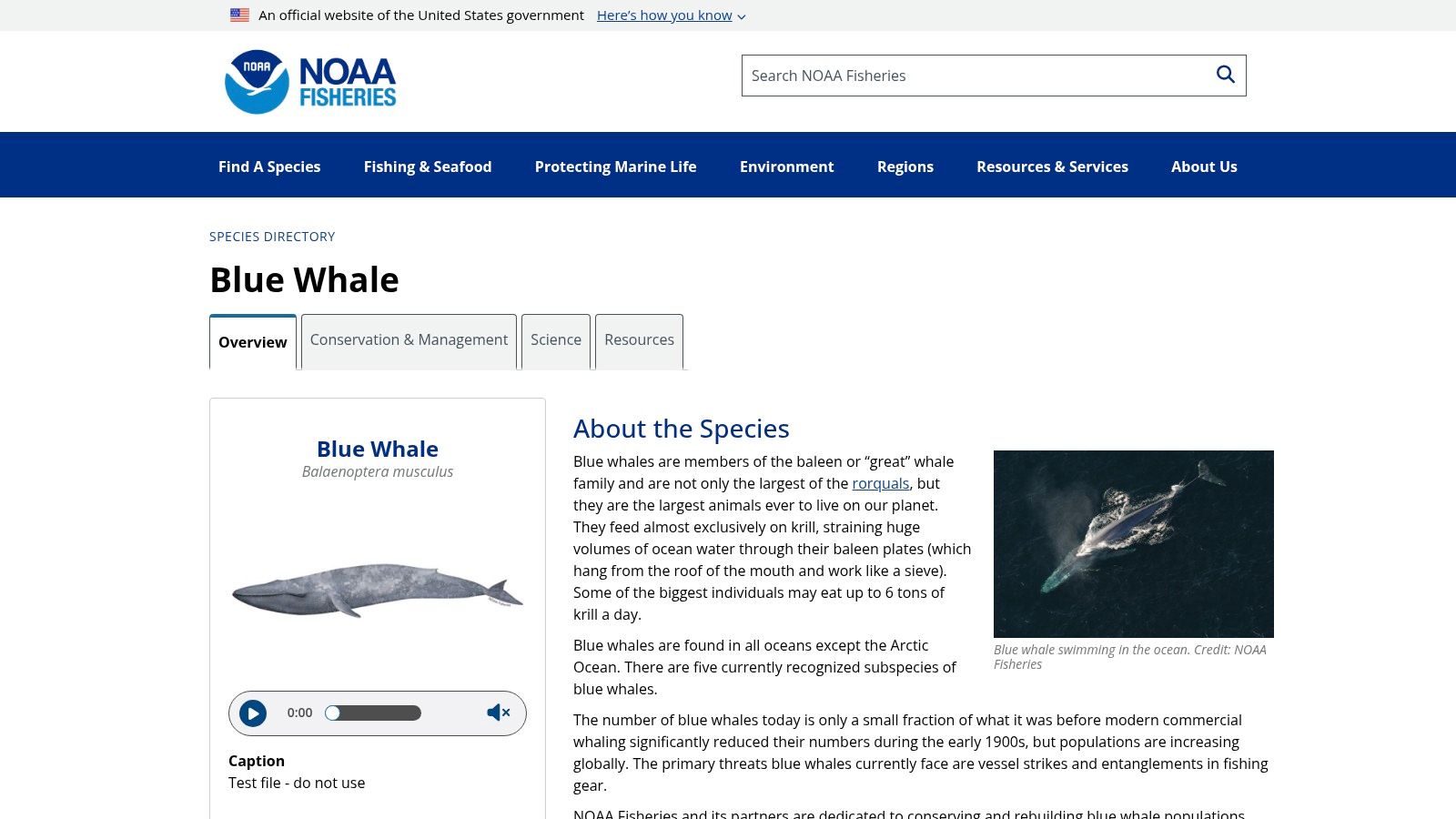
At the top of this ranking, the evidence is unusually consistent. Historical catch records, direct measurements from strandings, and modern photogrammetry all support the same conclusion. The blue whale is the largest whale ever measured, and no other species sits close enough to make first place uncertain.
Reported blue whale lengths reach roughly 30 meters, with a small number of historical reports describing even larger animals. Researchers treat those extreme records carefully because damaged carcasses, stretched measuring lines, and uneven reporting standards can inflate old estimates. Even with that caution, the main result does not change. Blue whales combine exceptional length with unmatched body mass.
That second point matters more than readers often realize. In whale rankings, length alone can blur the actual biological difference between species. Blue whales are not just the longest major whales. They are also the heaviest, with a body form that turns size into total biomass on a scale that no other animal has matched.
A marine biologist would frame the comparison this way. The blue whale is not merely first in a list. It occupies a separate upper tier.
Regional variation adds useful context. Antarctic blue whales are generally the largest form, while pygmy blue whales are smaller. That variation is one reason scientists rely on repeated measurements across populations rather than a single famous specimen. Species-level rankings depend on the full evidence base, not on one headline-sized individual.
The species also shows why measurement method matters. A stranded whale allows direct tape measurements and tissue examination. A drone survey helps researchers estimate length from a living animal without handling it. Historical records extend the dataset further back in time, even if those records require more scrutiny. Agreement across those methods strengthens confidence in the blue whale’s position at number one.
For readers comparing scientific and financial uses of the same term, the crypto meaning of "whale" refers to market influence, not body size. In marine biology, the ranking rests on measured anatomy and verified records.
2. Fin Whale (Balaenoptera physalus)
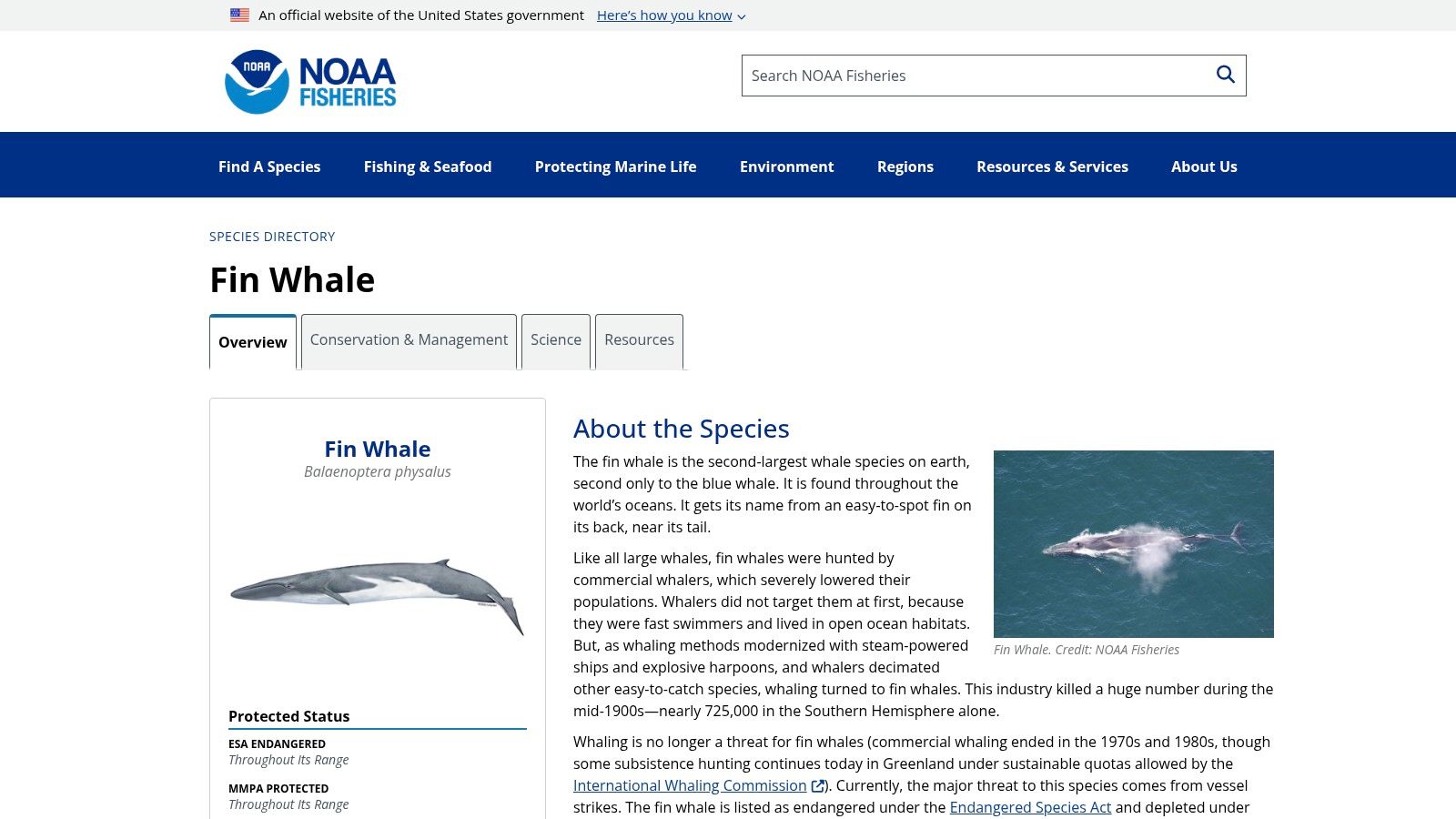
A fin whale can approach 90 feet in length. That puts it firmly in second place among the largest whales, based on the measurement record summarized earlier.
That rank holds up because fin whales are large across multiple lines of evidence, not because of one exceptional specimen. Researchers estimate length in living animals with aerial imagery and drone photogrammetry, compare those estimates with direct measurements from stranded whales, and check them against historical catch records with appropriate caution. Using several methods matters here. It reduces the risk that a famous outlier distorts the species-level picture.
Fin whales usually fall below blue whales in both length and mass, but they remain immense animals by any biological standard. Their body shape explains part of that result. Fin whales are long, with a slimmer profile than the broader-bodied blue whale, so two animals that look close in length can differ more substantially in total mass than a casual observer would expect.
The gap between first and second
Calling the fin whale the second-largest animal on Earth is correct. It also hides an important point. Second place in this ranking does not mean near parity with first place.
The scale of the difference is clearest when scientists compare bulk rather than length alone. Blue whales occupy a distinct upper tier because they combine greater length with substantially more body mass. Fin whales, by contrast, represent the upper limit of a faster, more tapered body plan. That makes them an instructive example of why whale rankings should separate length, weight, and overall body form instead of collapsing them into one simple label.
Their history adds another layer. Fin whales were heavily exploited during industrial whaling, which affects how modern readers interpret abundance. A species can rank near the top in size and still be far less common than its anatomy might suggest.
- Rank: Securely second among the largest whales discussed here.
- Body design: Longer and more slender in appearance than blue whales, with a more sleek build.
- Why measurement matters: Length records alone can understate how much larger the top-ranked species is in total biomass.
The word “whale” appears in finance too, where it refers to a very large market participant rather than an animal. Wallet Finder.ai tracks that usage in its article on a crypto whale tracker.
3. Sperm Whale (Physeter macrocephalus)
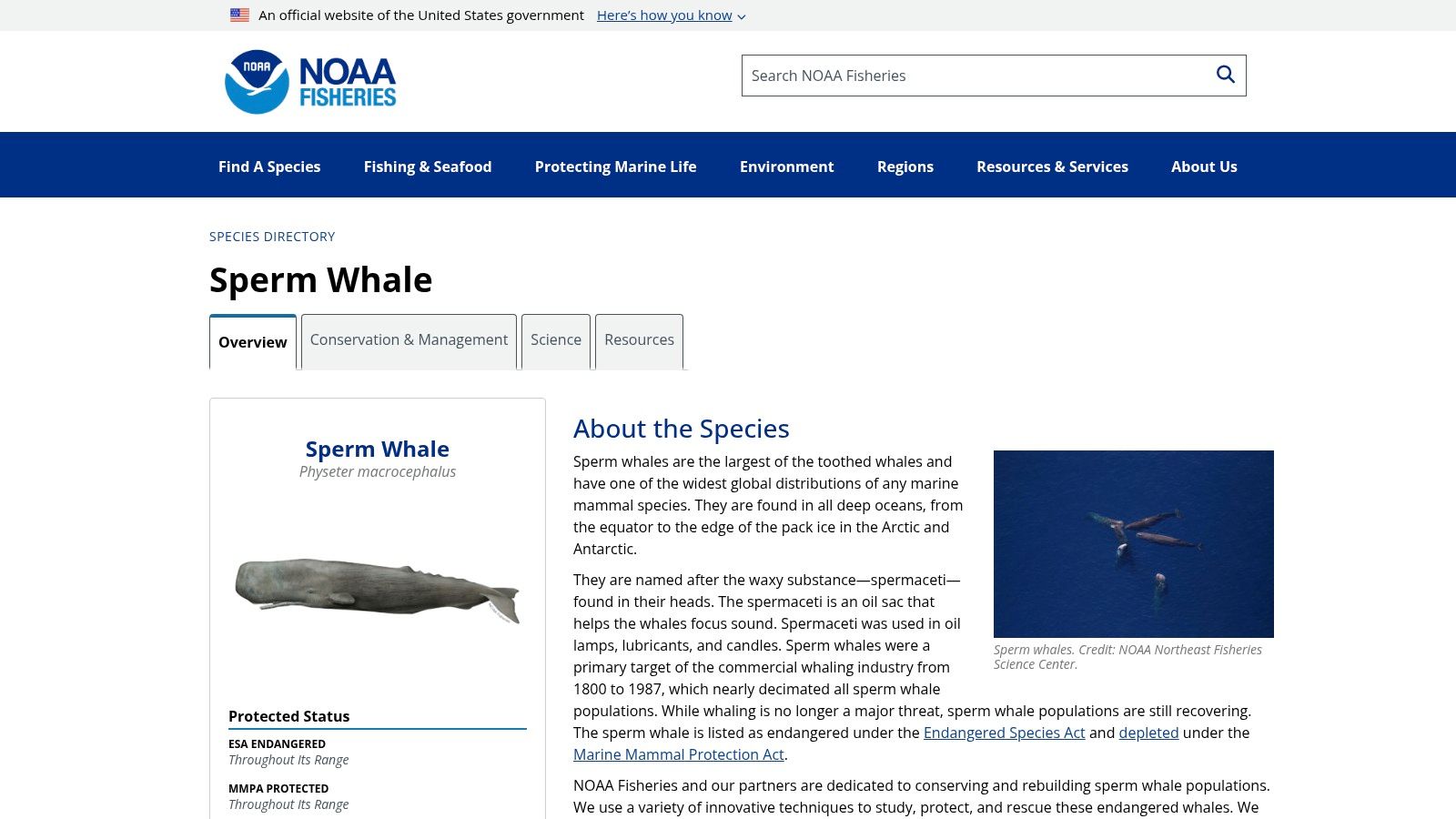
A strict evidence line is critical. The verified data provided for this article establishes blue whale as first and fin whale as second, but it doesn’t provide citable measurements for sperm whales. So the correct analytical move is to describe sperm whales qualitatively rather than invent a precise rank or body size.
What can be said confidently is that the sperm whale is one of the ocean’s largest whales and the largest toothed whale. Its body plan is instantly recognizable. The massive square head, narrow lower jaw, and deep-diving lifestyle make it unlike the baleen giants above it.
Why sperm whales complicate simple rankings
Sperm whales remind readers that “largest” can mean different things. Some species are longer. Others are bulkier. Toothed whales and baleen whales also evolved very different feeding systems, so direct comparisons don’t always translate neatly into everyday observation.
A person watching from a vessel may perceive a sperm whale as disproportionately huge because of its head and vertical profile at the surface. In a pure length ranking, though, baleen whales dominate the very top.
Sperm whales show why body design matters as much as raw size. Their silhouette makes them look even larger than their rank alone would suggest.
A useful real-world example is whale watching in deep offshore waters. Guides often identify sperm whales not by a long exposed back, as with some rorquals, but by a lower surface profile followed by the possibility of a dramatic dive sequence. That behavioral signature reinforces how different “large whale” can look from species to species.
If you're interested in how analysts interpret “whale” behavior in another domain, Wallet Finder.ai has a separate piece on analyzing whale wallets for market signals.
4. North Atlantic Right Whale (Eubalaena glacialis)

The North Atlantic right whale is one of the clearest examples of why a longest-whale list can mislead readers if it ignores body shape. Right whales do not share the sleekness of fin whales. They’re thick-bodied, broad-backed, and visually dense.
The verified dataset for this article doesn’t provide citable size figures for North Atlantic right whales, so a precise numerical placement would overstate certainty. What is clear is that they belong among the major large whales and are often perceived as especially massive because of their stocky build.
A whale built for bulk, not speed
Right whales lack the sleek profile many people associate with giant whales. Their bodies look almost architectural. The absence of a dorsal fin, the arched mouthline, and the rough callosities on the head make them easy to identify even at distance for experienced observers.
That anatomy also reveals something about ranking. A long, narrow whale can outrank a shorter, thicker one by length while looking less imposing at the surface. For naturalists, this is why “largest whales in order” should always be read with the hidden question attached: by length, by weight, or by overall visual mass?
- Identification cue: Head callosities help researchers distinguish individuals.
- Body impression: They often look heavier than readers expect from a simple ranked list.
- Conservation lens: For this species, rarity shapes public understanding almost as much as size does.
In field terms, right whales often leave a stronger impression than many readers anticipate. They don’t look built for speed. They look built for endurance and flotation.
5. Bowhead Whale (Balaena mysticetus)
The bowhead whale is another species that challenges casual rankings. It may not dominate popular imagination in the way blue, fin, or humpback whales do, but among polar specialists it stands out as one of the most extraordinary large whales on Earth.
The verified data here doesn’t include citable bowhead measurements, so this section stays qualitative. Even so, the bowhead belongs in any serious discussion of whale size because of its immense skull, barrel-shaped body, and adaptation to Arctic life.
The giant of the ice
Bowheads are built for a world that would punish sleeker whales. Their body form is blunt, heavily insulated, and specialized for survival in cold water and ice-filled habitat.
That ecological setting changes how you should think about size. In open-ocean rorquals, long and fast often go together. In bowheads, bulk and insulation matter more. A biologist comparing body architecture would treat the bowhead as a different kind of giant, one optimized for persistence in the Arctic rather than speed across temperate seas.
Interpretive note: If blue and fin whales represent maximum scale in the open ocean, the bowhead represents maximum durability in extreme cold.
A practical example helps. When researchers and local observers document whales near sea ice, they’re not just asking how long an animal is. They’re asking what shape allows it to move, breathe, and feed in a habitat where access to open water can be limited. Bowheads answer that question with one of the most distinctive body plans in Cetacea.
6. Humpback Whale (Megaptera novaeangliae)
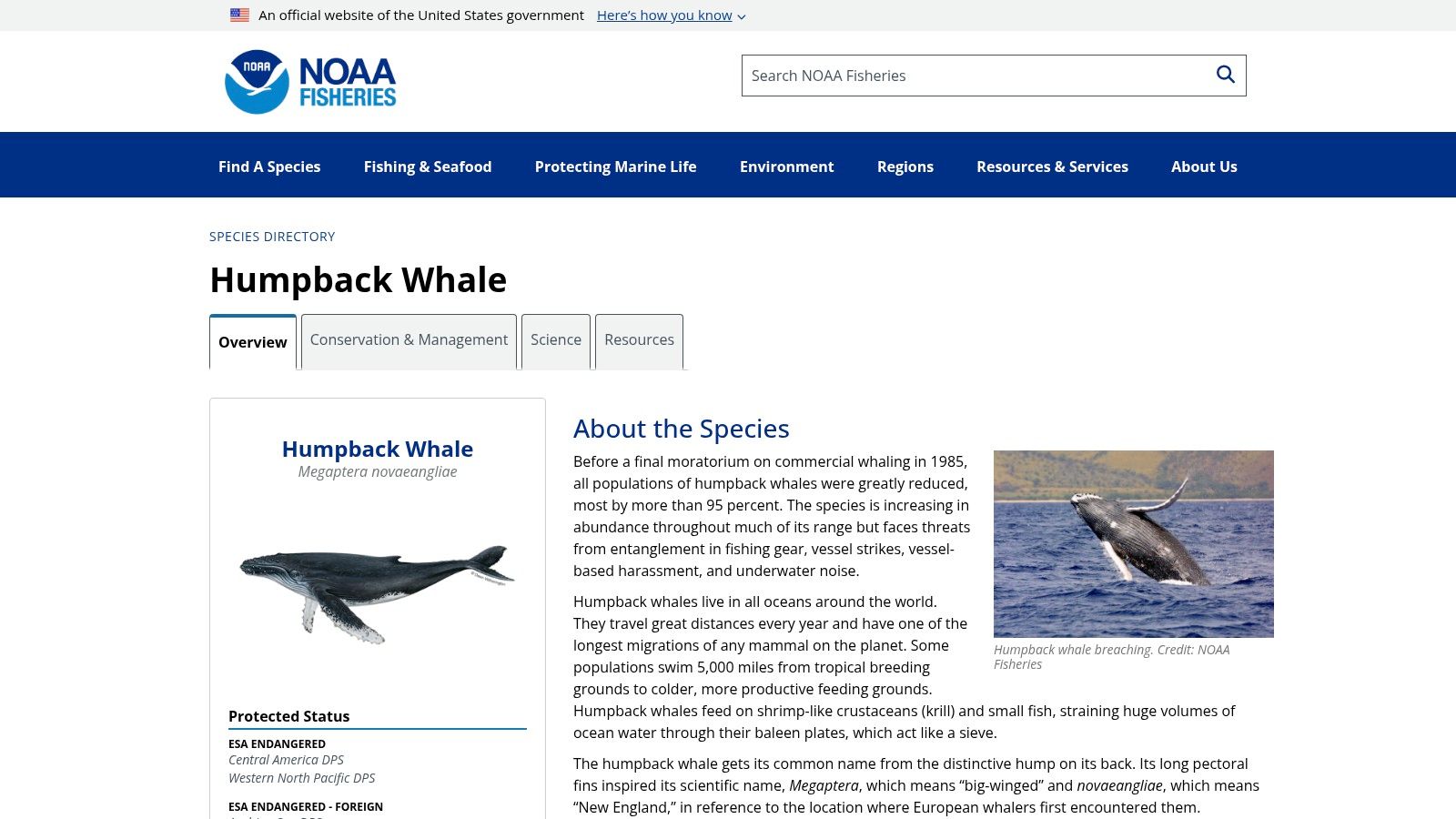
Humpback whales often feel larger than their ranking suggests because they’re the whales people most often see doing dramatic things. Breaching, flipper slapping, and coordinated feeding displays make their bodies legible in motion.
The verified data supplied for this article doesn’t include citable humpback measurements, so I won’t assign exact length or weight figures. Qualitatively, humpbacks are major large whales, though not in the same top-size tier as blue and fin whales.
The whale most people understand at a glance
Humpbacks are a good reminder that visibility shapes public perception. A blue whale may outrank nearly everything in existence, but many people form their mental image of a giant whale from humpbacks because humpbacks show more of the body above water and perform more conspicuous surface behaviors.
That makes humpbacks useful in education. If you want to explain whale scale to a general audience, a humpback offers a bridge between “very large animal” and “planet-scale giant.”
A real-world scenario proves the point. In a whale-watching setting, passengers often estimate humpbacks as larger than they are because long pectoral fins and repeated breaching expand the apparent size of the animal. Surface drama affects judgment.
- Public familiarity: Humpbacks are among the most recognizable great whales.
- Visual effect: Behavior makes them seem even larger than static measurements do.
- Teaching value: They help non-specialists grasp the mechanics of baleen-whale feeding and locomotion.
7. Sei Whale (Balaenoptera borealis)
The sei whale is often underappreciated in size discussions because it lacks the celebrity profile of humpbacks and the iconic status of blue whales. Yet it belongs among the large baleen whales and deserves a place in any practical roundup of the largest whales in order.
The verified record for this prompt doesn’t include citable sei measurements, so exact numbers would be unsupported. What can be said is that sei whales combine an efficiently shaped body with substantial scale, and they often create identification problems because observers confuse them with other rorquals.
Why sei whales are easy to underrate
Sei whales don’t announce themselves with the same obvious visual cues as humpbacks or right whales. They look efficient. That sleekness can make them appear smaller than they are.
For analysts of whale form, that matters. Human observers consistently underestimate size when an animal has a narrow, fast-looking profile. The opposite happens with broader whales, which often look larger than their measurements alone.
A sei whale teaches a simple lesson. Streamlining hides size.
A practical field example is offshore survey work. Researchers often need multiple cues, such as body shape, surfacing pattern, and dorsal-fin placement, to separate sei whales from similar rorquals. That means size ranking by casual sight alone is unreliable. Good whale lists depend on measured records, not instinct.
Ranked Comparison of the 7 Largest Whales
| Species | 🔄 Observation / Research Complexity | ⚡ Resource Requirements | 📊 Expected Outcomes | 💡 Ideal Use Cases | ⭐ Key Advantages |
|---|---|---|---|---|---|
| Blue Whale (Balaenoptera musculus) | High, wide-ranging, migratory | Very high, long-range vessels, passive acoustics | Population trends; ecosystem health indicators | Large-scale monitoring; acoustic surveys | Largest animal; very loud, low-frequency calls |
| Fin Whale (Balaenoptera physalus) | Medium, fast, pelagic | High, fast vessels; visual & acoustic ID | Migration mapping; foraging behavior | High-speed tracking; migration studies | Very fast; asymmetrical jaw aids feeding |
| Sperm Whale (Physeter macrocephalus) | High, deep-diving, offshore | Very high, deep-water vessels, tags, acoustics | Deep-sea ecology; echolocation studies | Deep-ocean biology; dive physiology research | Largest toothed whale; powerful echolocation |
| North Atlantic Right Whale (Eubalaena glacialis) | Medium, surface-skimming but rare | Very high, intensive conservation resources | Critical recovery metrics; threat assessments | Conservation policy; ship‑strike/entanglement mitigation | Distinctive callosities; surface feeder; high conservation priority |
| Bowhead Whale (Balaena mysticetus) | Medium, Arctic, ice-associated | Very high, ice-capable platforms, long-term studies | Longevity data; Arctic ecosystem responses | Arctic climate impact studies; aging research | Ice-adapted skull; extreme longevity; long baleen |
| Humpback Whale (Megaptera novaeangliae) | Low–Medium, coastal migrations, approachable | Medium, boat surveys, acoustic recorders | Cultural song transmission; feeding strategy insights | Ecotourism; behavioral ecology; song studies | Complex songs; bubble-net feeding; acrobatic displays |
| Sei Whale (Balaenoptera borealis) | Medium, fast, pelagic skimmer | Medium, open-ocean surveys, acoustics | Speed/ecology; surface feeding patterns | Pelagic foraging and migration research | Very fast swimmer; streamlined body; tall dorsal fin |
Start tracking smart money today
Join thousands of traders using WalletFinder.ai to find profitable wallets and copy their trades.
Start Free Trial →
