White Whale Crypto: How to Find & Follow Smart Money
Uncover the meaning of 'white whale crypto'. Learn to track massive whale wallets on-chain, manage risk, and use Wallet Finder.ai to mirror smart money moves.

May 5, 2026
Wallet Finder

May 5, 2026

You’re probably here because you watched a token rip higher, checked the chart too late, and realized the move started long before crypto Twitter noticed. That feeling usually comes from the same blind spot. You saw price, but you didn’t see the wallets that moved first.
In crypto, the edge often sits on-chain before it shows up on a candlestick. That’s why white whale crypto matters in two different ways. It can mean the elusive smart-money wallet you want to find, and it can mean the specific meme coin called WHITEWHALE that became a perfect lesson in why whale tracking helps, but blind faith gets traders wrecked.
A lot of traders still trade the visible surface. They watch chart breakouts, social volume, and exchange listings. Meanwhile, larger wallets are already building positions, rotating liquidity, and setting up exits.
That’s the practical meaning behind white whale crypto. You’re hunting for the wallets that matter before the crowd reacts. Not every large wallet is smart money, but the right one can show you where conviction is building, where risk is rising, and where narrative is about to shift.
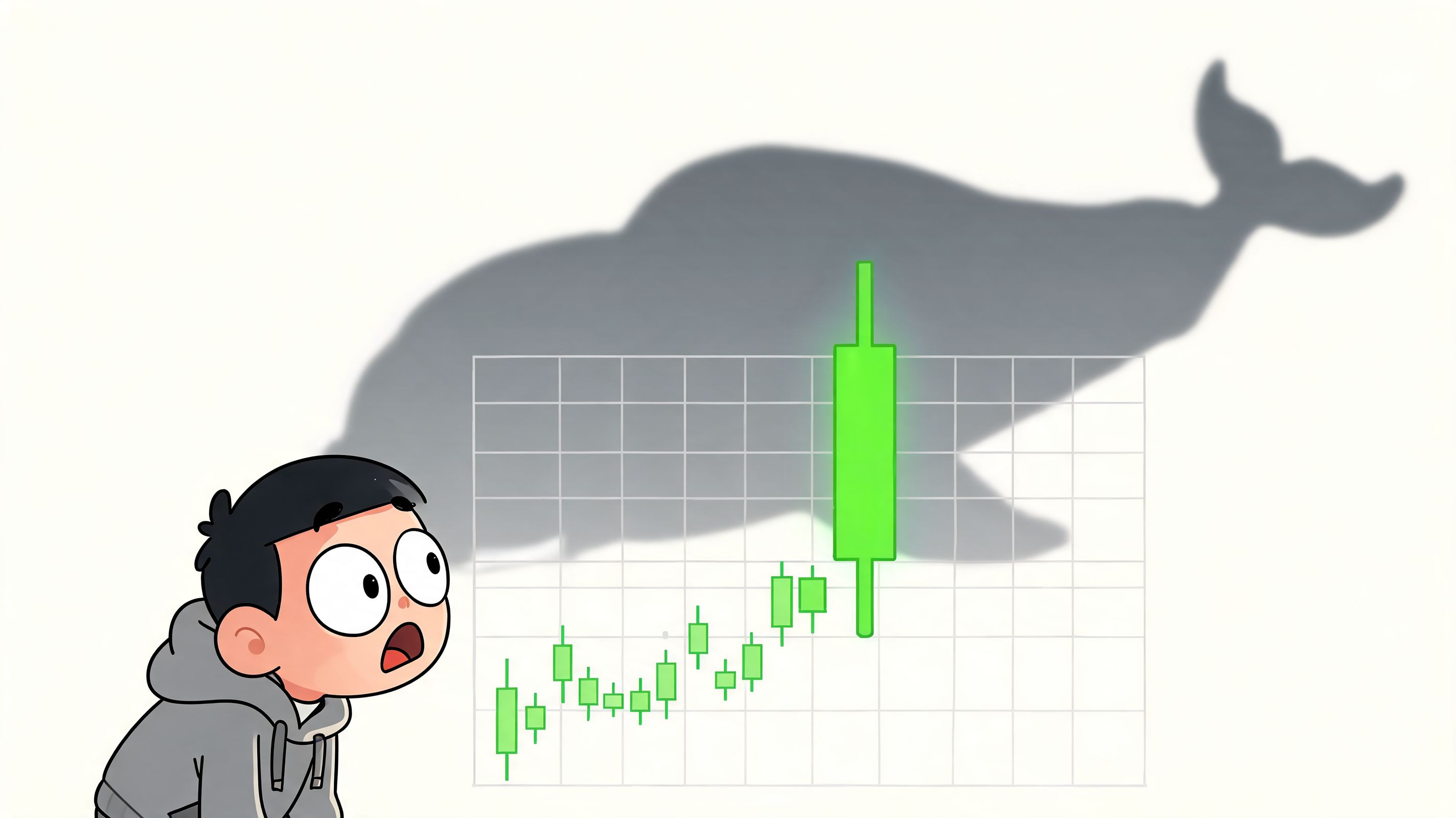
Most missed moves look random only if you ignore wallet behavior. In practice, traders often overlook a few repeat signals:
Practical rule: If you can’t explain who is providing the buying pressure, you’re trading a story, not a setup.
There’s another side to this phrase. The White Whale is also a real token, and its lifecycle is one of the cleanest cautionary examples of how sentiment, founder behavior, and holder concentration can overpower clean tokenomics.
The goal isn’t to worship whales. It’s to read them.
That means separating three things that many traders lump together:
| Focus | What it tells you | What it doesn’t tell you |
|---|---|---|
| Large wallet activity | Where capital is moving | Whether the move will sustain |
| Tokenomics | Supply structure and dilution risk | Whether trust will hold |
| Narrative shifts | Why buyers may rush in or flee | Whether the chart is already crowded |
If you can combine those three, you stop reacting late and start forming a process.
A trader spots a wallet that bought before the crowd, sees a token with a clean supply setup, and assumes the rest is simple. Then one founder event hits, liquidity thins out, and the chart stops respecting the earlier story.
That split matters here. In crypto, a white whale can mean the rare wallet worth studying, or it can mean the token called WHITEWHALE. Confusing those two ideas is expensive.
WHITEWHALE is a Solana meme coin, and its lifecycle works as a cautionary case study. It shows why tracking whales is useful, but blindly attaching that logic to a token narrative is dangerous.

When traders say they want to “find the whale,” they usually mean a wallet with repeatable behavior. That could be a high-conviction trader entering before broad attention, a coordinated fund shaping liquidity, or an operator whose exits are as disciplined as their entries.
A token is different. A token can attract smart money and still fail as a trade once trust breaks.
According to Phemex’s overview of WHITEWHALE, the project ran hard from late 2025 into early 2026, hit its cycle peak in January, then sold off aggressively after the founder exited in March, leaving the token far below its high by May.
That sequence is what matters. Price strength, supply design, and community enthusiasm helped on the way up. None of them prevented repricing once the market started questioning who was left to support the story.
The useful lesson is simple. Whale tracking and token evaluation are separate jobs.
Phemex notes that WHITEWHALE had a fixed supply structure, full circulation, and community actions such as a giveback plan and liquidity support. Those features can reduce dilution risk and improve early participation. They do not solve founder risk, concentration risk, or confidence risk.
I treat that as a hard rule in meme coins. If valuation depends heavily on a founder, mascot, or community myth, then trust sits on the same level as liquidity and wallet behavior. Once trust breaks, clean tokenomics stop being the deciding factor.
A fixed supply can help a chart. It cannot repair a market that no longer believes the people behind it.
Use this filter before chasing any “white whale” setup:
| Question | If yes | If no |
|---|---|---|
| Am I tracking a wallet with a proven process? | Study entries, scaling, holding time, and exits | Treat the move as noise until behavior repeats |
| Am I buying because the token narrative feels unstoppable? | Cut size and map liquidity before entering | Keep digging into who is actually accumulating |
| Does trust in a founder or inner circle drive valuation? | Price in headline risk from day one | Focus more on liquidity depth and rotation timing |
WHITEWHALE is useful because it shows both sides of the phrase in one chart. One side points traders toward skilled wallets worth tracking. The other shows how fast a token can fall apart when narrative support leaves the market.
That distinction is what turns whale watching into a strategy instead of a story.
A whale doesn’t need to own the whole market to move it. It only needs enough size relative to available liquidity.
In thin markets, one large participant acts like a ship passing close to smaller boats. Even if the whale isn’t trying to hit everyone else, the wake still throws smaller traders off balance. That’s especially true in meme coins and low-liquidity altcoins where order books aren’t deep and decentralized liquidity can vanish fast.

Large visible orders
A whale can place big bids or asks that create the appearance of support or resistance. Smaller traders often anchor to these levels even when the orders are temporary.
Strategic accumulation and distribution
Smart whales rarely buy everything at once. They scale in discreetly, then distribute into strength when retail demand arrives.
Liquidity pressure
On decentralized venues, adding or removing liquidity changes how violently price reacts. A pool with thin depth gets pushed around much more easily.
Sentiment signaling
A known wallet moving into a token can trigger copy buys. A large transfer out can create panic, even if the transfer isn’t an immediate sale.
Order-book games
Some participants use tactics like spoofing to influence perception. The key point for traders is not to trust a single visible signal without confirmation from executed trades and wallet history.
Most traders see a big transaction and ask, “buy or sell?” That’s too shallow. Ask a better sequence:
Here’s a practical interpretation model:
| Signal | First read | Better read |
|---|---|---|
| Big buy on-chain | Bullish | Could be early accumulation, a hedge, or a short-term scalp |
| Funds sent to exchange | Bearish | Often bearish, but confirm if actual selling follows |
| Multiple wallets buy same asset | Coordinated conviction | Check whether they historically trade together |
| Large wallet holds through volatility | Strength | Sometimes conviction, sometimes trapped size |
If a whale move changes price but not structure, don’t chase it. If it changes structure, liquidity, and sentiment together, pay attention.
Whales don’t just move price. They exploit predictable trader behavior.
Retail traders tend to buy after validation and sell after damage. Whales often do the opposite. They accumulate when attention is low, and they lighten risk when the crowd feels safest.
That doesn’t mean every whale is manipulating. It means large size changes the environment, and smaller traders need to read that environment with more discipline.
Blockchain data is public. The hard part isn’t access. It’s qualification.
A wallet with a large balance isn’t automatically worth following. Some wallets are inactive. Some are insiders with information you can’t replicate. Some got lucky on one trade and gave it all back later. Real on-chain forensics starts when you stop asking who is biggest and start asking who is consistently right.
A wallet becomes interesting when several behaviors line up:
These signals matter more than raw balance. A smaller, skilled wallet can be more useful to track than a giant passive holder.
One of the strongest upgrades a trader can make is combining on-chain behavior with market context. According to CoinMarketCap’s WHITEWHALE price analysis, a top wallet buying while the token showed a 14-day RSI of 26.08 and a Fear & Greed Index of 12, described as extreme fear, can mark a contrarian entry that price-only traders miss.
That kind of setup matters because it aligns three layers:
| Layer | What you want to see |
|---|---|
| Wallet behavior | A respected wallet buying, not just transferring |
| Technical state | Oversold conditions or compressed downside |
| Sentiment backdrop | Fear, fatigue, or capitulation instead of euphoria |
When those align, you have a signal worth investigating.
The best wallet alerts don’t tell you what to copy. They tell you where to focus your attention first.
If you’re doing this manually, start with explorers and then narrow aggressively. A useful workflow looks like this:
For a deeper manual workflow, this guide to blockchain forensics tools for wallet analysis is a good starting point.
Manual whale tracking breaks down in a few common ways:
Good on-chain analysis filters for skill first, then speed.
Manual tracking is fine when you are dissecting one token and a handful of wallets. It breaks once you need to monitor multiple chains, rank behavior fast, and react before the trade is crowded.
The bottleneck is not wallet discovery. The bottleneck is deciding which wallets deserve a place on your screen.

Block explorers show balances, transfers, and contract interactions. They do not rank trader quality, separate deliberate positioning from noise, or surface signals quickly enough for execution.
That gap matters if you are trying to apply the WHITEWHALE lesson in real time. By the time a wallet move is visible to everyone, the trade often offers worse asymmetry. You need a way to screen for wallets with repeatable behavior, then monitor them without rebuilding the same workflow by hand every day.
A platform built for whale wallet discovery and real-time tracking solves a different problem than an explorer. It helps you sort for skill, set a focused watchlist, and get alerted while the move is still actionable.
Mirroring whales starts with selection. If the wallet is undisciplined, copying it just transfers someone else's volatility into your account.
Start with trader quality:
Then cut harder than feels comfortable.
A workable filter set looks like this:
| Filter | Why it matters |
|---|---|
| Win rate | Helps separate repeatable execution from isolated luck |
| PnL | Shows whether results justify further review |
| Recent gains | Keeps your watchlist tied to current behavior |
| Trade frequency | Shows whether the wallet fits your holding period |
| Position sizing | Reveals whether the trader manages exposure with discipline |
Traders typically improve fastest at this point. They stop chasing the biggest wallet and start following the wallet whose behavior they can realistically mirror.
Discovery gives you candidates. Alerts give you timing.
If a wallet buys early, adds on confirmation, and exits into strength, you need to see those actions quickly and in sequence. Otherwise you are not mirroring a strategy. You are buying a screenshot of a trade that already happened.
After you build a watchlist, review the wallet's history before copying anything. Check whether it buys breakouts or pullbacks. Check whether it scales in over hours or enters all at once. Check whether it trades the same categories repeatedly or jumps between unrelated narratives. Those details determine whether the wallet is tradable for you.
A quick demo helps make that workflow concrete:
A mirror setup earns its keep if it lets you do four things with speed and context:
WHITEWHALE is the right cautionary example here. Past whale interest can point you toward opportunity, but only a disciplined process turns that information into a trade with acceptable risk. Good tooling does not replace judgment. It gives you faster access to the few wallets worth studying.
Whale tracking can improve discovery. It cannot remove risk.
The fastest way to lose money is to assume that a profitable wallet’s next trade is automatically safe for you. Your entry timing is different. Your size is different. Your liquidity access is different. Sometimes your role in the trade is to become someone else’s exit.
The cleanest reminder comes from WHITEWHALE’s recent downtrend. According to MEXC market data for WHITEWHALE, the token’s 90-day performance from mid-February to mid-May 2026 fell 92.55%. That’s a brutal example of how narrative-driven liquidation can destroy value even when whale accumulation had looked constructive beforehand.
That’s why copy trading needs hard rules. Not vibes.
Use whale activity as a signal layer, not a substitute for your process.
These are not the same thing.
| Approach | What it looks like | Main risk |
|---|---|---|
| Blind copy trading | You mirror every move from a wallet | You inherit trades without context |
| Signal-driven trading | You use wallet activity as a high-priority alert | You still need speed and discipline |
| Independent trading with wallet confirmation | You already like the setup, then confirm smart money participation | You may miss some early entries |
The third approach is usually the most durable.
Before following any wallet into a trade, run a short checklist. This wallet risk assessment checklist is a useful framework.
My own short version is simple:
If the last answer is mostly FOMO, the best trade is often no trade.
Most questions about whale tracking come down to legality, capital, and privacy. The short answer is that on-chain analysis uses public blockchain data. The important part is how responsibly you interpret that data.
| Question | Answer |
|---|---|
| Is whale tracking legal? | Yes. Blockchain transactions are publicly visible. Tracking wallets means reading public ledger activity, not accessing private accounts. |
| Do I need a large account to benefit? | No. What matters more is execution discipline, position sizing, and choosing setups that fit your capital and risk tolerance. |
| Does a large wallet always mean smart money? | No. Some large wallets are treasuries, insiders, inactive holders, or entities following mandates that don’t match your strategy. |
| Is it safe to copy a whale exactly? | Usually not. Timing differences, slippage, and liquidity can make your trade very different from the original wallet’s trade. |
| How do I know if a whale buy is meaningful? | Check context. A meaningful buy lines up with prior wallet behavior, market structure, sentiment, and a tradable exit plan. |
| Does whale tracking invade privacy? | Wallets are pseudonymous by default. Analysts track addresses and transactions, not personal identities, unless a wallet has already been publicly linked to a person or entity. |
Treat whale tracking like reading order flow, not following a guru. The wallet gives you a clue. Your job is to test the clue, not to surrender judgment.
That’s especially important in white whale crypto setups, where meme velocity, founder narratives, and thin liquidity can produce fast upside and even faster damage.
Good whale tracking doesn’t replace due diligence. It improves where you spend it.
If you want to turn wallet activity into something actionable, Wallet Finder.ai is built for exactly that. It helps you discover profitable wallets, filter for consistency, review full trading histories, and get real-time alerts when tracked wallets buy, swap, or sell, so you can act on smart-money signals with a process instead of chasing the chart.