Crypto Com Screenshot: A Secure How-To Guide (2026)
Learn to safely take a crypto com screenshot on iOS, Android, & desktop. Our guide covers redacting info, bypassing blocks, and exporting transaction history.

April 26, 2026
Wallet Finder

April 26, 2026

You searched zap zap app expecting a crypto alert tool. That assumption is usually the first mistake.
The true need isn't for a product named “zap zap app.” They want a fast way to know when a wallet buys, sells, rotates, or starts accumulating something before the crowd notices. The search term sounds specific, but the intent behind it is broader: alerts, automation, and quick action.
That gap matters. If you search the wrong name, you often land on unrelated messaging apps, Linux wrappers, security tools, or automation products that have nothing to do with DeFi trading. Some are useful in their own lane. None of them are the all-in-one crypto edge many traders imagine.
A better approach is to stop asking, “What is the zap zap app?” and start asking, “What job am I trying to get done?” If your real goal is timely signals, a purpose-built alert workflow is stronger than chasing a vague app label. If you're still comparing options, this guide to a crypto price alert app helps clarify what a trader should expect from a serious notification setup.
The honest answer is that “zap zap app” is not a clear crypto product category.
Searches around the term produce a messy mix of unrelated tools. Some results point to messaging apps. Others point to security software with “ZAP” in the name. Some users likely mean Zapier. In crypto circles, that creates confusion because traders often use shorthand when they really mean “an app that zaps me an alert the moment something important happens.”
That distinction is important. A search term can be popular among users without corresponding to a real, dedicated DeFi platform. In practice, people using this phrase are usually looking for one of three things:
Those are valid needs. The problem is that the keyword points in the wrong direction.
Traders often assume there must be a single app called “zap zap” built for signals or copy trading. The available evidence doesn't support that. Instead, the term maps to several unrelated products, none of which serves as the obvious crypto solution implied by the query.
Practical rule: When a search term looks like slang, nickname, or local shorthand, verify the product category before you connect it to your trading workflow.
That saves time, but it also reduces security risk. Downloading the wrong app because of a fuzzy name is how traders end up mixing personal messaging tools, browser wrappers, and unknown software into setups that should stay clean and deliberate.
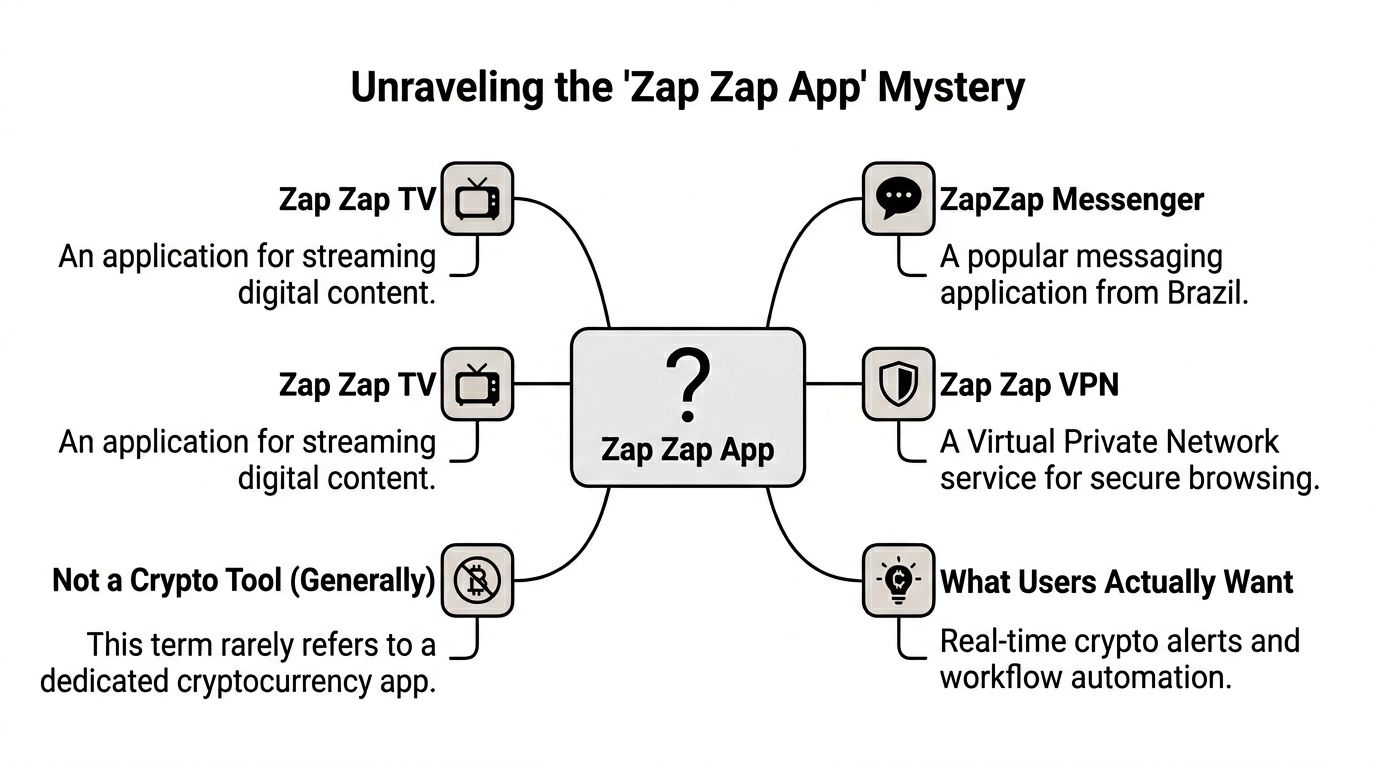
The phrase zap zap app acts more like an umbrella label than a single product name. When you inspect the results, you find several different applications and product families that happen to share “Zap” or “ZapZap.”
One of the clearest examples is ZapZap Messenger, which uses the Telegram API and supports file transfers up to 1.5 GB and groups of up to 20,000 participants, according to its Uptodown listing for ZapZap Messenger. Useful for communication, yes. A DeFi trading terminal, no.
| Application Name | Primary Function | Relevance to DeFi Trading |
|---|---|---|
| ZapZap Messenger | Telegram-based messaging client | Useful only as a communication channel for alerts |
| ZapZap for Linux | Desktop wrapper for WhatsApp Web on Linux | Helpful for receiving messages, not for generating trading signals |
| ZAP Proxy | Web app security scanning and testing | Relevant to software security, not crypto alerts |
| Zapier | Workflow automation across apps | Relevant for automation, but not a native trading intelligence tool |
| “zap zap app” in crypto searches | Ambiguous query | Usually reflects intent, not a real dedicated DeFi app |
The confusion usually comes from name overlap.
ZapZap Messenger is a chat app variant. It may be practical if you want lightweight communication or large groups, but that doesn't make it a wallet tracker, signal engine, or on-chain scanner.
ZapZap for Linux is a different product entirely. It functions like a Linux-focused way to use WhatsApp in a more desktop-friendly format. That's a utility layer, not a market intelligence layer.
ZAP Proxy belongs in security operations. The OWASP ZAP documentation describes internal statistics and scan-related metrics for analyzing application interactions through its internal statistics documentation. That's valuable if you're testing software. It doesn't answer the trader's question.
Zapier is where some of the misunderstanding gets more interesting. Zapier can connect apps and pass data between them. It even shows Zap history with up to 10 Zap runs per page in individual accounts or 25 in projects, as noted in the verified data. But that's still an automation platform, not a crypto-native signal source.
The safest conclusion is simple. If you're searching “zap zap app” for a DeFi edge, you're probably using the wrong label for the right need.
There isn't a widely documented zap zap app for DeFi with verifiable launch milestones, adoption data, or market presence. That doesn't mean your use case is unrealistic. It means you should separate the job into components:
Once you think in components, the entire environment becomes easier to understand.
What are people really searching for when they type zap zap app into a crypto query box?
In most cases, they want one of two things. They want alerts that arrive fast enough to matter, or they want actions to happen automatically after a trigger. The confusion comes from the label. The actual need is much more specific.
A useful way to frame this is to separate detection from delivery. One tool watches the market or the chain for meaningful activity. Another tool sends that information somewhere you will see it. Crypto alerts work like a smoke detector and an alarm. The detector senses the event. The alarm gets your attention.

Speed matters, but raw speed alone does not help a trader. A flood of pings is not an edge. It is a distraction.
What traders usually want is a short list of alerts tied to decisions they can act on, such as:
That last point causes a lot of confusion. Price alerts tell you what happened. On-chain alerts often help explain why it happened. If you only watch price, you are looking at the scoreboard. If you also watch wallets and flows, you can start to see the plays developing.
A generic notification app can deliver a message, but it usually cannot decide which on-chain event deserves your attention. That filtering step is where signal quality is won or lost.
For DeFi traders, the harder job is not sending the alert. It is defining the trigger well enough that the alert means something. A wallet tracker, on-chain monitor, or custom script can handle that logic. Telegram, Discord, email, or push notifications can handle delivery.
This modular setup gives traders better control:
For broader context on combining market data with event triggers, this guide to an API for crypto prices shows how price feeds fit into a trader's alert workflow.
Many searches around this phrase point to the same practical goals.
The first goal is awareness. Traders want to know when a wallet, token, or market condition changes. The second goal is automation. They want a follow-up action, such as posting to a channel, logging the event, or triggering a workflow. Those are related jobs, but they are not the same job.
That distinction matters because it prevents a common mistake. Traders often search for one magic app that finds alpha, filters noise, sends alerts, and automates reactions. In practice, better results come from combining specialized tools with clear rules.
A memecoin trader may care about first buys from a small, curated wallet list. A swing trader may care more about repeated accumulation over time. A research team may want alerts to enter a spreadsheet before anyone gets pinged. Same category of need. Different trigger logic, different delivery path, different tolerance for noise.
The practical conclusion is simple. People searching zap zap app are usually looking for an alert and automation system, not a single crypto product with that exact name. The useful question is not "Where is the app?" It is "Which events do I need to catch, and where should they be sent?"
A strong setup doesn't need to be complicated. It needs to be deliberate.
The usual pattern is simple: identify the wallets worth tracking, decide which events matter, and send those events into a channel you'll notice. If you want broader context around data feeds and integrations, this overview of an API for crypto prices helps frame how market and on-chain data fit into a usable workflow.

Most beginners track tokens first and wallets second. Skilled traders often reverse that order.
Start with wallets that match your style. If you trade fast rotations, track wallets known for early entries and quick exits. If you prefer steadier setups, track wallets that build positions over time and show discipline.
Use filters that help you answer questions like:
A watchlist should be curated, not crowded. If every address goes into the same list, every alert becomes noise.
Not every on-chain event should ping your phone.
Good triggers are events that force a decision. Examples include:
Keep the first version narrow. You can always expand later. The biggest mistake is turning on every possible notification and then muting the channel after one noisy afternoon.
Working rule: An alert should either make you investigate immediately or be removed.
For many traders, Telegram works well because it is fast, familiar, and easy to monitor on both desktop and mobile. Others prefer Discord or a private team setup.
What matters is response time. If you ignore email for hours, don't use email for time-sensitive trade alerts. If you already check Telegram throughout the day, route the signals there.
After connecting the channel, test it with a small set of events. Confirm that messages arrive clearly and include enough context to act on.
A system that works in calm conditions can fail when markets get noisy.
Use a dry run. Watch how alerts arrive. Check whether the message tells you what happened, which wallet triggered it, and whether you need to open another dashboard to understand the event.
A visual walkthrough helps here:
Once alerts are flowing, improve quality before adding quantity.
A clean alert system often has:
| Area | What to refine |
|---|---|
| Wallet list | Remove weak or inactive addresses |
| Trigger logic | Cut low-signal events |
| Message routing | Split channels by strategy or urgency |
| Review habit | Revisit alerts and see which ones led to useful action |
A custom setup offers distinct advantages over any vague “zap zap app” people hope to find. It matches your decision process, not someone else's.
Alerts are only the first layer. Serious traders often want actions to happen after the alert.
That doesn't mean placing trades automatically in every case. More often, it means routing information into the rest of your research system so nothing gets lost. A related framework for building these flows appears in this guide to real-time alerts for profitable wallets.

Automation is useful when the same follow-up happens every time an event appears.
Examples:
People often confuse “zap zap app” with Zapier. Zapier isn't a signal source. It's a connector that moves information between tools after a trigger occurs.
Think about a three-part chain:
That action might be as basic as appending a row to a Google Sheet. It might also be more operational, such as creating a Trello card for a discretionary review or sending a structured webhook into a private research bot.
The key is to automate the repetitive follow-up, not the judgment itself.
If you monitor alerts on Linux, efficient communication tools matter. The ZapZap Linux PWA uses PyQt6 and a proxied WhatsApp Web connection and is described as achieving 15% lower CPU utilization than Electron alternatives in the ZapZap GitHub repository. That detail won't make it a trading app, but it does highlight a real concern for traders who keep communications open all day: low-overhead tooling is useful.
A good automation chain reduces manual copying. It shouldn't reduce your scrutiny.
Before you connect everything, check these points:
What event starts the workflow
Be explicit. “Interesting wallet activity” is too vague.
Who receives the output
You, a team channel, an analyst, or a bot all need different formatting.
What must be reviewed by a human
Logging can be automatic. Conviction shouldn't be.
What happens if the destination app fails
Build for recoverability. Keep a primary alert path separate from your archival path.
This modular approach is the answer to the search intent behind zap zap app. Traders don't need a mystery app. They need reliable signals, flexible delivery, and optional automation layered on top.
Security is where the vague zap zap app search gets expensive.
People searching that phrase often want one simple tool for alerts or automation. The risk is that they end up connecting a random browser extension, unofficial app wrapper, or low-visibility bot to accounts that reveal wallet activity, exchange access, or team workflows. In crypto, that exposure can map your behavior long before anyone steals funds.
A connected setup works like a house with several doors. Each alert app, webhook, API token, and chat integration is another entrance. One weak lock can expose the whole system.
The safest setup is narrow by design. Give each tool only the access it needs, and nothing more. If an alert service only needs to watch wallets, use a read-only connection. If a notification bot only needs to post into Telegram or email, do not also connect it to exchange trading permissions.
That one habit prevents a lot of avoidable damage.
Use these checks before approving any new connection:
Traders sometimes treat alert tools as harmless because they do not execute trades. That is a mistake. An alerting stack can still reveal watchlists, wallet clusters, timing patterns, and research focus.
This is the clearest test.
A wallet tracker, notification bot, spreadsheet sync, or research dashboard does not need your seed phrase or private key to monitor public on-chain activity. Public wallets are already public. The tool only needs the wallet address or a limited API connection.
If any so-called zap zap app asks for recovery phrase access to send alerts, close it and move on.
You do not need to run a security lab to make better choices. You do need to slow down long enough to verify what you are connecting.
Check whether the tool has clear documentation, an identifiable developer or company, visible update history, and a permission model you can explain in one sentence. If you cannot describe what the tool does with your data, you should not connect it to a trading workflow.
A simple test helps here: if this integration were exposed publicly tomorrow, what would an outsider learn? Your wallet list? Your exchange account email? Your alert logic? Your team channel names? That thought exercise makes hidden risk easier to see.
API keys and webhook URLs are often handled too casually. Traders paste them into notes apps, old scripts, or shared docs, then forget where they ended up. That is like leaving spare keys under five different doormats and hoping no one checks.
Store credentials in a password manager or secure secret store. Label them clearly. Rotate them after staff changes, device loss, or any suspected exposure. If a tool is no longer part of your process, revoke the token instead of assuming it will stay unused forever.
Good security here is boring on purpose. Boring is what you want.
For the search intent behind zap zap app, the goal is usually fast alerts or light automation, not full account control. Build your stack to match that goal. Public wallet data goes in. Alerts come out. Sensitive credentials stay isolated unless there is a strong, specific reason to connect more.
That approach keeps the system useful without turning every convenience tool into a security liability.
There isn't a clearly documented, dedicated DeFi trading product that matches that phrase. In most cases, the query points to unrelated messaging, desktop, security, or automation tools.
Because the phrase sounds like what traders want. It implies quick alerts, instant pings, and lightweight automation. The intent is real even if the product name isn't.
Yes. They can be the delivery layer for alerts. Telegram, WhatsApp-based desktop tools, and team chat apps are useful channels, but they aren't substitutes for on-chain signal detection.
No. Zapier is an automation platform that connects apps and workflows. It can be part of a trading stack, but it doesn't replace a signal source.
A simple version works best:
Trying to solve everything with one vague app name. Traders do better when they split the stack into signal detection, notification delivery, and optional automation.
It can be, if you use strong passwords, two-factor authentication, minimal permissions, and established services. Never share a seed phrase with an alerting or analytics tool.
If you're trying to turn wallet activity into fast, usable trading signals, Wallet Finder.ai is built for that job. It helps you discover profitable wallets, monitor trades and tokens across major chains, and route alerts into a workflow you can act on without chasing the wrong “zap zap app” again.