Your Guide to American Coin Crypto Trading
Unlock the American coin crypto market. This guide shows you how to analyze tokens, follow smart money, and use on-chain data for smarter trading decisions.

February 23, 2026


Wallet Finder
February 23, 2026

When you hear “American coin crypto,” don’t think of a specific token. Think of a strategic category of projects built for the US market. These cryptocurrencies have US-based teams, a focus on American investors, and a clear plan for navigating the country's complex regulations.
For traders, this distinction is a massive deal, offering a unique risk profile and a potential edge in a crowded market.
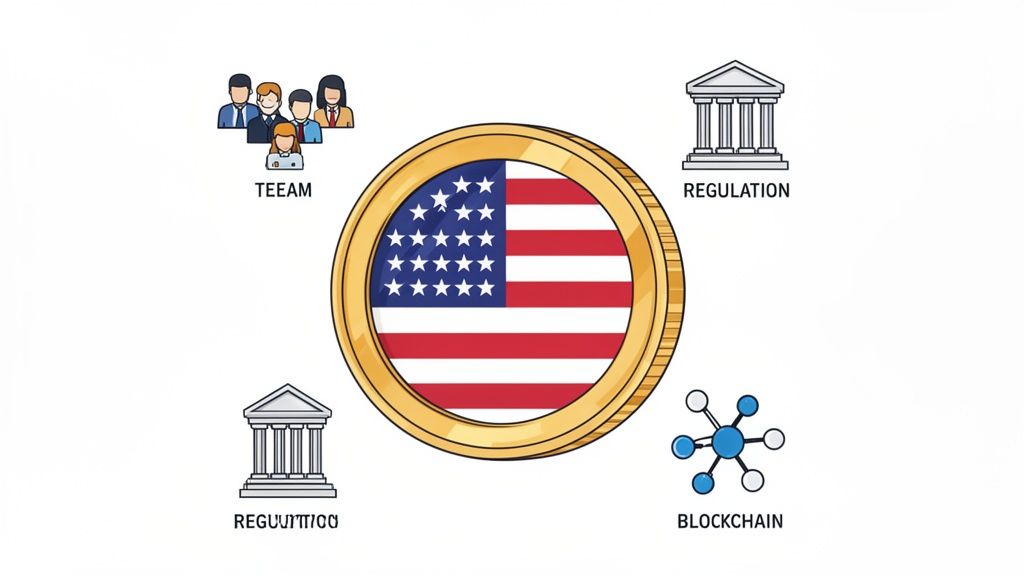
You can spot this category not by a coin’s name, but by its operational DNA. Unlike projects from anonymous founders or murky jurisdictions, an “American coin” crypto typically embraces a level of transparency designed to win over both retail and institutional money in the United States.
This proximity to the world's largest economy is a huge advantage. As regulatory bodies like the SEC provide clearer rules, these projects are often first in line to adapt and benefit. For investors, this can mean lower long-term risk and a better shot at mainstream adoption.
So what separates an "American coin" from thousands of other tokens? Smart traders look for a few core traits. This table breaks down the essentials.
By focusing on projects with a strong American footprint, traders are essentially making a bet on regulatory clarity and institutional comfort. It's a strategic play that prioritizes long-term stability and access to a massive pool of capital.
This approach helps you zero in on projects positioned to win as the US continues to shape its role in the global crypto economy.
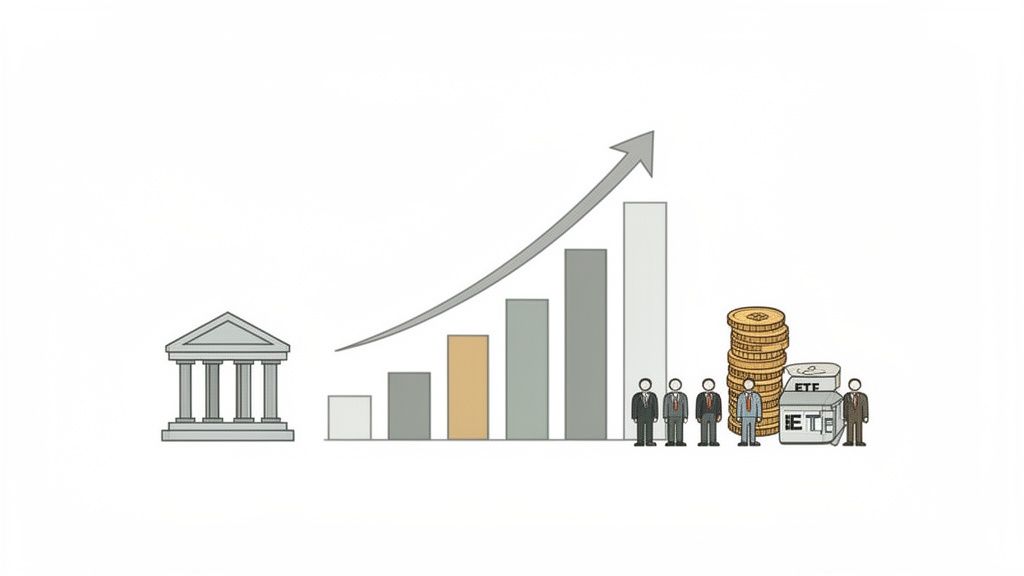
The buzz around American coin crypto is fueled by powerful market shifts. For any serious trader, understanding these trends is non-negotiable, as they’re what creates the liquidity, volatility, and opportunities we see today.
One of the biggest game-changers is the flood of institutional capital. For years, big financial players waited on the sidelines for a clear sign from regulators. The approval of spot Bitcoin ETFs was that sign—a structural shift that gave them the green light. This move has opened the floodgates for trillions of dollars from professionally managed funds to finally get exposure to digital assets.
It’s not just Wall Street. Crypto adoption is booming on Main Street. A staggering 30% of American adults—about 70.4 million people—now own digital assets. This massive pool of retail traders drives huge volume, particularly on chains like Ethereum and Solana. You can explore more data on consumer crypto trends to see what’s behind this growth.
This expanding user base does two key things for traders:
The combination of institutional money and surging retail interest is creating a uniquely powerful environment. It’s like a racetrack where professional drivers and enthusiastic amateurs are all competing at once—the race gets faster, more competitive, and full of strategic openings.
The final piece is the shifting regulatory scene. The old "regulation by enforcement" approach created uncertainty and pushed innovation overseas. Now, we're seeing a pivot toward proactive guidelines.
This new climate encourages high-quality projects to set up in the US because they can build on solid legal ground. For traders, this is huge. It means more opportunities to invest in projects that are less likely to be shut down overnight, offering a degree of security that’s hard to find in most of DeFi.
A whitepaper only tells you part of the story. The unfiltered truth lives on the blockchain. On-chain due diligence turns raw transaction data into a clear picture of a token's health and potential risks. Forget the hype; we're going to evaluate tokens using hard data.
We’ll focus on these critical areas:
First, who holds the tokens? If a few wallets control the majority of the supply, they can crash the price with a single sell-off. It's a poker game where one player has most of the chips—a table you want to avoid.
Use this quick reference table to check for concentration risk:
If the numbers are in the red zone, proceed with extreme caution. A balanced distribution with many different holders makes for a much more resilient market.
Liquidity is everything. It's what allows you to buy and sell without the price tanking. If a project's liquidity pool is shallow or unlocked, it’s a massive red flag. A sudden drain from the pool is the classic first move of a rug pull.
Actionable Checklist for Liquidity:
Some wallets are just better at trading. These "smart money" wallets often belong to experienced traders or funds. When you see them accumulate a token before it pumps, that’s a signal worth paying attention to.
The key is to follow their moves, not just their final holdings. Setting up real-time alerts can notify you the second they make a buy.
For a deeper dive, check out our detailed guide: On-Chain Data Analysis Playbook.
Key Insight: We’ve found that 75% of tokens that maintain stable liquidity for 30 days are more likely to sustain their price gains.
This framework is about building a repeatable process that gives you an edge. Before investing, always pop the contract address into a block explorer like [Etherscan] to ensure it's verified.
Here is a list of immediate warning signs. Spotting even one of these should make you pause.
Spotting these red flags can be the difference between a smart trade and a catastrophic loss.
Knowing what on-chain data is and knowing how to use it for a trading edge are two different things. This is where we stop talking theory and start taking action. It's about using the right tools to find alpha—market-beating returns—before everyone else.
Tools like Wallet Finder.ai are built for this: turning a flood of raw blockchain data into a clear strategy. Instead of tracking thousands of wallets manually, you can use features like 'Discover Tokens' to see which new American coin crypto projects are getting traction, backed by real money from smart traders.
The secret to finding alpha isn't luck; it's a system. Projections show the U.S. cryptocurrency market growing to USD 4,197.7 million by 2033, a 14.1% compound annual growth rate. This makes tools that can make sense of on-chain data more critical than ever.
Here’s a simple, actionable workflow:
This flow chart breaks down the process, starting with token distribution and liquidity before diving into individual traders.
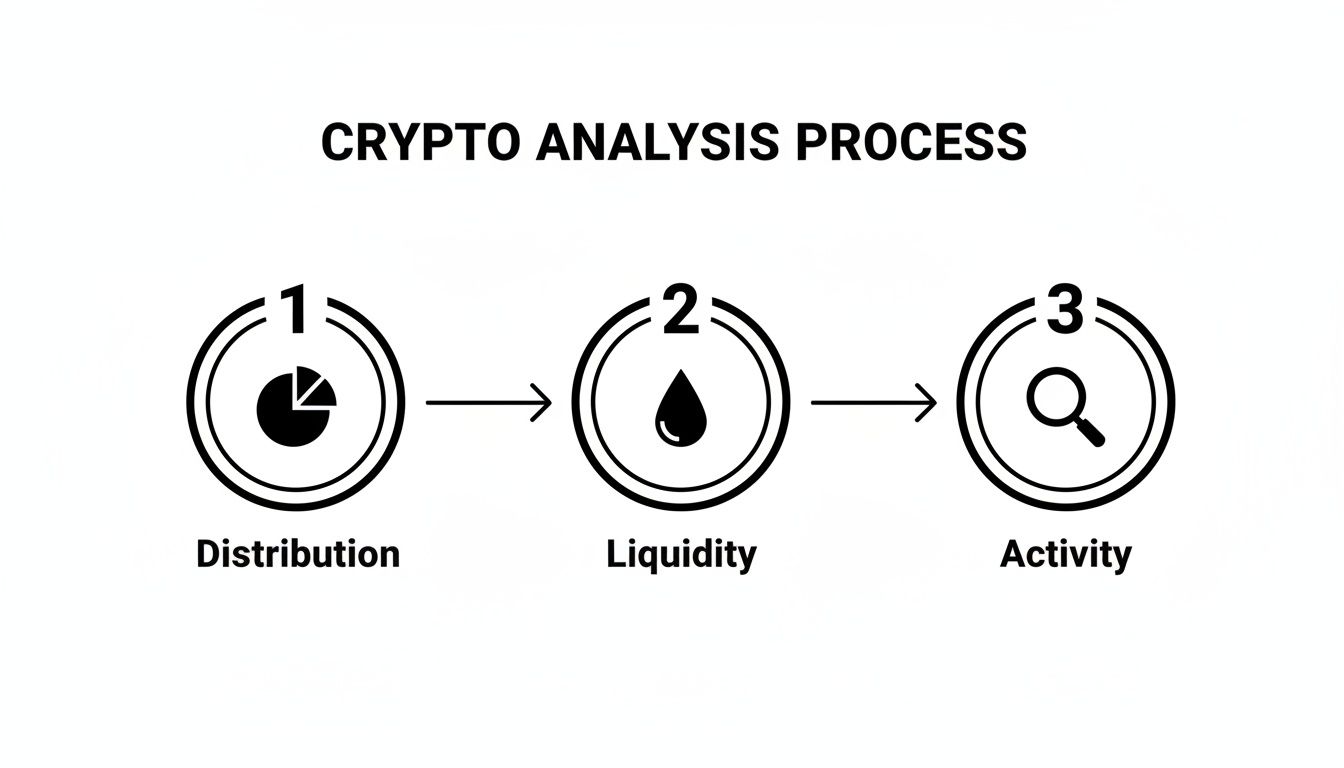
By following these steps, you’re doing your homework on the token’s health before you think about copying a trade.
So you've found a handful of consistently profitable wallets. Now what? The final piece is turning their moves into your own trading signals. Real-time alerts are your best friend here. By setting up notifications for a specific wallet, you get a ping the second they buy or sell.
When you mirror the trades of wallets with a proven track record, you're piggybacking on their research. It flips your strategy from reactive to proactive. You enter positions based on smart money movements, not social media hype.
This lets you act with confidence, knowing your decisions are backed by data from traders who have already proven they know how to win. For a deeper dive into the tool landscape, check out our guide on the 7 best DeFi analytics tools for crypto traders.
Navigating crypto means being your own head of security. Before chasing profits, your number one job is protecting your capital. This means developing a sharp eye for the warning signs that separate a real project from a scam.
The good news? Most high-risk projects leave a clear trail of red flags. Think of it like inspecting a used car; you wouldn't buy one without popping the hood, so why throw money at a token without checking its fundamentals?
Some red flags are immediate deal-breakers. If you spot any of these, the smartest move is often to walk away, no matter the hype.
Here is an actionable checklist of critical red flags:
A project's transparency is a direct reflection of its integrity. If a team is hiding their identities, their code, or how the tokens are distributed, they're hiding it for a reason. In DeFi, what you can't see is almost always what will hurt you.
For a detailed breakdown of the most common scam, read our guide on how to check for a rug pull.
Let's put this into practice. Theory is great, but seeing it in action is what matters.
Imagine you find a new, trending American coin crypto. We'll call it "Liberty Token" (LIB). Instead of just jumping in, you use a tool like Wallet Finder.ai to see who’s making moves behind the scenes.
You pull up the top holders and filter for wallets with high PnL. One address catches your eye—let's call it 0xAlpha. This wallet bought $25,000 worth of LIB three weeks before it started trending. Its stats show a total PnL of over $1.2 million with a 78% win rate. This is the smart money we're looking for.
Now for the actionable part. You dig into 0xAlpha's history and a clear pattern emerges: this trader gets into undervalued projects early and typically holds for about 21 days. They avoid high-risk meme coins and stick to tokens with utility. This is a disciplined, repeatable strategy.
Here is your step-by-step action plan:
0xAlpha to Your Watchlist: Tag this wallet for monitoring.0xAlpha makes.0xAlpha just swapped 10 ETH for a new token.By mirroring a proven wallet, you're not just copying trades; you're adopting a data-driven strategy. This transforms trading from a guessing game into a calculated process based on the actions of demonstrably successful market participants.
This is exactly how you can use on-chain analysis to find high-quality entry signals. It's a powerful approach, especially when venture capital investment in U.S. crypto companies recently hit $7.9 billion, a 44% increase. You can read more on these VC crypto trends to see how the pros are thinking.
Let's tackle some of the most common questions about trading American coin crypto.
It boils down to their operational DNA. An "American coin" typically has a US-based team, a focus on the American market, and engages proactively with regulators. This often translates to lower long-term risk compared to projects with anonymous founders or those in legal gray areas.
The best way is with a discovery tool. Start by spotting trending tokens, then dive into the top holders and most active traders. Platforms built for this cut out the noise, making it easy to find wallets with a profitable track record. Once you've found a few, you can analyze their moves and set up alerts.
No strategy is guaranteed. Copy trading is a powerful tool, but it is not a "set it and forget it" solution.
Think of smart money trades as high-quality signals, not infallible commands. Your own due diligence is the final, critical step.
Ready to stop guessing and start following the smart money? Wallet Finder.ai gives you the tools to discover profitable wallets, analyze their strategies, and get real-time alerts on their trades. Start your 7-day trial today and find your trading edge.

A premier DeFi analytics platform empowering traders to discover and analyze profitable blockchain wallets, trades and tokens.