
Top 10 app for bsc Choices in 2026
App for bsc - Discover the top 10 app for bsc options of 2026! Our expert guide helps you find the best tools to manage your crypto and optimize your BSC
Trading on BSC often looks messy in the first hour of a real session. A chart breaks out on one screen, a wallet alert hits your phone, liquidity shifts on a DEX tab you were not watching, and the contract still needs a quick sanity check before you touch the buy button.
That kind of setup is normal. The problem is that random tabs do not make a process. They create delays, and delays are expensive on BSC. Good entries disappear fast, weak token structures get missed, and poor routing can turn a solid idea into a mediocre trade.
The better approach is to treat an app for bsc as a workflow, not a single download.
My own stack follows a simple order. Find the signal. Verify the token and the wallet activity behind it. Check market structure and liquidity. Execute on the venue that gives the best fill. Then keep watching the position and the wallet risk after entry. That is the lens for this list.
Wallet Finder.ai sits at the front of that process because trade ideas usually matter more than another charting tab. BscScan handles contract and holder checks. DexScreener and DEXTools help confirm price action and liquidity behavior. PancakeSwap and 1inch cover execution. DeBank, Zerion, Trust Wallet, and Rabby help with monitoring and custody.
Each tool does a different job, and the trade-offs matter. Some are faster than others. Some are better for due diligence than execution. Some reduce mistakes when you are moving too quickly. Used together, they give you a cleaner operating system for BSC trading instead of a pile of disconnected apps.
1. Wallet Finder.ai
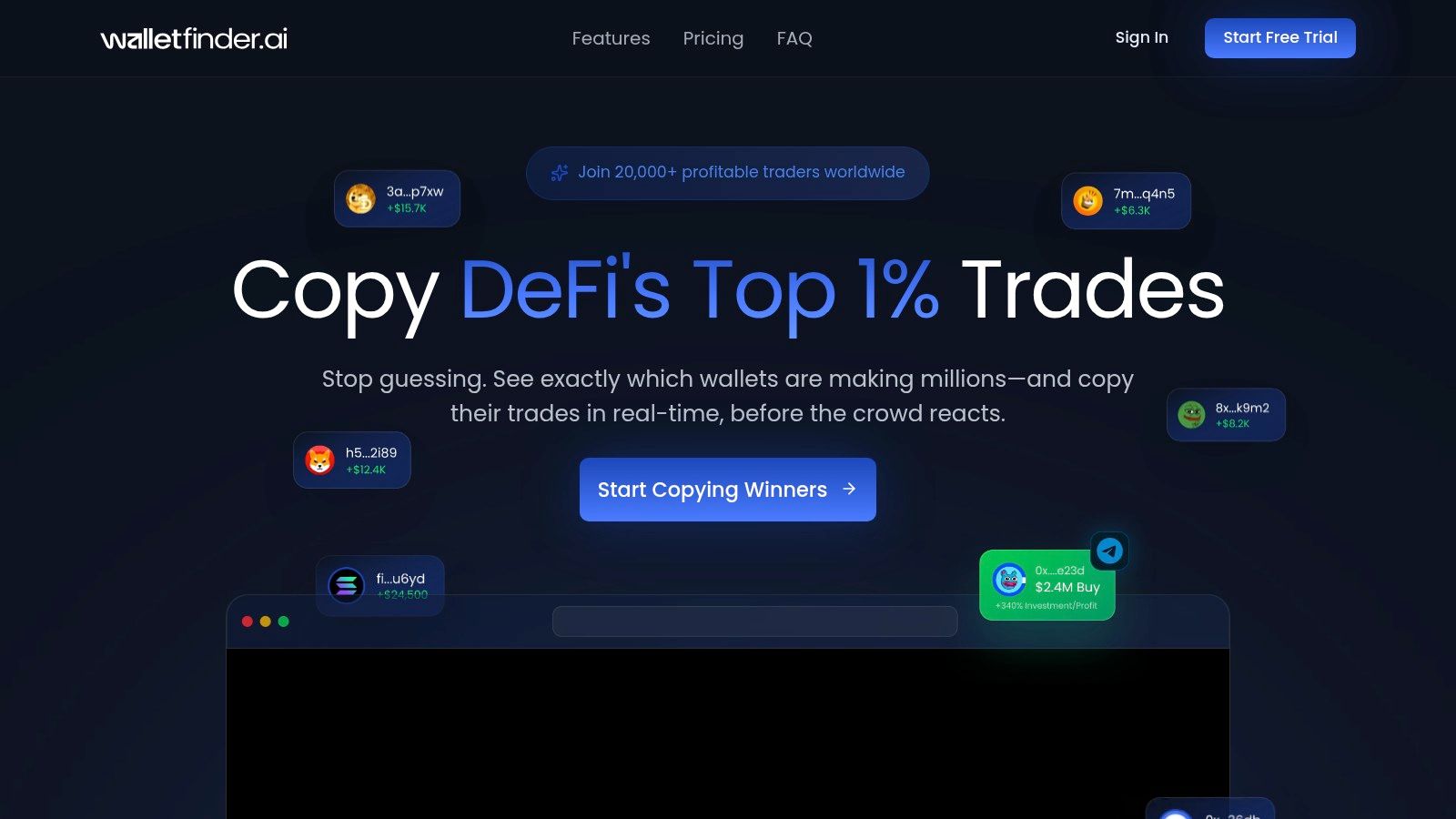
Wallet Finder.ai is where I’d start if the goal is finding trade ideas instead of just reacting to them. Most BSC traders spend too much time staring at token lists and not enough time following wallets that consistently get in early.
That’s the gap this platform fills well. It turns wallet activity into a usable signal stream.
Why it belongs at the top of the stack
Wallet Finder.ai supports BNB Chain as part of a broader cross-chain workflow, which matters if your best signals often start on one ecosystem and rotate into another. The useful part isn’t just that it shows wallet history. It’s that it helps narrow the field to wallets worth watching.
For active traders, that means:
- Find wallets by behavior: Filter for consistency, returns, recent gains, and other performance patterns instead of manually checking random addresses.
- Track complete trade histories: Entry timing, exits, wallet PnL patterns, and position sizing are all more useful than a simple “this wallet bought X.”
- Get alerts fast: Telegram and push alerts matter when you’re trying to act on a fresh BSC move instead of chasing it after social media notices.
- Export for deeper work: If you like reviewing trades off-platform, the exports and blueprints are practical, not fluff.
The platform also leans into security basics that serious users care about. It emphasizes encrypted connections, Stripe-secured payments, no storage of private keys, and authentication handled via AWS Cognito in the U.S.
What works and what doesn’t
What works is the workflow fit. You can use Wallet Finder.ai to identify a wallet buying into a BSC token, then move to BscScan for contract and holder checks, then to DexScreener or DEXTools for chart context, then execute through PancakeSwap or 1inch.
That sequence is far stronger than discovering tokens from a trending page alone.
Practical rule: Copy the process, not the trade. If a wallet buys a new BSC token, check what else that wallet has been buying, how it sizes positions, and whether it tends to scale in or all-in.
The main trade-off is obvious. Copy trading always carries timing risk. A wallet can be profitable and still leave followers with bad entries if they move size before you see the alert, or if liquidity is thin. Past profitable behavior doesn’t guarantee the next trade will be good.
Trial access is useful, but limited. A paid plan is where the full analytics become practical for daily use.
For traders who want one app for bsc discovery instead of a pile of disconnected dashboards, this is the strongest first tool in the workflow.
2. BscScan
BscScan is the tab that keeps you honest. If Wallet Finder.ai gives you the lead, BscScan tells you whether the lead is worth touching.
A lot of traders skip that step because block explorers feel slow and ugly compared with trading terminals. That’s a mistake.
Where BscScan earns its keep
BscScan was built by the Etherscan team and provides developer APIs for direct access to block explorer data via GET and POST requests, as described on the BNB Chain DappBay page for BscScan. Even if you never touch the API, that matters because it’s one reason so many analytics tools rely on it underneath.
For a trader, the useful pieces are simpler:
- Check the contract page: You want the actual token contract, not a copycat.
- Review holder distribution: A chart can look great while supply concentration is ugly.
- Inspect recent transfers: Watch how tokens move between wallets, LPs, and contracts.
- Review approvals and address activity: This helps when you’re managing wallet risk, not just trade entry.
If you’re newer to explorers, this guide on what a blockchain explorer is is worth bookmarking before you start relying on BscScan for trade validation.
Best use case on BSC
BSC moves fast enough that you need a fast verification habit. Mine is simple. If a token hits my radar, I open BscScan before I open the buy panel. Not after.
Don’t treat BscScan like a research archive. Treat it like a pre-trade filter.
The downside is usability. The interface is dense, and beginners often don’t know which sections matter. Also, if you’re building dashboards or bots, the more advanced API use cases usually push you toward paid tiers or tighter rate-limit planning.
Still, there’s no serious BSC workflow without it. This is the app for bsc verification, even if it doesn’t feel glamorous.
3. DexScreener
DexScreener is the speed tool. When liquidity appears on BSC and a pair starts moving, DexScreener is usually one of the fastest places to see whether it’s real, whether it’s expanding, and whether you’re already late.
That’s why memecoin traders keep it open all day.
Best for early pair discovery
DexScreener is strong when you need to answer three questions quickly:
- Is there a live pair worth watching
- Is liquidity meaningful enough to trade
- Is volume building or fading
It’s especially useful on BSC because new pools and short-lived narratives can rotate fast. You don’t need an overloaded terminal in that moment. You need a chart, liquidity context, and a watchlist you can scan in seconds.
Mobile access helps too. If you’re away from your desk and get a wallet alert, DexScreener is often the fastest way to sanity-check the pair before deciding whether to dig deeper.
The real trade-off
The strength is speed. The weakness is that speed attracts junk.
Trending and newly active pages can surface weak tokens just as easily as strong ones. DexScreener doesn’t replace contract review, holder checks, or wallet-context analysis. It works best after a signal, not as your only source of ideas.
A practical way to use it:
- Start with an external signal: Wallet alert, community monitor, or your own watchlist.
- Use DexScreener for price context: Check whether momentum is fresh or already extended.
- Move off fast if needed: If the chart is interesting, go straight to BscScan and execution.
I like it most for one specific job. If Wallet Finder.ai flags a wallet entering a BSC token, DexScreener helps answer whether the market is just waking up or whether the move has already become crowded.
For that, it’s excellent. As a standalone app for bsc trading research, it’s too thin. As the fast charting layer in a broader workflow, it’s exactly right.
4. DEXTools
DEXTools is what I use when DexScreener feels too light. It gives you more context, more features, and more ways to keep a trading session organized.
That extra depth helps if you’re not just hunting one-off entries.
Better for active session management
DEXTools works well for traders who want the market view and the wallet-adjacent view in one place. You can move from pair analysis to portfolio and positions tracking without switching mental modes as much.
The practical value is in features like:
- Richer pair analysis: Good when you want more than a bare chart and a liquidity snapshot.
- Alerts and Telegram tools: Useful if you’re managing several BSC setups at once.
- Favorites and tracking features: Better than trying to remember every pair manually.
- Multi-device workflow: Handy when your desktop is for analysis and your phone is for monitoring.
For heavy DEX users, DEXTools can feel more like a terminal than a chart site. That’s the appeal.
Who should skip it
If you’re still learning BSC, DEXTools can feel busy. There’s a lot going on, and not all of it improves decision quality. Newer traders often mistake more panels for more edge.
More indicators rarely fix a bad process. Better filtering does.
The other trade-off is access. Some of the better functionality sits behind subscriptions or token-based access models. That doesn’t make it bad, but it means you should know what problem you’re paying to solve.
I’d choose DEXTools over DexScreener when the session is already active and I’m managing multiple names. I’d choose DexScreener when I need a cleaner read on a fresh move. Used that way, they complement each other instead of competing.
As an app for bsc power users, DEXTools makes sense. As a first tool for beginners, it’s not my top pick.
5. PancakeSwap
A typical BSC trade starts before the swap. A wallet pops on Wallet Finder.ai, the chart confirms momentum, contract checks clear, and then the real question shows up fast. Where do you execute without donating edge on slippage or bad pool selection?
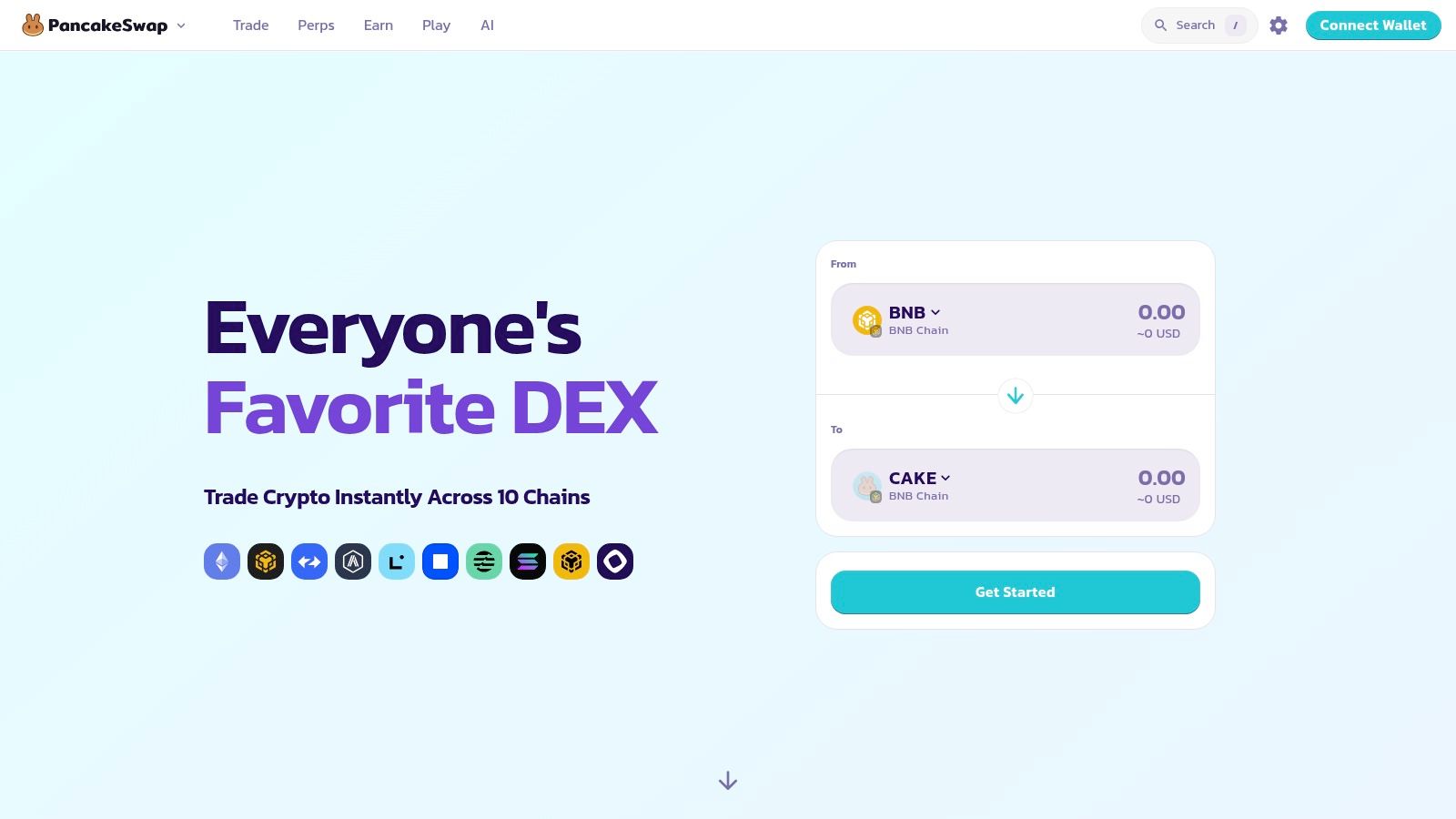
PancakeSwap is usually that venue. It sits at the center of most BSC trading workflows because it handles the part that actually matters once the research is done: getting size in and out with decent liquidity and minimal friction.
Execution quality on BSC often comes down to simple things. Is the pair liquid enough? Is routing finding the better pool? Can you get the trade filled fast enough to keep the original setup intact? PancakeSwap does that job well, which is why I treat it as the default execution layer after discovery and due diligence happen elsewhere.
What matters in practice:
- Deep coverage across BSC pairs: Useful when wallet tracking surfaces newer names alongside majors.
- Pool and routing infrastructure: Better odds of a clean fill than blindly hitting the first available path.
- LP functionality: Relevant for traders who also farm, hedge inventory, or provide liquidity selectively.
- Broad wallet compatibility: Easy to connect and execute without adding process overhead.
If you want the setup details, this PancakeSwap app guide for wallet connection and trading basics covers the mechanics.
The trade-off is simple. PancakeSwap is a strong execution venue, not a filtering tool. A token being available there does not make it safe, liquid enough for your size, or worth trading. That mistake costs newer BSC traders money every cycle.
I use PancakeSwap after the signal is already qualified. Wallet Finder.ai helps surface smart-money movement. BscScan helps verify the contract and holder behavior. DexScreener or DEXTools helps judge the chart, liquidity, and momentum. PancakeSwap is where that work turns into an actual position.
Best use cases:
- Entering and exiting core BSC trades
- Acting on wallet-based signals quickly
- Trading majors and stronger ecosystem names
- Running LP positions if you understand the inventory risk
The main risk is execution without context. Traders chase a fresh pair, set loose slippage, ignore taxes or pool quality, and blame the venue for a bad trade. PancakeSwap works best when the rest of the workflow has already done its job.
6. 1inch
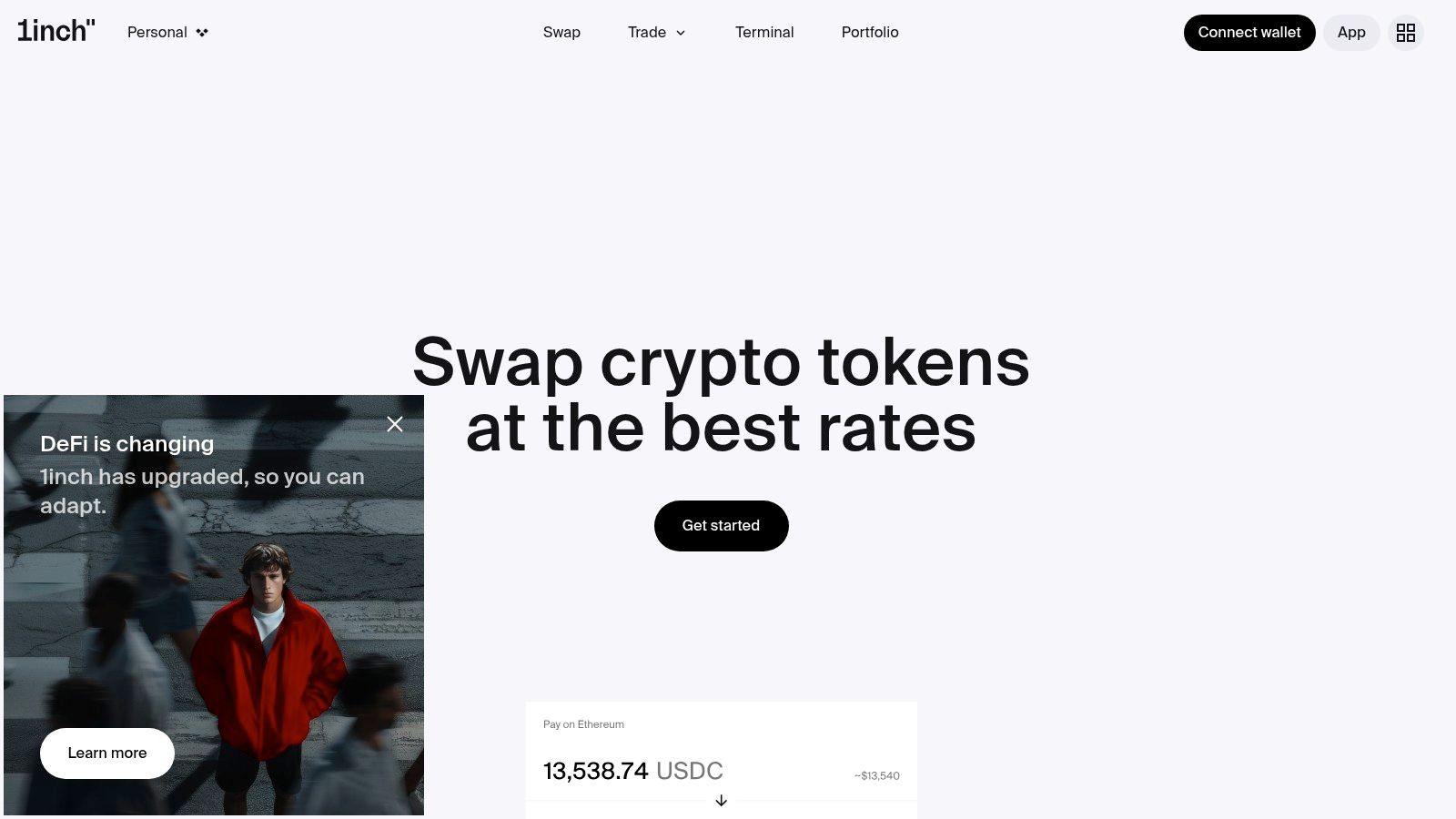
1inch is the execution upgrade when you don’t want to rely on a single venue path. On BSC, that matters most when liquidity is fragmented or when a fast-moving token punishes lazy routing.
If PancakeSwap is the default, 1inch is the “check before you click” layer.
When aggregation helps
The practical case for 1inch is simple. A direct swap on one DEX isn’t always the best swap. Routing across multiple venues can improve execution, especially when the pair is moving hard or your order size starts to matter.
What makes 1inch useful in a BSC workflow:
- Aggregator routing on BNB Chain: Better chance of finding cleaner execution than using one venue blindly.
- Protected execution modes: Helpful when volatility spikes and you care about adverse fills.
- Advanced swap logic: Better suited to traders who think about execution quality, not just entry ideas.
That’s why I treat 1inch as a second execution tab, not a replacement for everything else.
What to watch for
Aggregation doesn’t remove the usual risks. You still deal with network conditions, underlying DEX fees, and token-specific issues. And because support and features can change over time, it’s smart to check what’s currently live for BNB Chain before building habits around one specific mode.
The right use is selective:
- Use 1inch when size matters
- Use it when spreads feel messy
- Use it when you want a second opinion on routing
- Skip the extra step for tiny, straightforward swaps if speed matters more than optimization
A lot of BSC traders either overuse aggregators or never use them at all. The better approach sits in the middle. If your edge is entry timing, don’t waste time over-optimizing tiny orders. If your edge includes disciplined execution, 1inch deserves a place in the stack.
7. DeBank
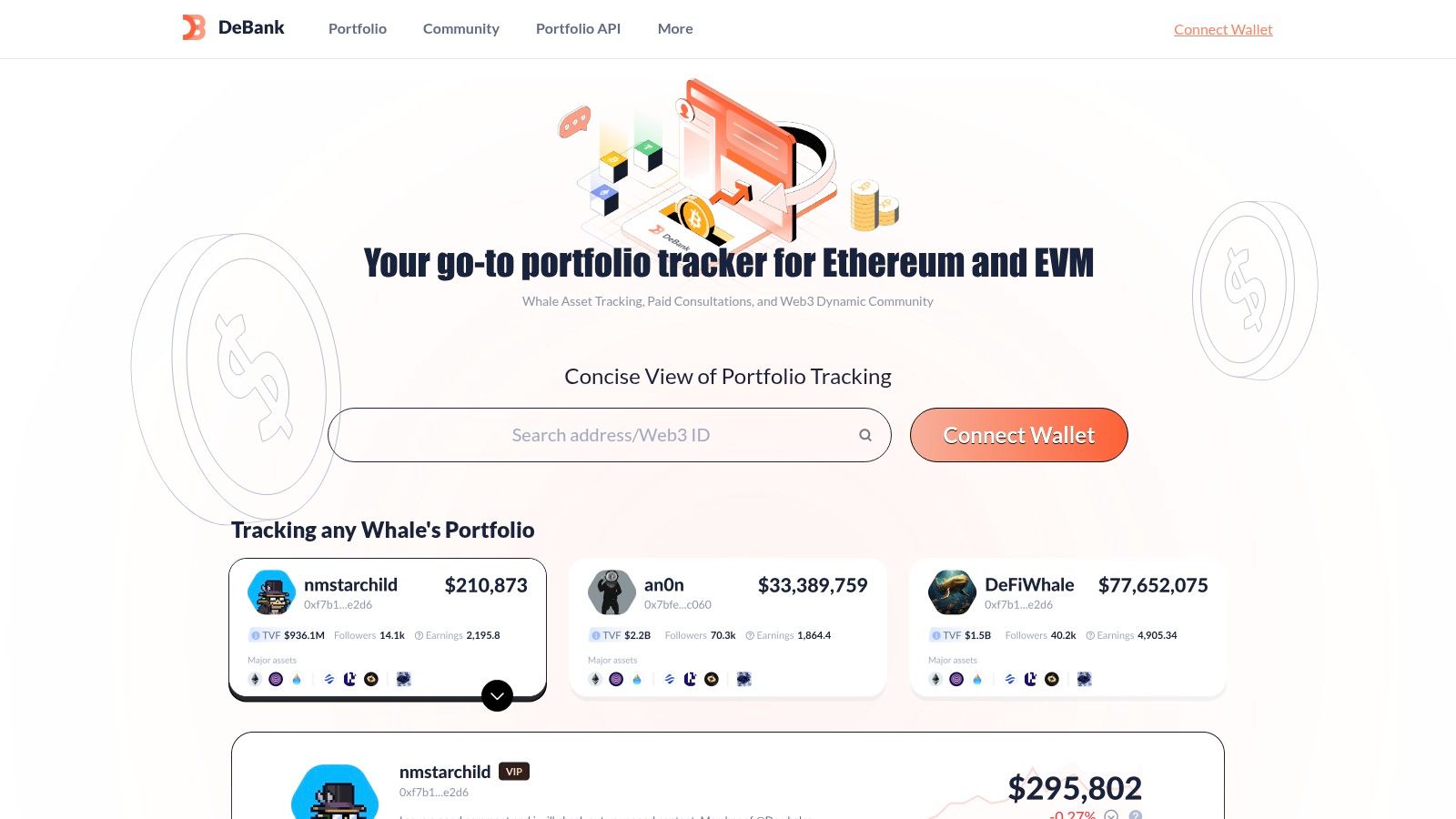
DeBank is the portfolio intelligence layer. It’s not where I discover BSC trades, and it’s not where I execute them. It’s where I check whether my wallet exposure is cleaner or uglier than I thought.
That sounds basic until you’ve got positions spread across swaps, LPs, and multiple chains.
Best use after the trade is live
DeBank is particularly useful when your BSC activity extends beyond spot token holdings. If you’re in liquidity pools, staking setups, or protocol positions, DeBank usually gives you a faster overview than trying to reconstruct everything manually.
What I like most:
- Clear wallet breakdowns: Good for seeing token balances and protocol exposure in one place.
- Multi-chain view: Useful if your BSC positions are only part of the overall book.
- Developer-friendly options: Teams and advanced users can build monitors and alerts on top of its APIs.
For active DeFi users, that makes it much more than a wallet viewer.
The trade-off in plain English
DeBank is strong at portfolio visibility. It’s weaker as a pure trading edge tool.
If you only do basic BSC swaps and rarely touch DeFi positions, parts of the product can feel more technical than you need. Some features are better suited to funds, builders, or users who want to monitor strategy exposure at the protocol level.
Still, I like DeBank for one reason. It catches lazy thinking. Traders often say they have “small exposure” to something, then open a wallet dashboard and realize that token, LP, and farming position overlap more than expected.
Check exposure by protocol, not just by token ticker. On BSC, hidden overlap is common.
As an app for bsc portfolio tracking, DeBank is strongest for users who are already doing enough on-chain activity to lose the plot without a proper overview.
8. Rabby Wallet

Rabby Wallet is the wallet I’d hand to someone who trades BSC often enough to need friction in the right places. Not annoying friction. Protective friction.
That distinction matters. A lot of wallet losses come from speed plus habit.
Why Rabby fits BSC traders
Rabby is built for EVM users, and BSC benefits from that focus. It supports many EVM networks, detects tokens and DeFi positions automatically, and puts transaction simulation and security checks in front of the signature step.
That pre-signing layer is the key feature.
For practical BSC use, Rabby is strong at:
- Transaction simulation before signing: You get a better chance to catch bad approvals or weird contract behavior.
- Security-oriented prompts: Helpful when interacting with unfamiliar BSC contracts.
- Local controls and whitelists: Better operational hygiene for frequent DeFi users.
- Smooth EVM workflow: Good if BSC is one stop in a wider EVM routine.
Who it’s best for
Rabby makes the most sense for people who connect to dApps regularly. If you only hold tokens and rarely use DeFi, the extra features may feel unnecessary. But if you trade launches, claim rewards, approve spenders, and interact with multiple protocols, the added visibility is worth it.
The limitation is straightforward. Rabby is EVM-focused. If your wallet life spans a lot of non-EVM ecosystems and you want one universal home, it’s less of a fit.
For BSC specifically, though, that focus is a plus. It’s tuned for the type of risk BSC traders face. Accidentally approving the wrong spender, signing blind into a questionable token contract, or moving too fast through an unfamiliar dApp flow.
I wouldn’t call Rabby the best beginner wallet. I would call it one of the best serious-user wallets.
9. Zerion
Zerion is for the trader who wants fewer moving parts. If you’d rather monitor, swap, export history, and keep a cross-chain view in one app, Zerion does that well.
It’s less specialized than some tools in this list. That’s the point.
The convenience play
Zerion’s strength on BSC is workflow compression. Instead of using one tool to track, another to review PnL, and another to export activity, you can do a lot of that in one interface.
That makes it useful for:
- Unified portfolio monitoring across chains
- In-app swaps and bridging
- PnL review and CSV exports
- Notification-driven position management
For users who care about tax-ready history or want cleaner records, the export side matters more than people admit.
Convenience has a cost
The trade-off is execution economics. In-app swap convenience can cost more than going directly to a DEX. That doesn’t mean Zerion is overpriced for everyone. It means convenience should be a deliberate choice.
I’d use Zerion when:
- I want one dashboard for many chains
- I care about clean portfolio history
- I’m managing positions, not hunting the absolute best on-chain routing
- I value mobile usability
I wouldn’t use it as my primary venue for every BSC trade if price precision is the main objective. A direct DEX or aggregator often makes more sense there.
So the right framing is this. Zerion isn’t the sharpest specialized app for bsc trading. It’s one of the best generalist apps for people who want a cleaner command center.
10. Trust Wallet

A common BSC trading setup looks like this. Wallet Finder.ai surfaces a wallet worth tracking, BscScan confirms what the contract is doing, DexScreener shows whether momentum is real, and then the trade gets executed from a phone before the window closes. Trust Wallet fits that last step well.
Trust Wallet remains one of the simplest ways to get onto BSC, especially for users who live on mobile. It handles BEP-20 assets cleanly, connects to dApps without much setup, and keeps the learning curve low enough that you can focus on the trade instead of the wallet.
Where Trust Wallet fits
Trust Wallet works best as a practical execution and monitoring wallet. Open the app, connect to a BSC dApp, approve what you need, and manage positions without dragging a desktop setup everywhere.
That matters more than many traders admit.
On BSC, missed entries often come from small operational problems, not bad thesis quality. The wallet is confusing. Gas is underfunded. A dApp connection fails on mobile. Trust Wallet reduces that friction for basic DeFi tasks, which is why it still earns a place in a real app stack.
It is a strong fit for:
- Mobile-first BSC trading and position checks
- Simple dApp connections through WalletConnect
- Holding and sending BEP-20 assets without extra setup
- Newer users who need a fast, familiar wallet
If you’re still comparing options, this guide to choosing a Binance Smart Chain wallet covers the trade-offs in more detail.
The trade-off for active traders
Trust Wallet is convenient, but convenience is not the same as control. Once trading size goes up or you start interacting with riskier contracts, wallet quality is no longer just a UX question. It becomes a security and execution question.
Advanced users often want clearer transaction previews, better approval visibility, and tighter guardrails before signing. That is why many serious BSC traders use Trust Wallet as a secondary mobile wallet instead of their main operating wallet. Rabby is usually stronger for review and signing discipline. Trust Wallet is usually faster for basic access on the go.
That distinction matters in practice. I would use Trust Wallet to monitor positions, hit routine dApps, or manage smaller mobile balances. I would be more cautious about using it as the only wallet for frequent contract approvals, larger DeFi positions, or high-risk token runs.
For casual and intermediate users, Trust Wallet remains a sensible app for bsc. For a tighter workflow, it works best as the execution layer that sits underneath your research stack, not as the entire system.
Top 10 BSC Apps, Feature Comparison
A good BSC setup is less about picking one app and more about putting the right tools in the right order. I use this table as a workflow check. Start with signal discovery, verify on-chain facts, read the pair, execute with the best route, then monitor risk and approvals after entry.
| Product | Core features | UX & Quality | Price & Value | Target audience | Unique edge |
|---|---|---|---|---|---|
| 🏆 Wallet Finder.ai | Smart money wallet tracking, full PnL, win streaks, alerts, exportable datasets, custom charts | ★★★★★ (4.9/5), real-time tracking | 💰 7-day trial; Basic ≈ $21/mo; Pro tiers; Lifetime $1,497 | 👥 Copy traders, on-chain analysts, funds, retail traders | ✨ Finds early wallet-led signals you can turn into repeatable watchlists |
| BscScan | Block explorer, contract verification, token holders, public API | ★★★★ reliable, industry standard | 💰 Free; Pro APIs paid | 👥 Devs, auditors, token researchers | ✨ Canonical on-chain data and reputation labels |
| DexScreener | Instant pair discovery, real-time charts, alerts, mobile apps | ★★★★ very fast for new pairs | 💰 Free; mobile apps | 👥 Memecoin and early-token traders | ✨ Rapid pool indexing and volume spike detection |
| DEXTools | Real-time charts, portfolio and positions, alerts, Telegram bots | ★★★★ feature-rich for active traders | 💰 Freemium; pro features, DEXT perks | 👥 Active DEX traders, community traders | ✨ Social trading tools, positions tracking, and alert depth |
| PancakeSwap | DEX liquidity, smart routing (v2/v3/Infinity), LP concentrated positions | ★★★★★ deepest BSC liquidity | 💰 Protocol fees 0.01% to 0.25% | 👥 DEX traders, liquidity providers on BSC | ✨ Deep liquidity and low fee tiers on the chain that matter most |
| 1inch | Aggregator routing across DEXes, Fusion MEV protection, intent swaps | ★★★★ often finds better execution | 💰 Free; execution and network fees apply | 👥 Traders seeking optimal routing and MEV protection | ✨ Aggregator routing plus MEV-aware execution paths |
| DeBank | Multi-chain portfolio and position breakdowns, Pro/OpenAPI | ★★★★ clean portfolio UX | 💰 Free; Pro API for higher limits | 👥 Funds, analysts, teams needing APIs | ✨ Broad wallet and protocol visibility across chains |
| Rabby Wallet | EVM wallet, tx simulation, approval controls, MEV guard | ★★★★ security-first UX | 💰 Free | 👥 DeFi power users, security-conscious traders | ✨ Pre-sign simulation, whitelists, and tighter approval review |
| Zerion | Multi-chain wallet plus PnL tracking, CSV export, in-app swaps and bridges | ★★★★ strong unified monitoring UX | 💰 Freemium; Premium lowers fees and adds exports | 👥 Portfolio managers, tax-conscious users | ✨ Built-in PnL tracking and export tools for recordkeeping |
| Trust Wallet | Mobile self-custodial wallet, dApp browser, FlexGas | ★★★★ mainstream mobile UX | 💰 Free; in-wallet swap fees (~0.7%) | 👥 Casual and mobile users, BSC dApp users | ✨ Fast mobile access with an integrated dApp browser |
Start tracking smart money today
Join thousands of traders using WalletFinder.ai to find profitable wallets and copy their trades.
Start Free Trial →

