Master Dynamo Pool Management for Top Yield

Wallet Finder

Blank calendar icon with grid of squares representing days.

April 19, 2026

You open a concentrated liquidity position, the pair looks healthy, volume is active, and the APR on the front end seems good enough to justify the click. A few days later, price drifts, your range goes stale, fee generation slows, and your PnL starts reflecting a problem you didn’t sign up for. Not because the pool is broken. Because passive LPing in volatile markets usually is.

That’s the fundamental approach for dynamo pool management in DeFi. It isn’t about picking a pool and hoping the math carries you. It’s about treating liquidity like a trading operation. You define ranges with intent, monitor when those ranges stop working, and rebalance before a decent setup turns into dead capital.

Most LPs learn the same lesson the expensive way. The edge doesn’t come from the first deposit. It comes from what you do after entry.

Beyond Just Setting and Forgetting

A bad LP trade rarely blows up all at once. It leaks.

You deposit into a concentrated liquidity pool around the current price because you want stronger fee density. At first, it works. Swaps hit your range. Fees come in. Then price trends in one direction, your inventory shifts toward the weaker side of the pair, and the position stops earning the way the dashboard promised. You haven’t exited, but you’re no longer really participating either.
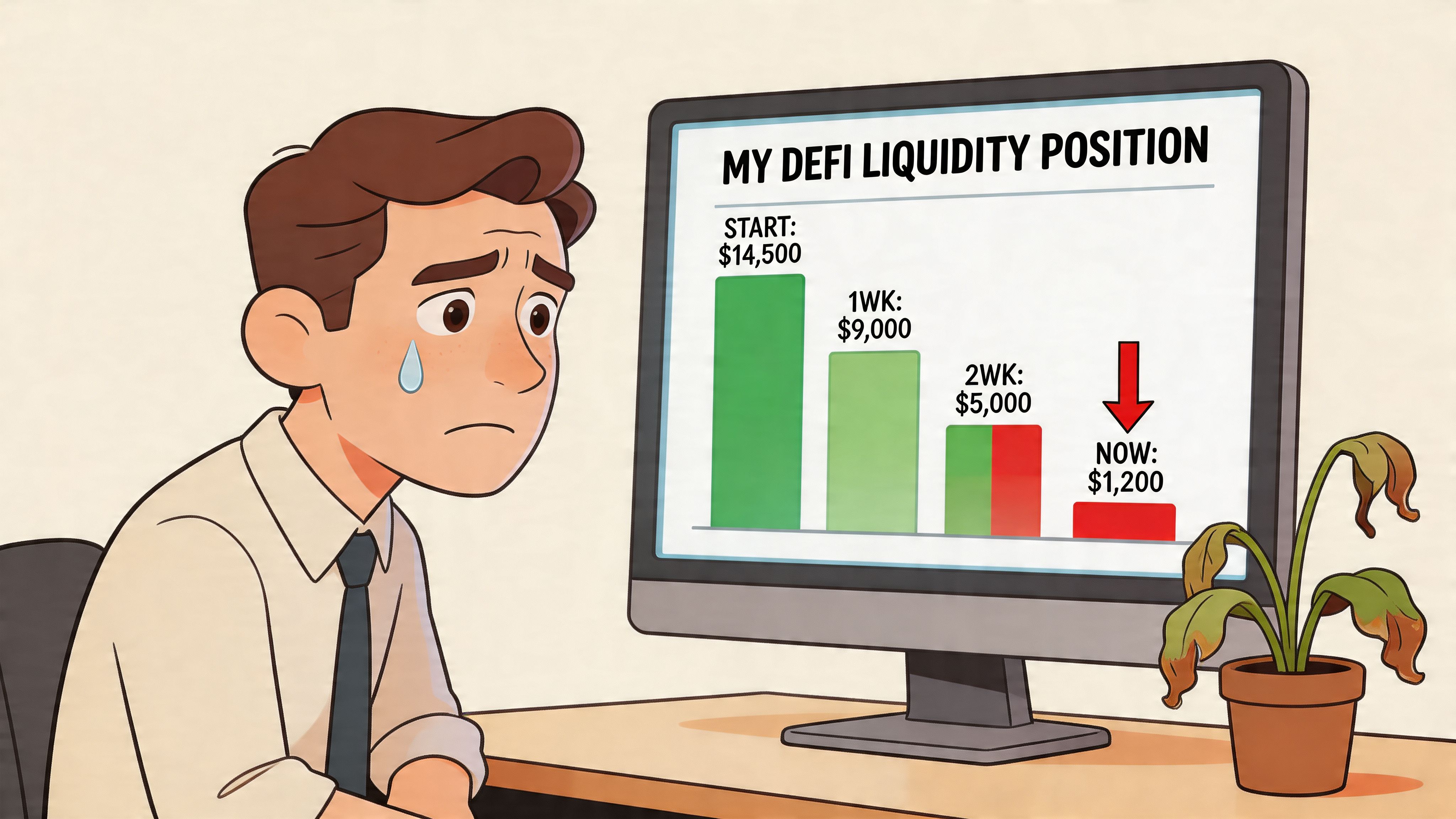
A distressed office worker looking at a computer screen showing a declining DeFi liquidity position graph.

That’s why I use the phrase dynamo pool management as a mindset. The useful metaphor comes from a real company named Dynamo Pool Management, which operates as a for-profit subsidiary of a non-profit, with profits supporting the Dynamo Swim Club, as described on the Dynamo Pool Management about page. In DeFi terms, that’s the right mental model. Your liquidity positions should feed your broader portfolio. They shouldn’t become isolated bets that gradually drain it.

What passive LPs usually miss

The common mistake is assuming fee income will compensate for poor positioning. Sometimes it does for a while. Over longer stretches, weak range placement and slow reaction times usually hand the advantage to more active participants.

A strong LP setup does three things:

  • Keeps capital in the active zone: If your range sits far from current price, you’re not collecting the fees you modeled.
  • Protects inventory quality: You need to care what asset you’ll hold if price moves hard in one direction.
  • Supports the portfolio outside the pool: Fees are useful only if they improve the whole book, not just the vanity APR of one position.

Practical rule: If you can’t explain when you’ll adjust a range before you enter it, you don’t have a liquidity strategy. You have a deposit.

What works and what doesn’t

What works is narrow focus with active oversight. Pick pools you understand. Know why that pair trades. Know who uses it. Know what kind of movement invalidates your current range.

What doesn’t work is copying broad LP advice from social posts that treat all pools the same. A stablecoin pool, an ETH-stable pool, and a volatile alt pair each punish different mistakes. The traders who stay profitable don’t “set and forget.” They decide what the position is supposed to do, then they manage it like it matters.

Foundations of Smart Liquidity Provisioning

Concentrated liquidity rewards precision and punishes laziness. That’s the appeal and the trap.

When you provide liquidity in a concentrated AMM, you choose a price range instead of supplying capital across the full curve. That gives you more fee efficiency inside the range, but once price leaves it, your capital stops working as intended. So the first job isn’t hunting for the highest displayed yield. The first job is understanding the setup you’re entering.
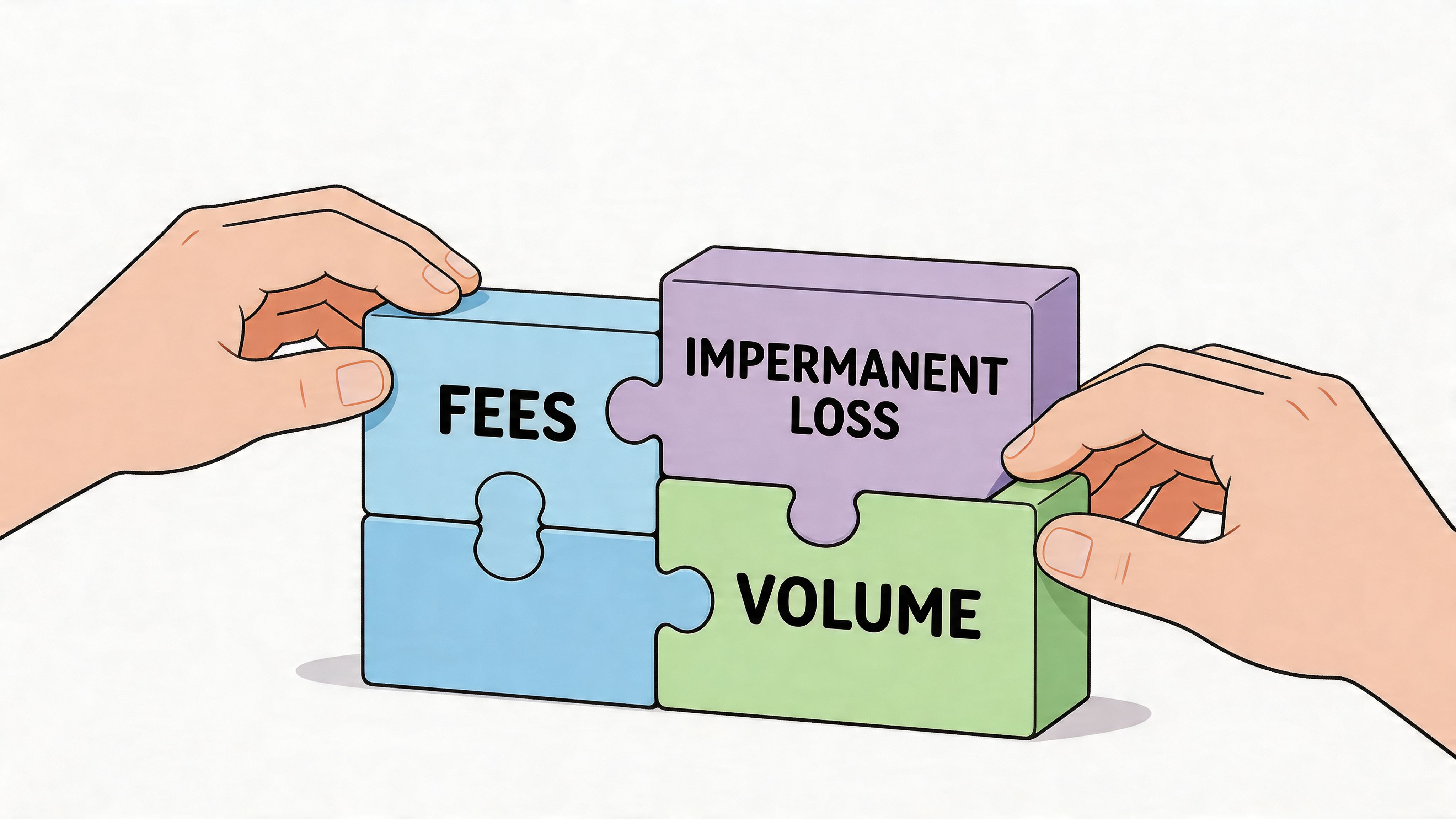
A digital illustration showing hands fitting together puzzle pieces labeled fees, impermanent loss, and volume.

There’s a useful metaphor from the labor market. Some roles pay about 25% below the national average, and the point for LPs is obvious: uninformed participants often earn meaningfully below what a better setup could have produced, as framed in this salary comparison discussion. In DeFi, below-average execution usually comes from poor pool selection, bad range width, and mismatched fee tiers.

The three decisions that matter first

Price range

A narrow range increases fee concentration, but only while price stays inside it. That makes narrow bands better for pairs with cleaner structure and more predictable trade flow. Wider ranges reduce how often you need to intervene, but they dilute fee density.

Ask one question before setting width: Am I trying to maximize fee capture or maximize time in range?

If you can’t monitor actively, don’t pretend you’ll maintain a very tight range well.

Fee tier

Higher fee tiers can work when the pair is volatile and traders will tolerate more slippage. Lower fee tiers fit pairs where efficiency matters more than margin per swap. The wrong fee tier can make even a decent range underperform because your position isn’t aligned with the pair’s trading behavior.

Token relationship

The true impact of this is frequently underestimated. Some pairs move with each other. Others only look attractive because the fee number is large. Correlated assets usually create cleaner LP conditions. Uncorrelated assets can still work, but your range and rebalance plan have to be sharper.

A practical pool selection checklist

Use this before every new deployment:

  1. Check the pair’s behavior

    • Correlation first: If both assets often move in related ways, the position is easier to manage.
    • Narrative risk second: If one token trades mostly on hype, your inventory can deteriorate fast.
  2. Read the volume pattern

    • Consistent flow beats event spikes: You want repeatable swap activity, not one hot day that makes the APR screen look heroic.
    • Look for tradable behavior: Pools with random bursts and long dry periods are harder to manage.
  3. Match the pool to your time horizon

    • Short attention span: Use simpler, more forgiving ranges.
    • Active desk mindset: Tighter bands can make sense if you will monitor them.
  4. For a broader grounding in LP mechanics, this guide to crypto liquidity pools is worth reviewing before you size up a new position.

    How I set an initial position

    I don’t start by maximizing. I start by validating.

    DecisionGood starting biasWhat to avoid
    Pair choiceAssets with understandable trade flowTokens you can’t value outside the pool
    Range widthWide enough to survive normal movementHyper-tight bands without monitoring time
    Position sizeSmall enough to observe behavior firstFull allocation on first entry
    Rebalance triggerPredefined before depositMaking it up after price moves

    Start with a position size that lets you learn the pool’s rhythm without forcing emotional decisions.

    That last point matters. A first deposit should tell you how the pair behaves in practice. If the pool trades the way you expected, then scale. If not, you’ve paid tuition cheaply instead of committing serious capital to a weak read.

    Active Rebalancing and Fee Optimization Strategies

    Every concentrated liquidity position has an expiration point. Not on-chain. In practical usefulness.

    The position becomes inefficient when price approaches the edge of your range, when inventory drifts too far toward one asset, or when the fee opportunity no longer compensates for the risk you’re carrying. That’s why active rebalancing sits at the center of good dynamo pool management. It’s the difference between managing a strategy and babysitting a stale position.

    A comparative infographic illustrating the differences between set and forget passive pool management and active rebalancing strategy.

    Why set and forget fails

    A passive LP setup usually breaks in one of two ways. Price leaves the active range, so fee generation dries up. Or price grinds toward one side long enough that your asset mix changes into something you no longer want to hold at that weight.

    Neither problem fixes itself.

    If a trader actively manages entries and exits on directional trades, but treats LP positions as passive, they’re managing only half the risk book.

    Three ways to rebalance

    Manual rebalancing

    This is still the cleanest approach if you understand market structure and watch your positions. You move the range when price action invalidates the original placement, when volume migrates, or when the pair’s behavior changes.

    What works here is flexibility. You can account for support and resistance, volatility compression, trend acceleration, and changes in sentiment. What doesn’t work is emotional intervention. If you rebalance only after frustration sets in, you’re late.

    Manual rebalancing fits traders who already think in scenarios, not fixed rules.

    Time-based rebalancing

    Some LPs prefer a schedule. They review and adjust daily, every few days, or weekly depending on the pair. This is less precise, but it prevents total neglect.

    The upside is discipline. The downside is obvious. The market doesn’t care about your calendar. A scheduled review may be too early and waste gas, or too late and leave you holding a dead range for longer than necessary.

    Time-based methods work best when combined with basic price alerts.

    Automated vaults

    Vault products such as Gamma and Arrakis reduce the operational burden by outsourcing part of the range management process. For many users, that’s a fair trade. You give up some direct control for simpler execution.

    The issue is that automation follows a framework, not your full portfolio context. A vault might manage the position correctly on its own terms while still leaving you with exposures you wouldn’t have chosen manually.

    Comparison of Rebalancing Strategies

    StrategyProsConsBest For
    Manual rebalancingHighest flexibility, adapts to market context, supports custom risk viewsRequires time, stronger judgment, and gas disciplineActive traders who already monitor charts and positions
    Time-based rebalancingSimple routine, easier to systematize, reduces neglectCan miss fast moves, may trigger unnecessary adjustmentsPart-time LPs who want structure without full automation
    Automated vaultsLower hands-on workload, convenient execution, easier for diversified usersLess control, strategy logic may not match your portfolio goalsUsers who want exposure without frequent manual management

    My preference by pool type

    I don’t use the same method across all pairs.

    • Stable or tightly correlated pairs: Time-based reviews often work fine because the market structure is less chaotic.
    • Major volatile pairs: Manual rebalancing usually gives better control when trend and momentum matter.
    • Pairs I can’t watch closely: I’d rather use a vault than pretend I’m actively managing when I’m not.

    Fee optimization is not just range width

    A lot of LP advice treats fees as a simple function of being closer to price. That’s incomplete.

    Fee optimization comes from the interaction of four things:

    • Being in range often enough
    • Choosing a pair with real trade flow
    • Picking a fee tier aligned with trader behavior
    • Not overpaying in adjustments

    That last point gets ignored. A brilliant rebalance plan can still underperform if you churn too much. Good LPs don’t just chase more fees. They ask whether the next adjustment has a positive expected impact after costs and inventory effects.

    A workable decision process

    When I review a position, I’m usually deciding between three actions:

    1. Leave it alone because price is still trading where my original thesis holds.
    2. Shift the range because the pair still offers opportunity, but the current placement no longer does.
    3. Exit entirely because the setup I wanted is gone.

    That third option matters. Not every pool deserves a rebalance. Some deserve capital withdrawal.

    Mitigating Impermanent Loss and Hidden Risks

    Most new LPs treat impermanent loss like a mysterious penalty that appears after the fact. In practice, it’s more manageable than that. IL is what happens when your inventory changes because price moves, and that new mix underperforms holding the assets outright.

    The important part isn’t the textbook definition. The important part is recognizing when the fee opportunity is no longer compensating for the inventory shift.

    A useful analogy comes from real pool operations. In the physical world, 40% of community pools faced regulatory fines for protocol failures, and the lesson for DeFi is straightforward: when operators ignore controls, preventable damage follows, as discussed in this non-profit pool management note. In LPing, failing to monitor IL, smart contract exposure, and asset-specific failure modes is the financial version of skipping safety protocols.

    How I think about IL before entry

    I don’t start with formulas. I start with scenarios.

    If token A runs hard against token B, ask what you’ll own after the move. If the answer is “mostly the asset I least want after that move,” the setup needs more caution. Wider ranges can reduce maintenance pressure, but they don’t erase the core inventory problem.

    Pair selection does a lot of hidden work. Correlated assets generally make IL easier to live with. Highly divergent assets can produce fee numbers that look tempting while building a much worse inventory outcome underneath.

    A practical risk screen

    Before entering a pool, check these in plain language:

    • Correlation risk: Are these assets likely to move together enough for LPing to make sense?
    • Smart contract risk: Has the protocol earned your trust, or are you reaching for yield in code you barely know?
    • De-peg or structural asset risk: If one asset depends on a peg, wrapper, or external mechanism, what happens when that assumption breaks?
    • Liquidity exit risk: Can you unwind without ugly slippage or operational friction?

    For a deeper playbook on offsetting LP risk, this article on dynamic hedging for impermanent loss is a strong companion read.

    Risk lens: A pool can be profitable on a dashboard and still be wrong for your book if the inventory you’re accumulating makes the rest of your portfolio worse.

    What actually reduces damage

    Some methods are simple and effective:

    • Choose cleaner pairs: High-correlation pairs usually behave better than narrative-driven mismatches.
    • Use wider ranges when volatility is unstable: You’ll collect less concentrated fee income, but you’ll avoid constant repositioning.
    • Exit when the thesis breaks: Holding and hoping is not risk management.
    • Limit protocol sprawl: Fewer, higher-conviction venues are easier to monitor than scattered positions everywhere.

    IL also isn’t the only hidden risk. Oracle issues, governance changes, thin liquidity in stressed conditions, and token-specific mechanics can all turn a decent LP position into a bad one fast. Good dynamo pool management means acting like a risk manager first and a yield farmer second.

    The Pro's Edge With On-Chain Intelligence

    The jump from competent LP to consistently strong LP usually comes from one shift. Stop guessing what good positioning looks like. Start studying wallets that already do it well.

    That sounds obvious, but most traders still operate from front-end metrics, social posts, and delayed narratives. None of those show you how skilled LPs size, rebalance, and rotate. On-chain behavior does.

    A detective examines blockchain data blocks displaying liquidity and APY information using a magnifying glass.

    There’s a useful analogy from service operations. Manual, inefficient processes can lead to 60% annual turnover, which is a reminder that systems break down when people try to manage too much by hand, as framed in this staffing operations discussion. LP research has the same problem. If you manually scan wallets, piece together swaps, and try to notice position changes after the fact, you’ll miss the moves that matter.

    What top LP wallets reveal

    When you study strong liquidity providers on-chain, you’re not looking for a magic wallet. You’re looking for repeatable behaviors:

    • Where they deploy
    • How wide they set ranges
    • How often they reposition
    • When they stop defending a pool and leave
    • Whether they scale in, rotate, or concentrate

    That last point is where amateurs usually lose the plot. Good LPs don’t just find decent pools. They know when a good pool stops being good.

    A strong primer on this workflow is learning how to structure your own on-chain analysis process.

    A usable workflow for copying strong LP behavior

    I like a four-step workflow because it keeps the process practical.

    Find wallets with repeatable behavior

    Don’t chase one-off outliers. You want wallets that show coherent decisions across time. If a wallet repeatedly interacts with concentrated liquidity pools, adjusts ranges rather than abandoning them blindly, and avoids chaotic spray-and-pray behavior, it’s worth a closer look.

    Reverse-engineer the position logic

    Once a wallet is on your watchlist, inspect the sequence of actions. Did they enter after volatility compressed? Did they tighten ranges after trend stabilized? Did they pull liquidity before a sharp directional move?

    This reveals the true value. You’re not just copying destinations. You’re inferring the rules.

    Good wallet tracking doesn’t replace judgment. It lets you borrow tested judgment while you sharpen your own.

    Separate signal from prestige

    Some wallets are profitable because they have speed, relationships, or private flow you can’t replicate. Others are profitable because they manage positions well in public liquidity. Focus on the second group.

    For LP copy-trading, I care more about interpretable behavior than brand-name addresses.

    Build an alert-driven process

    The key isn’t discovering a wallet once. The key is knowing when it acts again. Real-time notifications matter because concentrated liquidity positions age quickly. If you learn about a range adjustment too late, the best part of the move is gone.

    Here’s a useful walkthrough before you set that up:

    What this changes in practice

    Once you rely on on-chain intelligence, your LP process improves in three ways.

    AdvantageWhat changes
    Better entriesYou stop choosing pools in isolation and start using observed behavior from proven operators
    Faster adjustmentsAlerts cut the lag between a market change and your response
    Cleaner exitsYou learn to recognize when skilled wallets stop defending a thesis

    This approach also changes your psychology. You spend less time searching for perfect public frameworks and more time reacting to evidence. That’s a better fit for DeFi because high-quality LP data is often fragmented, delayed, or hidden inside transaction history rather than neatly summarized on dashboards.

    Your Blueprint for Profitable Pool Management

    Profitable dynamo pool management comes down to a simple truth. Liquidity provision is not passive income in any serious sense. It’s active inventory management wrapped in an AMM interface.

    The blueprint is straightforward if you keep it disciplined:

    • Enter selectively: Choose pairs you can understand, not pools with the most seductive front-end numbers.
    • Define the job of the position: Know whether the range is built for fee density, durability, or inventory control.
    • Rebalance with purpose: Adjust because your thesis changed, not because you’re uncomfortable.
    • Manage risk beyond IL: Protocol risk, asset structure, and exit conditions matter as much as price movement.
    • Use on-chain evidence: Strong LPs leave footprints. Study them.

    Researchers have noted that thorough technical benchmarks for new DeFi pool management strategies are often scarce, which makes the most reliable edge the observable behavior of wallets that already execute well, as reflected in this research integrity note on following available data. That’s the practical edge. Public theory is incomplete. On-chain behavior is specific.

    If you want to manage liquidity like a professional, stop treating LP positions like parked capital. Treat them like live trades that need context, rules, and evidence. That shift alone changes everything.


    If you want a faster way to find profitable wallets, study their LP behavior, and react when they move, Wallet Finder.ai gives you a practical edge. You can track smart money across major chains, build watchlists, review full wallet histories, and get alerts when the wallets you follow buy, sell, or rotate. For traders who want to turn on-chain footprints into an actionable pool management workflow, it’s a strong place to start.