Guide to Lone Wolf Transactions in DeFi

Wallet Finder

Blank calendar icon with grid of squares representing days.

February 15, 2026

In the DeFi wilderness, you'll find a rare breed of trader. They operate in the shadows, executing high-conviction trades based on their own deep research. We call these lone wolf transactions.

These traders are the ones who spot alpha long before the rest of the market catches on, making their on-chain moves a powerful leading indicator for emerging trends.

Understanding Lone Wolf Transactions in DeFi

Think of a lone wolf trader like a skilled hunter moving silently through the forest, spotting opportunities everyone else misses. This is exactly how they operate in decentralized finance. They aren't chasing social media hype, following the herd into coordinated group buys, or apeing into the flavor of the week.

Instead, they rely on sharp instincts and even sharper research to execute precise, impactful trades. They are the complete opposite of large DAOs or trading syndicates that move slowly and loudly.

A lone wolf’s power comes from their independence and speed. This agility lets them jump into and out of positions before bigger players even know an opportunity exists, and it's this independent streak that makes their on-chain footprint so incredibly valuable to follow.

The Anatomy of a Lone Wolf Trader

So, what really sets these elusive operators apart? It boils down to a few core traits that separate them from your average DeFi participant or mindless bot.

  • Independent Research: They don’t just listen to influencers; they do their own homework, digging through fundamental and on-chain data to build a unique investment thesis.
  • High Conviction: These aren't small, speculative bets. When a lone wolf sees an opportunity, they allocate serious capital, signaling immense confidence in their play.
  • Early Mover Advantage: Lone wolves are often the very first to interact with new protocols or buy up nascent tokens, getting in position long before the real price discovery begins.

A lone wolf's wallet tells a story of strategy, conviction, and timing. By learning to read their on-chain history, you gain a masterclass in spotting alpha before it becomes common knowledge.

When we talk about lone wolf transactions, we mean trades executed by a single wallet acting on its own. These solo operators often pull in massive profits simply by being first.

Just look at the Solana memecoin frenzy in Q3 2025. An incredible 78% of the top 1,000 most profitable trades were made by lone wolf wallets. They sniped low-liquidity launches before bots or syndicates could pile in, averaging a stunning 450% ROI within just 48 hours. You can dig into more stats about the DeFi market's growth over at Mordor Intelligence. By learning to track these elusive players, you can uncover powerful signals for your own portfolio.

Identifying a Lone Wolf Trader On-Chain

Spotting these expert traders means looking beyond a simple wallet balance and really digging into their on-chain behavior. Lone wolf traders leave behind a trail of digital fingerprints, but you have to know what you’re looking for. Their actions tell a story of independent thinking and deep conviction, which cuts right through the noise of trading bots and crowd-fueled hype.

If you know how to analyze their transactional patterns, you can start picking out the signals that separate the pros from the pack. These aren't just random gambles; they're calculated moves backed by serious research.

The concept map below breaks down the core pillars that define a lone wolf trader.
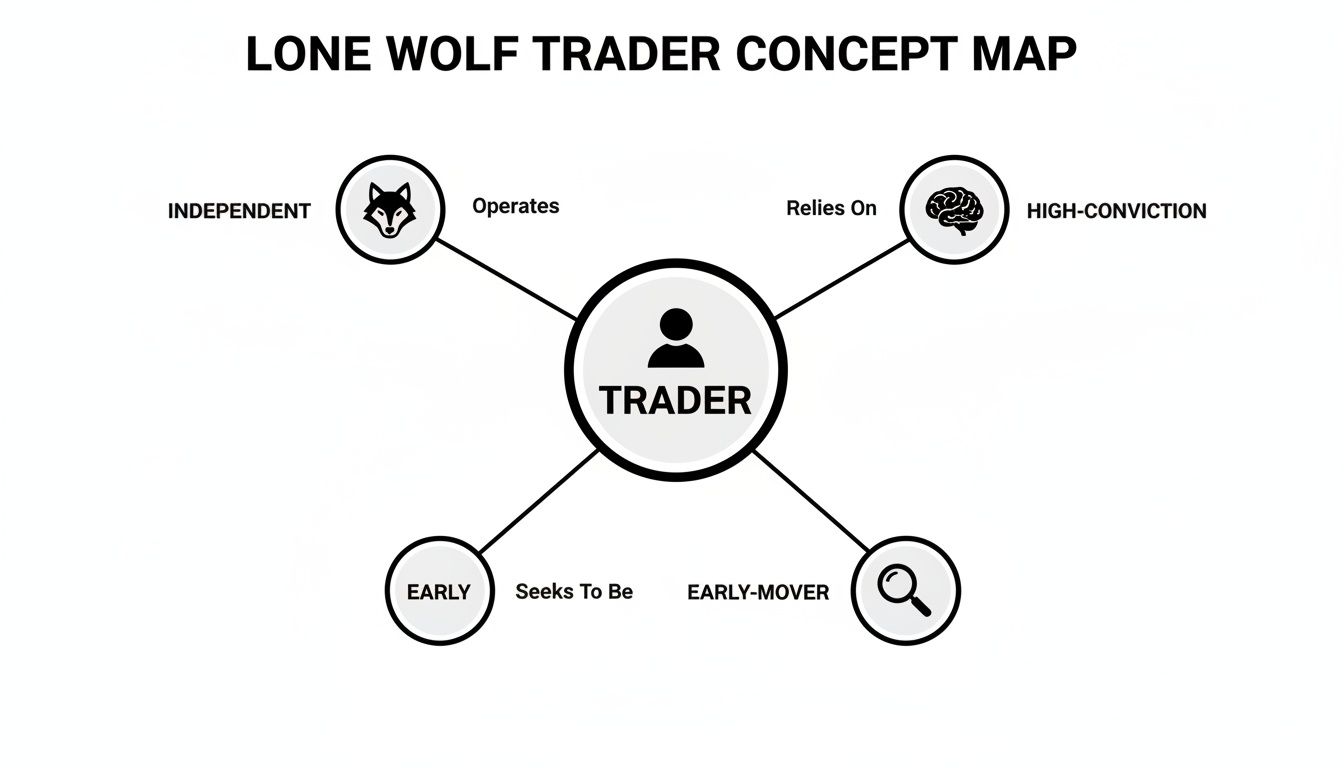
A concept map illustrating the traits of a Lone Wolf Trader, emphasizing independence, conviction, and being an early mover.

As you can see, it's the combination of independence, high conviction, and an early-mover mentality that shapes the profile of a successful lone wolf. Now, let’s get into the specific on-chain signals that give them away.

Core Behavioral Signals To Watch For

Unlike bots that run 24/7 with machinelike precision, lone wolves have a distinctly human rhythm to their trading. Their activity is often irregular, with bursts of trades concentrated in certain hours followed by long periods of radio silence. This kind of pattern strongly suggests a human is behind the wheel, actively researching and waiting for the perfect moment to execute.

Another dead giveaway is their knack for being an early mover. These traders are frequently among the very first wallets to buy a new token, sometimes just minutes after it launches on a DEX. This isn't just dumb luck; it's a clear sign they’ve done their homework and have the confidence to jump in before any social proof or hype has a chance to build.

One of a lone wolf's most telling traits is their interaction with obscure, under-the-radar smart contracts. While the average joe sticks to household names like Uniswap, a lone wolf is out there hunting for undiscovered gems, actively engaging with new, unaudited protocols with low Total Value Locked (TVL).

This ability to find and vet new projects before anyone else is the true hallmark of a sophisticated operator. They aren't following trends—they're starting them. Their willingness to take on the risk of engaging with less-established protocols is a powerful signal of their deep expertise.

Wallet and Transactional Fingerprints

Looking at how a wallet interacts with the rest of the ecosystem adds another crucial layer to the analysis. True lone wolves show very little interconnectedness. Their wallets have few, if any, direct transactions to or from large, known centralized exchange (CEX) wallets or other famous whale accounts.

This isolation suggests they aren't part of a bigger fund, a trading syndicate, or some market-making operation. The capital is theirs, and the decisions are their own. It's a critical distinction that helps filter out wallets that might look successful on the surface but are really just executing a broader, coordinated strategy. Similar techniques are useful for all kinds of on-chain analysis, and you can learn more in our detailed guide on how to track whale transactions in DeFi.

To tie all these concepts together, here's a quick checklist you can use to spot the key on-chain signals of a lone wolf trader.

Lone Wolf On-Chain Signal Checklist

This table serves as a quick reference guide, breaking down the key on-chain indicators that help distinguish a lone wolf trader from other market participants.

On-Chain SignalWhat It Looks LikeWhy It Indicates a Lone Wolf
Irregular Trading CadenceSporadic trades at varied times of day, not on a perfect schedule.Distinguishes from automated bots that trade 24/7 or at set intervals.
Early Mover StatusBuys new tokens within the first few blocks or hours of launch.Shows deep research and conviction before social media hype builds.
Unique Contract InteractionsInteracts with new, low-TVL protocols, not just Uniswap or Aave.Indicates a sophisticated user who audits and finds undiscovered gems.
Low Wallet InterconnectednessFew transactions to or from large, known CEX or whale wallets.Suggests an independent operator, not part of a larger fund or syndicate.

By using this framework, you can start to systematically cut through the blockchain's endless sea of data. It's how you pinpoint the lone wolf transactions that so often come right before a major market move.

Spotting a lone wolf is just the first step. The real magic happens when you understand why their moves are so important—that's how you turn raw on-chain data into a genuine edge for your portfolio. Following their trades is like getting a peek into the minds of DeFi's sharpest operators.

Their wallets are often broadcasting high-fidelity alpha signals. Because lone wolves rely on their own deep research, they're frequently way ahead of major narratives, institutional money, and the usual social media hype. When they make a move, it’s a strong sign that something big is brewing under the surface.

Learning from the DeFi Playbook

By zeroing in on their trades, you can filter out all the noise from paid shills and fleeting trends, allowing you to make decisions backed by solid data. It’s not just about what they buy, but how they trade. Watching their strategies unfold is like getting a playbook from DeFi's most successful solo performers.

Here are the key lessons you can learn from them:

  • Position Sizing: How much capital do they allocate to a high-conviction play versus a speculative one?
  • Entry and Exit Timing: When do they buy into a position, and more importantly, when do they start taking profits?
  • Risk Management: How do they diversify across different assets and protocols to protect their capital?

Digging into their on-chain history to answer these questions gives you a blueprint to sharpen your own game.

Tracking lone wolf transactions isn’t about blindly copying trades; it’s about decoding the logic of elite operators. Their wallets are a living record of conviction, timing, and discipline—the three pillars of sustainable trading success.

This kind of strategic observation helps you move beyond just guessing and build a much more methodical, informed approach to the market.

A Powerful Signal in the DeFi Market

The influence these traders have isn't just a hunch; it's a real, measurable force in the market. A closer look at the data shows lone wolf transactions are a hidden engine driving DeFi forward, where a single wallet executes a high-conviction trade without needing outside validation.

By 2025, the global DeFi market had already hit $26.94 billion and is projected to skyrocket to $1,417.65 billion by 2033, growing at a blistering 68.2% CAGR. Lone wolves are a big part of that story, contributing disproportionately with their precise, well-timed moves.

In fact, 2024 Ethereum stats revealed that these traders snagged 41% of all yield farming rewards—a whopping $1.8 billion. Their win rates hit 72% over 30-day periods, crushing the 55% DeFi average. You can dive deeper into these DeFi market trends in this detailed report from Grand View Research.

By following their lead, you put yourself in a position to jump on opportunities before they go mainstream, turning their foresight into your profit. It’s a proven way to consistently stay one step ahead of the crowd.

A Step-by-Step Guide to Finding Lone Wolf Wallets

Theory is great, but putting it into practice is where the money is made. Let's shift gears from what lone wolf traders are to how you can actually find them. This is a hands-on walkthrough using Wallet Finder.ai to systematically uncover these top-tier traders and turn their on-chain moves into your personal alpha stream.

We’re going to zero in on the 'Discover Wallets' feature, which is essentially a powerful search engine for profitable traders. By applying a few specific filters, you can slice through the noise of millions of wallets and isolate the ones showing all the classic signs of a lone wolf. This isn't about luck; it's a data-driven hunt.

An illustration of a system filtering wallets, adding selected ones to a watchlist and generating alerts.

Think of this interface as your mission control for identifying elite wallets based on their real-world trading performance.

Step 1: Fine-Tuning Your Search Filters

First things first, you need to tell the platform exactly what kind of trader you’re after. A lone wolf is defined by consistent wins and a trading frequency that feels human, not robotic. We can translate these traits into specific filter settings.

  1. Set a High Win Rate: Start by cranking the win rate filter to greater than 70%. This immediately weeds out the gamblers and one-hit wonders, leaving only the wallets that consistently come out on top.
  2. Filter for Real Profits: Next, apply a PnL (Profit and Loss) filter. A solid starting point is a minimum of $50,000 in realized profit over the last 90 days. This makes sure you’re only tracking wallets making moves that actually matter.
  3. Exclude the Bots: To screen out high-frequency trading bots, cap the daily transactions. Setting a range between 2 to 15 trades per day is perfect for homing in on human traders executing fewer, more thoughtful lone wolf transactions.

Getting these initial filters right is crucial. They take you from a sea of millions of wallets down to a curated list of skilled operators who fit the profile we're hunting.

Step 2: Creating a Custom Watchlist

Once your filters spit out a list of promising wallets, it’s time to do a little digging. Click into a few of the top results and check out their recent trades, their biggest holdings, and their PnL chart over time. You’re looking for the patterns we talked about earlier, like getting into new tokens before the hype.

After you've pinpointed a handful of wallets that look like the real deal, add them to a custom watchlist.

Think of your watchlist as your own personal team of elite on-chain scouts. You're building a hand-picked, high-signal feed of the market's smartest moves, delivered right to your screen.

For even better organization, try creating separate watchlists for different strategies—maybe one for "Solana Gem Hunters" and another for "Base Narrative Riders." If you want to go deeper on organizing your on-chain recon, check out our guide on how to effectively track crypto wallets.

Step 3: Setting Up Real-Time Alerts

The final, and most important, step is to make your watchlist work for you. Information is only powerful if it’s timely. Inside Wallet Finder.ai, you can set up instant alerts for every wallet on your watchlist. This is where the magic happens.

  • Configure Telegram or Push Notifications: Hook up your account to get pinged the second a wallet you're tracking makes a move.
  • Customize Alert Triggers: You can get notified for every single transaction, or you can narrow it down to specific actions like a brand new token purchase or a major sell-off.

With alerts activated, you can stop wasting time manually checking wallets. Instead, you get a real-time notification when a lone wolf pulls the trigger on a trade. This gives you the jumpstart you need to analyze their move and decide if you want to follow suit. It completely flips your strategy from being reactive to proactive.

How to Analyze Lone Wolf Trading Strategies

Spotting a lone wolf wallet is a great first step, but the real alpha comes from digging into the strategy behind their trades. If you want a sustainable edge, you need to move beyond just copying transactions and start understanding their mindset. It’s all about reverse-engineering their success by looking at their on-chain moves through a strategic lens.

By breaking down their PnL, entry points, and how much they risk on each trade, you can start to see patterns and core principles emerge. This is how you turn raw, messy transaction data into a repeatable playbook you can adapt for your own portfolio.

A financial dashboard displaying a PnL line graph alongside sector rotation and size indicators.

Uncovering the Narrative Rider

One common lone wolf you'll see is the "Narrative Rider." This trader is a master at sniffing out emerging sector trends long before they hit the mainstream. They don't just ape into random tokens; they build a focused portfolio around a central theme, like Real World Assets (RWA) or decentralized AI.

Using a tool like Wallet Finder.ai, you can look through their wallet's history. Search for clusters of tokens from the same category that were all bought around the same time. If you see that pattern lining up with a PnL chart that's going up and to the right, you've likely found someone who successfully front-ran a major narrative.

Identifying the Low-Cap Gem Hunter

Another classic profile is the "Low-Cap Gem Hunter." This trader lives for the thrill of finding obscure, high-potential tokens with tiny market caps—usually way before they get listed on big exchanges or start trending on social media. It's a riskier game, but the wins can be massive.

To spot one, scan their transaction history for frequent buys of tokens with low liquidity and just a handful of holders. Pay very close attention to their entry and exit points. Did they get in within the first few hours of the token's launch? Did they start selling off small bits of their position as trading volume picked up? That’s the mark of a disciplined approach, not just blind gambling.

The core of analyzing lone wolf transactions is connecting the what (the tokens they buy) with the why (the underlying strategy). Every trade tells a part of the story, revealing their market thesis, risk appetite, and profit-taking discipline.

Historically, lone wolf transactions have been behind some of DeFi's most legendary moments. During the 2024 Arbitrum Orbit launch, for example, these traders executed a staggering 84% of the initial liquidity provisions. They secured $320 million in fees and walked away with an average ROI of 890% by getting out at key TVL peaks.

This isn't a fluke. The trend is set to continue, as DeFi's payments segment—a lone wolf favorite—is projected to grow at a 34.67% CAGR. That's an expansion from a $238.54 billion market in 2026 to $770.56 billion by 2031.

Reverse-Engineering Success

Once you’ve got a handle on a trader's general style, you can drill down into the specifics using a platform like Wallet Finder.ai. This is where you connect their strategy to their actual results.

  • PnL Over Time: Does their profit graph show slow, steady growth, or is it just a few massive spikes from lucky trades? Consistent growth is what you're looking for—it points to a strategy that works over and over.
  • Position Sizing: How much of their total portfolio are they willing to bet on a single high-conviction idea? This tells you everything about their risk tolerance.
  • Holding Period: Are they in and out in minutes (scalping), holding for a few days (swing trading), or are they in it for the long haul? This helps you understand their time horizon.

Breaking down these factors is essential to building a complete picture of their playbook. For a deeper look at this process, check out our guide on the key metrics for identifying profitable wallets. By taking apart these elements, you can stop blindly following and start thinking like a lone wolf yourself.

Common Questions About Lone Wolf Trading

As you start digging into lone wolf transactions, a few questions always pop up. It's a powerful way to trade, but it comes with its own quirks and risks. Let's tackle these head-on so you can build confidence and use these strategies with a clear head.

Think of this as your practical field guide for the common hurdles you'll face on this journey.

Is It Risky to Copy Lone Wolf Transactions?

Yes, blindly copying any trade is risky. While lone wolves are skilled, they aren't infallible. Their risk tolerance might be much higher than yours, and they can afford to lose on bets you can't.

Actionable Tip: Treat their trades as a starting point, not a final decision. Use their activity as a signal to begin your own due diligence (DYOR). Before investing, ask yourself:

  • Does this trade align with my own strategy and risk profile?
  • Do I understand the fundamentals of this project?
  • Am I prepared for a potential loss on this position?

How Can I Tell a Lone Wolf from a Sophisticated Bot?

The difference lies in predictability and human-like behavior. Bots are often rigid and repetitive, while lone wolves are more strategic and adaptive.

Here is a table to help you distinguish between them:

TraitLone Wolf Trader (Human)Sophisticated Bot (Automated)
TimingIrregular, often in bursts, followed by periods of inactivity.Consistent, 24/7 activity, often trading at precise intervals.
VolumeA manageable number of high-conviction trades per day (e.g., 2-15).Can execute hundreds or thousands of transactions daily.
StrategyExplores new, low-liquidity protocols. Adapts to market narratives.Typically sticks to pre-programmed strategies like arbitrage on high-liquidity pairs.

When you find a wallet with a high win rate but a reasonable number of daily transactions, you're probably looking at a human. Their unpredictable, research-driven approach is the dead giveaway.

What Is the First Step to Becoming a Lone Wolf Trader?

The journey begins with observation and analysis. The most actionable first step is to use a tool like Wallet Finder.ai to build a watchlist of successful traders and study their behavior. Don't just copy trades; deconstruct their strategies.

Focus on these key areas:

  1. Analyze Wins and Losses: Understand why a trade succeeded or failed.
  2. Learn On-Chain Analysis: Get comfortable reading blockchain data to understand liquidity, token distribution, and smart contract interactions.
  3. Follow DeFi Narratives: Stay informed about emerging trends and sectors to understand the context behind their trades.

By meticulously tracking and learning from elite traders, you build the foundation needed to develop your own independent, high-conviction trading style.


Ready to stop guessing and start tracking the market's smartest money? Wallet Finder.ai gives you the tools to discover, analyze, and act on the moves of elite traders in real time. Start your 7-day trial and turn on-chain data into your competitive edge today at https://www.walletfinder.ai.