
Recovery Factor Calculation for Smart Traders
Master the recovery factor calculation to measure a strategy's resilience. Learn the formula, see DeFi examples, and find top wallets with Wallet Finder.ai.

June 20, 2026


Wallet Finder
March 28, 2026
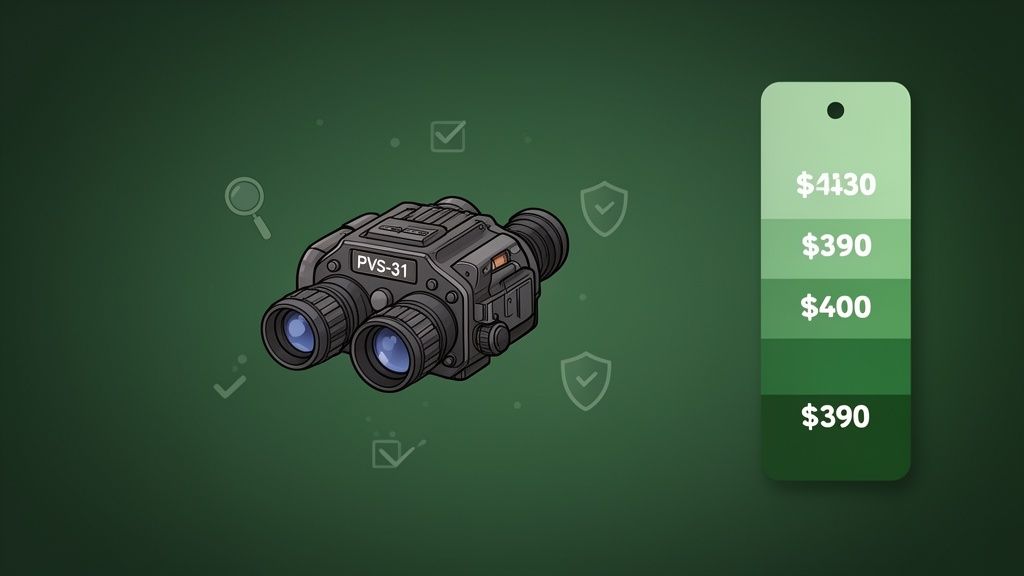
Let's get right to it: a PVS-31 will set you back anywhere from $8,500 for a used unit to $15,000 or more for a brand-new, mil-spec model. This isn't your average consumer electronic—the steep price tag comes from the incredible technology and military-grade precision packed inside. The final cost you pay really boils down to the condition and performance of its most critical components.
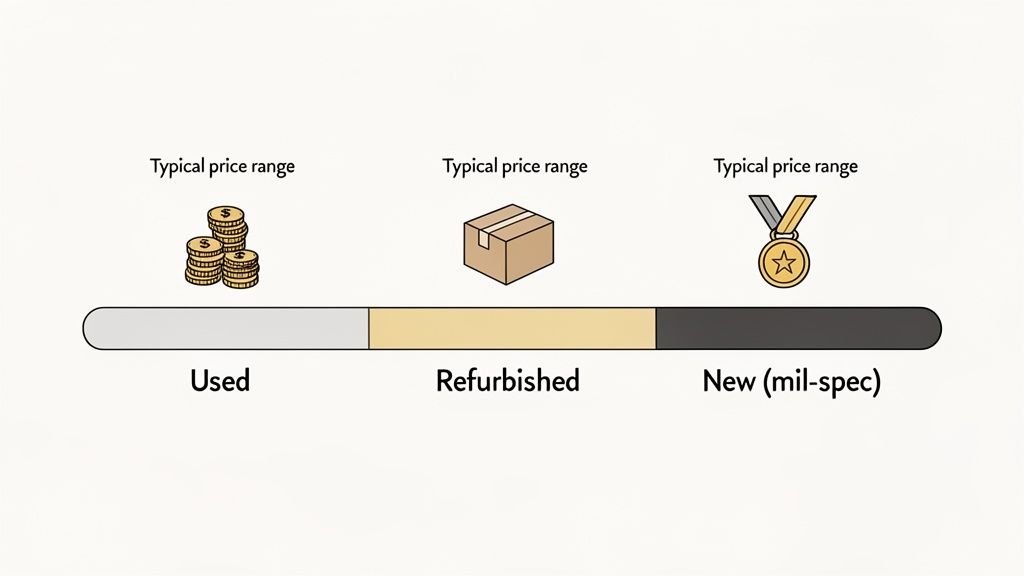
There’s no single, fixed price for a PVS-31. Think of it more like a spectrum. Where a unit falls on that spectrum depends on its condition, the quality of its image intensifier tubes, and who you're buying it from. A factory-fresh unit from an authorized dealer is a totally different beast than a pre-owned goggle from a private seller, and the price will absolutely reflect that.
Getting your head around this is the first step. A surprisingly low price is almost always a red flag for compromises—things like cosmetic spots (blems) in the tubes, a high number of operational hours, or lower-performance specs. On the flip side, a premium price should get you pristine, high-spec tubes straight from the factory, complete with a full warranty.
To give you a solid baseline for your budget, we've put together a quick look at what you can expect to pay. This table breaks down the common price brackets you’ll run into.
This table outlines typical market prices for PVS-31 units based on their condition and tube quality.
| Unit Condition & Type | Typical Price Range (USD) | Key Characteristics to Expect |
|---|---|---|
| Brand New Mil-Spec | $13,500 - $15,000+ | Unblemished high-FOM white phosphor tubes, full kit with accessories, manufacturer warranty, from an authorized dealer. |
| Lightly Used High-Spec | $10,500 - $13,000 | Excellent condition tubes with minimal or no blemishes, low hours, may include original spec sheets and some accessories. |
| Used Mid-Spec or Blemished | $8,500 - $10,000 | Noticeable cosmetic blemishes (spots) in tubes, higher hours, or lower FOM specs. Functionally sound but imperfect image. |
These numbers give you a ballpark, but the rest of this guide will dig into why these prices vary so much. By the end, you'll have the confidence to know exactly what you're buying and what it's worth.
So, you’ve heard the name and seen the jaw-dropping pvs 31 price tags. Let's break down what this device actually is. The AN/PVS-31 is a premier binocular night vision device (BNVD), and it’s the go-to choice for the most elite special operations forces around the world. This isn't just another night vision gadget; it’s professional-grade equipment built for missions where seeing in the dark is a matter of life and death.
Think of it like comparing a dependable family sedan to a Formula 1 car. Sure, they’re both cars, but one is engineered with exotic materials and bleeding-edge tech for absolute peak performance—and its price reflects that. The PVS-31 is the F1 car of the night vision world, designed from the ground up to reduce operator fatigue and provide unmatched situational awareness.
The main reason for the sky-high cost is what's under the hood: a pair of Gen 3 image intensifier tubes. These aren't just fancy lenses. They're incredibly complex vacuum tubes that slurp up any available ambient light—starlight, moonlight—and amplify it thousands of times, painting a pitch-black night in a clear, green or white-hued picture.
The quality, clarity, and performance of these tubes are the single biggest drivers of the final PVS-31 price. A unit with flawless, high-performance tubes can easily cost $5,000 to $7,000 more than one with minor cosmetic blemishes or lower specifications.
Manufacturing this technology is a nightmare of precision and expense. Each tube is born in a hyper-controlled cleanroom environment, and only a tiny fraction of what’s produced actually meets the strict standards demanded by military contracts.
It’s not just about the tubes, though. The physical housing and features of the PVS-31 also add serious cost to the final product. Everything is engineered for the professional user:
When you combine those cutting-edge intensifier tubes with a featherlight, tough-as-nails chassis and a smart, ergonomic design, the price starts to make sense. You aren't just buying the ability to see in the dark; you're investing in a professional tool built with zero compromises.
The massive price gap you see between a top-of-the-line PVS-31 and a budget-friendly one all boils down to a handful of critical factors. Nailing these details is the key to sizing up any unit like a pro and making sure you’re paying a fair price for the performance you actually get.
Think of it like buying a high-performance car. The final sticker price isn't just for the car itself—it's for what's under the hood, the trim package, and its mileage. For night vision, it's all about the components.
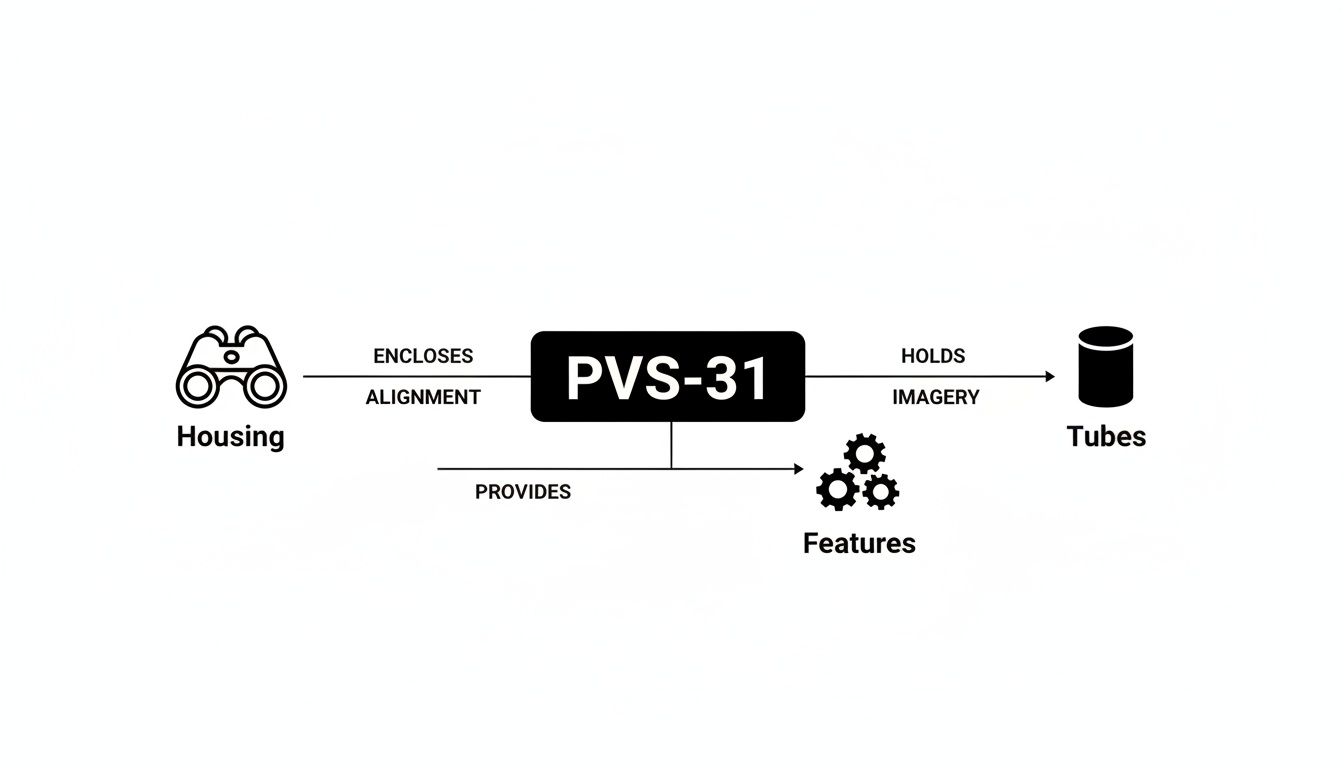
As you can see, the housing, special features, and most importantly, the image intensifier tubes are what really dictate the final cost and performance. A unit's value is the sum of its parts, and the tubes are by far the biggest piece of that puzzle.
The most straightforward factor is whether the unit is fresh from the factory or has been previously owned. A brand-new PVS-31 from an authorized dealer comes with a manufacturer's warranty, a full kit of accessories, and the guarantee of zero hours on the tubes. That peace of mind always comes at a premium.
Going with a used unit can save you a serious chunk of change, but it's a game of variables. You have to factor in the total hours of use on the tubes, which have a finite operational life. Scratches on the housing might just be cosmetic, but any damage to the lenses or internal electronics is a completely different story.
The "engines" of any PVS-31 are its two image intensifier tubes. Their specific performance specs are, without a doubt, the single biggest driver of the PVS-31 price. Two units can look absolutely identical from the outside, but there can easily be a $6,000 price difference based only on the quality of the tubes inside.
This is why you must always ask for the spec sheets.
A spec sheet is like a tube's birth certificate. It details its exact performance metrics recorded at the factory. Any legitimate seller offering a high-end unit should be able to provide one for each tube—if they can't, it's a major red flag.
The table below breaks down how these key tube specifications directly influence both the price tag and, more importantly, what you actually see in the dark.
| Specification Metric | Lower-Tier (Lower Price) | Higher-Tier (Higher Price) | What It Means for You |
|---|---|---|---|
| FOM (Figure of Merit) | 1800-2000 | 2400+ | Higher FOM means a clearer, less "snowy" image in extremely dark conditions. It's the top-line indicator of overall tube performance. |
| SNR (Signal-to-Noise) | 25-28 | 33+ | This directly impacts how clean the image looks. Higher SNR cuts down on the background "static" or sparkle you see through the tube. |
| Blemishes (Spots) | Multiple spots in Zone 2 | No spots in Zone 1 or 2 | Blemishes are tiny black spots in the image. While often just cosmetic, spots in the center of your view can be distracting and will lower the unit's value. |
The specs on the sheet tell the real story of a tube's capabilities. A unit with high FOM and SNR but a few cosmetic blems might be a great deal, while a "clean" tube with low specs might be overpriced.
Of course, other things like included accessories (mounts, cases, external battery packs) will also nudge the total package price up or down. A bare-bones unit will naturally be cheaper than a full, ready-to-go kit. By understanding how each of these components contributes, you can better estimate the true market price of any PVS-31 you're looking at.
So, you’re ready to dive into the world of high-end night vision. That’s great, but before you start hunting for the best PVS-31 price, you need to understand one critical thing: this isn’t like buying a new camera or a high-end optic.
PVS-31s are professional-grade tools, and that means they come with some serious rules. The most important one to know is ITAR, the International Traffic in Arms Regulations.
At its core, ITAR is what governs the export of defense-related gear and services. Since top-tier night vision like the PVS-31 falls squarely into that category, the U.S. government considers it a controlled item. This makes it flat-out illegal for an individual to take these devices out of the United States without very specific permission from the State Department—a process that simply isn’t available to the general public.
This brings us to a non-negotiable step in the buying process. Any and every legitimate dealer will require proof of U.S. citizenship before they even think about completing a sale.
When a reputable seller asks for this, they aren’t trying to make your life difficult. They are legally required to make sure these devices don't end up in the hands of non-U.S. persons. If you find a seller who doesn't ask for this, consider it a massive red flag.
Legal Warning: Trying to export an ITAR-controlled item like a PVS-31 can result in severe federal penalties. We’re talking up to 20 years in prison and fines of $1 million or more per violation. This is not a rule you want to test.
Another major legal landmine to watch out for is accidentally buying stolen government property. It’s not unheard of for military-issued PVS-31s to pop up on sketchy online marketplaces. These units are almost always listed at a price that seems too good to be true and will be missing key paperwork like spec sheets.
Even if you buy stolen property unknowingly, it can still lead to the confiscation of your very expensive new toy and potential criminal charges. A real-deal seller will always have a clear chain of custody for their products, especially for any used units they offer. Always ask where it came from and demand the proper paperwork to make sure your purchase is safe, legal, and a sound investment.
When you’re dropping five figures on a piece of gear like the PVS-31, getting scammed isn't just an inconvenience—it's a catastrophic loss. The high value and strict regulations surrounding night vision make this a prime hunting ground for fraudsters. Your first and most important job is picking the right place to buy.
If you’re buying new, the answer is simple: stick to authorized, reputable dealers. These businesses are vetted, have direct relationships with the manufacturers, and are legally required to handle all ITAR compliance, which includes verifying your U.S. citizenship.
For a used unit, which can bring the pvs 31 price down significantly, you’ll want to head to well-known online forums and communities that have a solid user feedback system.
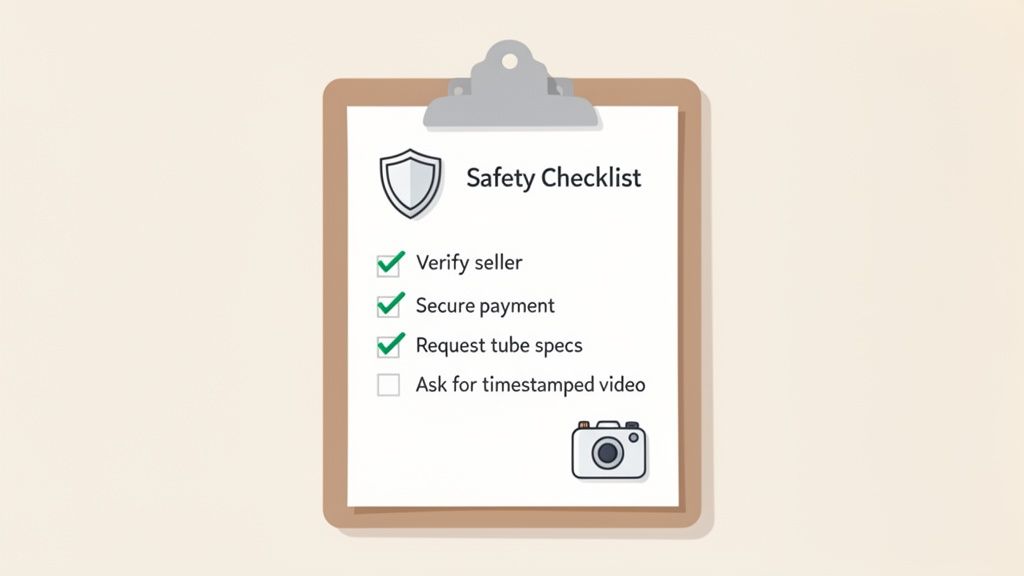
It doesn’t matter where you’re shopping—treat every deal with extreme caution. A purchase this big should never, ever be rushed. Before a single dollar leaves your account, run through this checklist to protect your investment.
The small fee for PayPal Goods & Services is cheap insurance. Paying a 3% fee is infinitely better than losing 100% of your money to a scammer.
Protecting yourself is everything in this market. The principles are similar to verifying other high-stakes assets; for instance, crypto users might find our guide on how to check for a crypto rug pull familiar. Follow these steps, and you’ll be on your way to acquiring a PVS-31 safely and with total confidence.
The PVS-31 has a legendary status, but its high PVS 31 price tag often makes people think it's the only game in town for serious users. That just isn't true. Plenty of incredible alternatives deliver top-tier performance, and some might even be a better fit for your specific needs and budget.
| Alternative | Best For... | Key Advantage | Price Point |
|---|---|---|---|
| RNVG | Maximum Durability | Built from solid aluminum, it's known for being nearly indestructible. The go-to for extreme-use environments. | $$$ (Slightly less than PVS-31) |
| Katana | Lightweight on a Budget | Offers a polymer, articulating housing similar to the PVS-31 but at a significantly lower cost. | $$ (Most affordable articulating) |
| DTNVS | Premium Performance | Delivers a high-end, articulating experience with excellent optics, directly competing with the PVS-31 feature set. | $$$ (Comparable to PVS-31) |
This mission-first approach guarantees you end up with the right tool for the job.
If you’re diving into the world of PVS-31s, you've probably got a few questions about that serious price tag. Let's get right into the most common ones we see from buyers.
A legitimate, brand-new PVS-31 will not sell for under $10,000. The price is driven by two things: military-grade Gen 3 image intensifier tubes and the incredible precision needed to build them. Any listing you see for a "new" unit below that price is a massive red flag. It's almost guaranteed to be:
The real deal costs what it does because of the top-tier technology and zero-fail quality control involved.
Not at all, but you have to do your homework. Buying used can be a great way to get into a high-end unit, but it comes with risks. You could end up with undisclosed tube blemishes, tubes with high run-time (which shortens their lifespan), or even illegally owned government gear.
The key is to vet your seller. Always buy from reputable names in the night vision community, insist on seeing the tube spec sheets for verification, and use a secure payment method like PayPal Goods & Services for its buyer protection.
FOM, or Figure of Merit, is the single most important number for tube performance. It’s calculated by multiplying the tube's resolution and its signal-to-noise ratio.
Simply put, a higher FOM means a cleaner and sharper image, especially when it’s almost pitch black. A tube with a 2400+ FOM will deliver a stunningly clear picture, and because that performance is so sought-after, it commands a much higher price.
At Wallet Finder.ai, we turn complex on-chain data into clear, actionable signals. Discover profitable traders and mirror their strategies in real time by visiting https://www.walletfinder.ai.

A premier DeFi analytics platform empowering traders to discover and analyze profitable blockchain wallets, trades and tokens.