Ripple Address Lookup: A Trader's On-Chain Data Guide

Wallet Finder

Blank calendar icon with grid of squares representing days.

April 19, 2026

You’re probably doing this already. A large XRP transfer shows up, you paste the address into XRPSCAN or Bithomp, you confirm the balance, skim the latest transactions, and move on.

That’s fine for checking whether funds moved. It’s weak if you’re trading.

A ripple address lookup is more than a wallet search. It’s the entry point into wallet behavior, exchange routing, trust line activity, DEX intent, and wallet risk. On the XRP Ledger, the traders who only look at balances see snapshots. The traders who read address history properly see positioning.

Beyond Basic Balance Checks An Introduction

The XRP Ledger isn’t a small niche chain. It hosts 7,414,131 wallet addresses and a total supply of approximately 99.99 billion XRP tokens, according to XRPL rich list data. That scale is why basic wallet search alone stops being useful fast. There are too many addresses, too much movement, and too much noise to treat every lookup as equal.
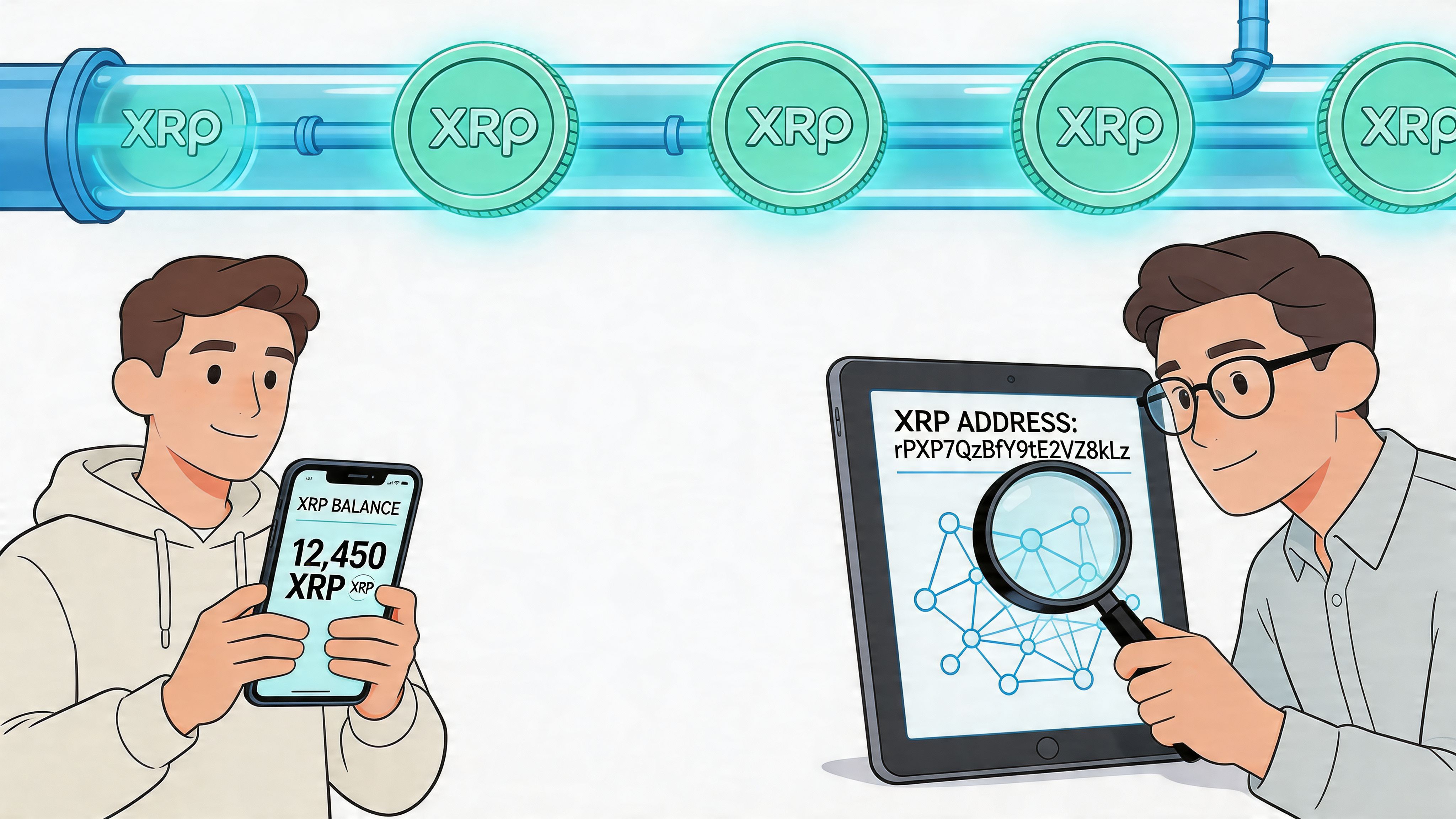
A person checking XRP balance on a phone while another examines a blockchain address on a tablet.

What traders miss in a simple lookup

An address lookup is typically employed for one of four reasons:

  • Balance verification to confirm funds are present
  • Transaction checking to see whether a payment landed
  • Exchange troubleshooting to inspect tags and transfers
  • Basic curiosity about a whale wallet or public address

Useful, but incomplete.

A serious trader treats the address page as the first filter, not the last answer. The balance tells you what’s there now. The transaction trail shows you how the wallet behaves. That difference matters because two wallets with the same XRP balance can have very different profiles. One may be dormant. Another may be routing through exchanges, setting trust lines, or posting on-ledger offers.

Practical rule: Never judge an XRP wallet by its current balance alone. The history matters more than the snapshot.

What a good ripple address lookup should tell you

A productive lookup should help you answer questions like these:

  1. Is this wallet active or just funded?
  2. Does it interact like a trader, a payment account, or a cold wallet?
  3. Are transfers clustered around exchange flows?
  4. Does it use destination tags in ways that suggest custodial routing?
  5. Is it safe to track, or is it structurally risky?

That’s where most traders hit the ceiling with standard explorers. They show records. They don’t interpret them for trading.

The shift from wallet search to on-chain intelligence

On XRPL, transparent ledger data gives you a real edge if you know what to pull from it. You can compare wallets, spot repeated counterparties, watch transaction types change over time, and identify whether a wallet is accumulating, distributing, routing, or just sitting idle.

The jump in skill is simple. Stop asking, “What’s the balance?” Start asking, “What is this wallet doing?”

That’s the mindset behind every strong ripple address lookup workflow.

Your Essential Toolkit for XRP Address Lookups

If you’re doing manual research, start with explorers. They’re still the fastest way to triage an address before you decide whether it deserves deeper analysis.
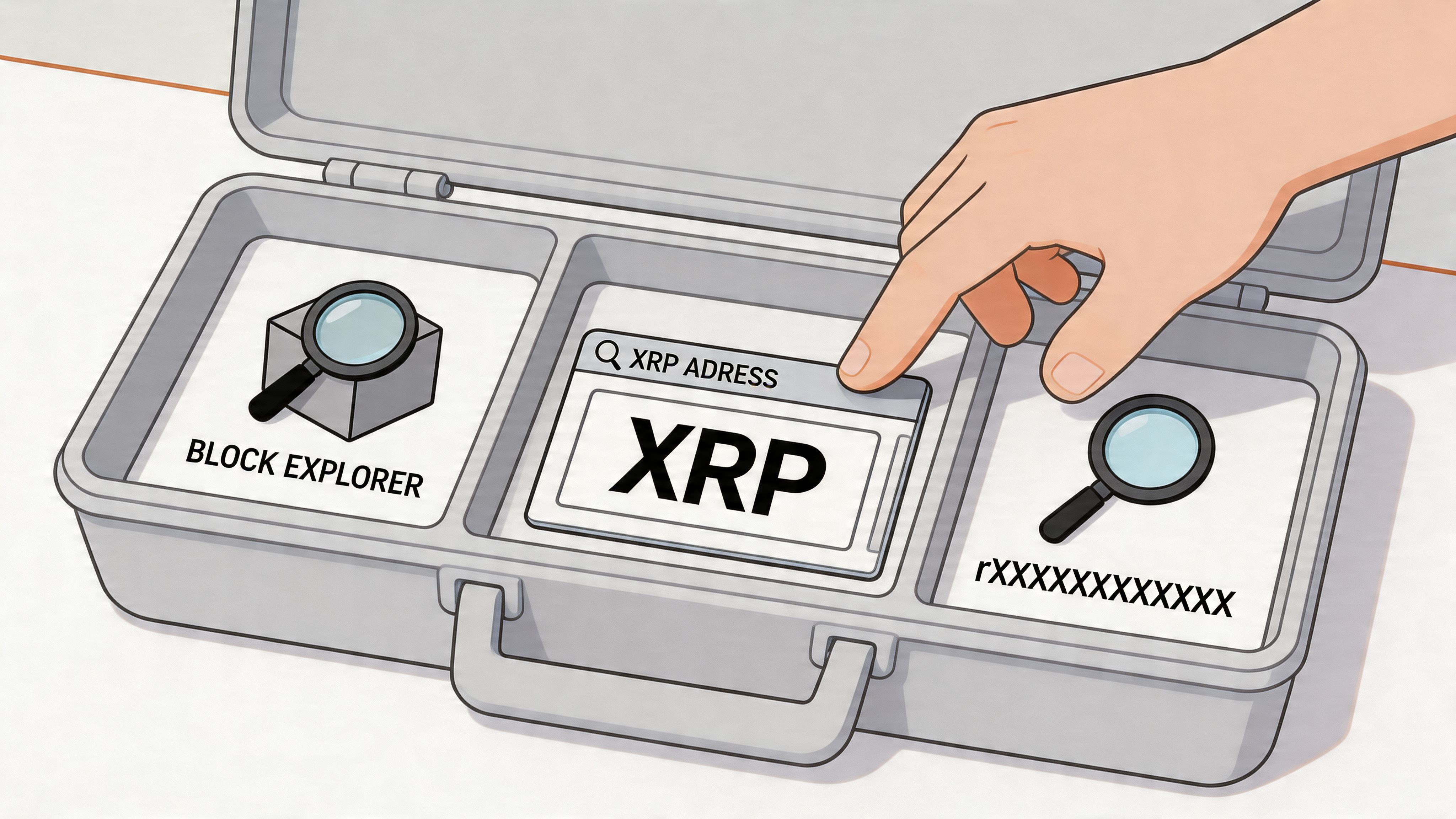
A hand selecting an XRP address search box inside a briefcase containing crypto block explorer tools.

The three tools most traders open first

The usual stack is:

  • XRPSCAN for broad account and transaction visibility
  • Bithomp for readable wallet views and XRPL account context
  • CoinTracker for a simplified XRP wallet lookup experience, especially when you want a quick summary rather than a deep ledger read

Each has a place. None replaces actual analysis.

XRPSCAN is usually where experienced traders begin because it exposes a lot of account detail quickly. Bithomp often makes account behavior easier to scan at a glance. CoinTracker is useful as a reference point for standard wallet visibility, but it doesn’t give you the higher-order trader metrics you’d want for conviction.

What to read on the address page first

When you open an XRP wallet page, don’t start with the transaction list. Start with the summary panel.

Look for these items first:

  • Current XRP balance
    This is only a starting point. Use it to decide whether the wallet is large enough to matter to your strategy.

  • Last activity
    A wallet that moved recently deserves more attention than one that hasn’t done anything meaningful in a long time.

  • Account status and setup details
    Account creation context can hint at whether the wallet was created for active use, operational routing, or long-term holding.

  • Flags or labels
    Some explorers identify exchange-associated wallets, service wallets, or unusual account states. Treat labels as hints, not gospel.

A fast triage workflow

Here’s a practical sequence that works:

  1. Paste the address into XRPSCAN or Bithomp
  2. Check whether the wallet is active
  3. Scan the most recent counterparties
  4. Look for repeated exchange interactions
  5. Open the transaction history only if the summary suggests something interesting

This saves time. Many wallets look important because of a large balance but do nothing useful from a trading perspective.

An address with frequent, purposeful activity is often more informative than a larger wallet that never changes state.

What each interface element means in practice

A few examples make this clearer.

If the wallet has a healthy balance but sparse history, it may be storage rather than execution. If the wallet has a moderate balance but dense transaction patterns, repeated exchange links, and non-payment transaction types, it may be far more valuable to track.

If you see destination tags repeatedly, that often points to exchange or custodial flows. If you see trust line activity mixed with offers and payments, you’re looking at a wallet that may be doing more than simple transfers.

What explorers do well and where they stop

Explorers are strong at:

  • Showing balances
  • Listing transactions
  • Verifying destination tags
  • Surfacing raw account history

They’re weak at:

  • Ranking wallets by trading quality
  • Showing profitability
  • Separating smart activity from random activity
  • Warning you when a wallet is structurally bad to mirror

That’s the core limitation. A block explorer is a microscope, not a trading model. It shows details. It doesn’t tell you whether the wallet is worth following.

A good manual habit

Keep a simple research note for each address you inspect. Not a spreadsheet full of vanity fields. Just a short operational log:

CheckWhat to note
BalanceLarge enough to matter or not
RecencyActive now, sporadic, or dormant
Flow patternExchange-heavy, peer-to-peer, mixed
Transaction mixPayments only or broader XRPL usage
Follow-upIgnore, watchlist, deeper analysis

That small habit improves your ripple address lookup process more than opening five tabs and clicking faster.

How to Decode Ripple Transaction Data

The wallet summary gets you interested. The transaction history tells you whether the wallet deserves your attention.

A lot of traders scroll an XRP transaction list and only read amounts. That’s a mistake. On XRPL, the type of transaction often matters more than the amount because it tells you intent.

Balance size needs context

Wallet size alone can mislead you. According to MEXC’s XRP rich list breakdown, roughly 2,200–2,300 XRP is currently required to rank in the top 10% of XRP wallet addresses globally. That’s useful context because many wallets that look “large” at first glance may be above average retail holdings, not institutional-scale actors.

So when you run a ripple address lookup, ask whether the wallet is large relative to the network, then ask what it does.

The transaction types worth learning

You don’t need to memorize every XRPL transaction format. You do need to recognize the ones that change your interpretation of a wallet.

Transaction TypeWhat It IsTrader's Takeaway
PaymentXRP or token transfer between accountsUseful for spotting exchange inflows, outflows, and direct wallet movement
OfferCreatePlacement of an order on the XRPL DEXIndicates trading intent rather than simple transfer activity
OfferCancelCancellation of a standing orderSuggests changed market view, reduced conviction, or order management
TrustSetEstablishes or updates a trust line for another assetSignals that the wallet is engaging beyond native XRP
EscrowFinishReleases funds from escrow conditionsCan explain sudden balance changes that aren't market buys or sells
AccountSetChanges account configuration or flagsImportant when assessing whether a wallet is standard, restricted, or unusual
SignerListSetConfigures multisign behaviorRelevant for operational security and whether a wallet is easy to mirror behaviorally

A wallet full of simple Payment transactions may be operational or custodial. A wallet mixing OfferCreate, OfferCancel, and TrustSet starts to look more like an active participant in XRPL markets.

Read destination tags and memos carefully

Beginners ignore tags because they look administrative. Traders shouldn’t.

Destination tags often help identify whether a transfer is headed into exchange infrastructure or another custodial environment. If you’re tracking wallet behavior and notice repeated transfers to the same address with varying tags, that often tells you the wallet is interacting with a service rather than a private counterparty.

Memos matter too. They can provide intent, routing clues, or operational context. They won’t always be meaningful, but when they are, they save you from bad assumptions.

If you skip tags and memos, you’ll misclassify wallet flows. That’s one of the fastest ways to build a bad watchlist.

How to inspect a transaction like a trader

When you open a specific XRPL transaction, work through it in this order:

  • Transaction type first
    Don’t start with the amount. Identify the behavior category.

  • Counterparties next
    Repeated interaction with the same addresses usually matters more than a one-off transfer.

  • Metadata after that
    Success or failure details help you separate completed intent from attempted intent.

  • Sequence in history
    A single transaction rarely tells the whole story. The cluster around it usually does.

A standard explorer can still help, especially if you already understand what you’re looking at. If you want a cleaner view of explorer-based research patterns, this guide to a Ripple block explorer workflow is a useful companion.

A simple interpretation model

Use this quick lens when reading history:

  • Payments with exchange-like routing often point to capital movement
  • Offer activity suggests active market participation
  • Trust line changes point to broader asset exposure
  • Escrow actions can distort balance interpretation if you only check snapshots
  • Account configuration changes can raise security or usability questions

The point isn’t to become a protocol archivist. The point is to recognize whether a wallet’s history is tradeable intelligence or just ledger noise.

Programmatic Lookups Using the XRP Ledger API

Manual lookups are fine for spot checks. They don’t scale when you want systematic monitoring, alerting, or strategy execution.

If you’re serious about XRP wallet tracking, you eventually need to query the ledger directly through a rippled server.

A cartoon man in glasses working at a computer with code related to XRP Ledger API displayed.

The non-negotiable rule

For authoritative XRP Ledger lookup, you need responses from a rippled server and you need to confirm "validated": true. The XRPL documentation states that this flag means the data comes from a ledger version that has reached consensus through RPCA, which finalizes transactions in 3 to 5 seconds with 80% validator agreement, giving you irreversible results for trading systems that need certainty, as explained in XRPL transaction result finality guidance.

That single field is what separates usable execution data from “probably correct” data.

The API methods that matter most

For address-level work, these are the methods traders and developers usually care about:

  • account_info for current account state and balance context
  • account_tx for historical transaction retrieval
  • tx for detailed inspection of a specific transaction

Each solves a different problem.

account_info gives you the state view. account_tx gives you the behavioral record. tx lets you drill into a specific event when something in the sequence needs explanation.

Why validated data changes your system design

A lot of people treat public API responses as if every answer is equally trustworthy. They aren’t.

If your strategy reacts to fresh wallet activity, you need to know whether the returned state is finalized. Otherwise you can act on temporary or incomplete sequencing. On XRPL, finality is fast, which helps. But fast finality doesn’t mean you should ignore validation.

That affects how you build alerts, dashboards, and ingestion pipelines.

Execution rule: For any high-conviction wallet signal, delay action until the ledger state is validated.

Public endpoint versus dedicated infrastructure

There are two broad ways to work:

SetupBest forMain trade-off
Public rippled accessLight monitoring, prototypes, occasional queriesLess control over throughput and consistency
Dedicated rippled serverHeavy analysis, automation, production systemsMore operational overhead

If you’re just building a personal tracker, public infrastructure may be enough. If you’re ingesting many addresses, reconstructing histories, or alerting off recent activity, dedicated access becomes a lot more attractive.

The hidden issue isn’t only speed. It’s reliability under load.

If you’re building anything that polls frequently, you also need to think about request discipline and backoff behavior. This overview of API rate limit handling is worth keeping in mind before you turn a clean prototype into a noisy production script.

A practical query workflow

A sensible programmatic ripple address lookup flow looks like this:

  1. Query account_info
  2. Confirm the response is validated
  3. Pull account_tx for the address
  4. Store normalized transaction records
  5. Inspect individual tx results only when a sequence needs deeper classification

That structure keeps your system lean. You don’t need to over-query every object on every pass.

What not to do

Avoid these mistakes:

  • Using unvalidated results for trading decisions
    Fast doesn’t mean final.

  • Treating raw transaction history as analysis
    API access gives you data volume, not insight.

  • Ignoring failed or odd transaction states
    Those often explain why a wallet didn’t behave as expected.

  • Overengineering before you define your signal
    Decide what wallet behavior matters first, then design the lookup logic around it.

A good XRP API stack doesn’t start with code. It starts with a clear question. Are you tracking exchange flows, market makers, token traders, or operational wallets? Your query design should reflect that.

From Raw Data to Actionable Trading Signals

At this point, the hard truth shows up. Raw address data is not alpha by itself.

You can do a clean ripple address lookup. You can read transaction history correctly. You can even automate the process. None of that guarantees a useful trading decision.

A diagram illustrating the four levels from raw blockchain data to actionable crypto trading signals.

Where standard XRP tools stop helping

The core gap is simple. Existing XRP address lookup tools like XRPSCAN don’t provide advanced analytics on wallet profitability or win rates, and no tool aggregates on-chain activity to rank wallets by recent gains, win streaks, or copy-trading signals, according to CoinTracker’s XRP wallet overview.

That’s why many traders get stuck at the same level. They can identify activity, but they still can’t answer the questions that matter most:

  • Was this wallet’s trading good?
  • Does it show consistent timing or random churn?
  • Is this wallet worth monitoring again?
  • Was the move high conviction or just routine transfer activity?

A standard explorer won’t tell you.

The four layers that matter

Think of XRP wallet analysis as a stack:

LayerWhat you seeWhy it matters
Raw dataHashes, amounts, addresses, timestampsNecessary, but too noisy to trade directly
Structured historyOrdered account activity and transaction typesHelps classify wallet behavior
Analytical interpretationPatterns, repeated counterparties, likely intentTurns records into hypotheses
Trade signalWatchlist, alert, mirror candidate, risk filterProduces an action you can actually use

Most tools only cover the first two well.

What serious traders actually need

If your goal is copy trading, wallet discovery, or smart-money tracking, you need features beyond basic address search:

  • PnL-oriented wallet ranking
    Not just who moved funds, but who traded well.

  • Win-rate and consistency filters
    A wallet with active history isn’t automatically skilled.

  • Entry and exit timing analysis
    You want to know whether a wallet buys strength, buys weakness, scales in, or exits early.

  • Position sizing context
    A transfer only matters if it’s meaningful relative to the wallet’s behavior.

  • Alerting on behavior, not just movement
    A simple incoming transfer alert creates noise. A behavior-based alert is usable.

Raw on-chain data tells you what happened. A trading system needs to tell you whether it was worth caring about.

The practical framework for signal extraction

A solid process looks more like analyst work than explorer browsing.

Start with wallet selection. Don’t track every active address. Track addresses that repeatedly show the kind of behavior you want exposure to.

Then classify by pattern, not anecdote. One smart trade doesn’t make a smart wallet. Repeated behavior does.

Then reduce the list further:

  1. Remove purely operational wallets
  2. Drop addresses with unclear or mixed intent
  3. Keep the wallets whose activity clusters around identifiable trade behavior
  4. Build alerts only for the subset that matches your style

This is also why it helps to regularly check on-chain activity with a structured workflow instead of reacting to isolated transfers.

What works and what doesn’t

What works:

  • Watching repeated behavior from the same address
  • Comparing transaction type mix over time
  • Filtering out utility wallets and exchange routing noise
  • Turning wallet research into a maintained watchlist

What doesn’t:

  • Chasing one-off whale transfers
  • Assuming large balance equals skill
  • Copying a wallet before understanding its role
  • Mistaking raw visibility for edge

The traders who do best with XRP on-chain research aren’t the ones opening the most explorer tabs. They’re the ones who reduce the data into a small set of repeatable signals.

Advanced Security Tips and Common Questions

A lot of XRP lookup mistakes aren’t analytical. They’re operational. Traders misread wallet safety, copy bad addresses, or send funds into situations that standard explorers didn’t flag clearly enough.

One of the biggest blind spots is address risk. Standard explorers don’t reliably warn you about blackholed or invalid addresses, and they don’t automatically verify destination tags against exchange mismatches that can lead to failed deposits and fund loss, as explained in Bithomp’s blackholed address guide.

The risks that deserve attention first

Focus on these before you mirror or send anything:

  • Blackholed addresses
    These are dangerous because funds can become permanently unspendable. If a wallet’s structure looks unusual, don’t assume it’s safe just because it has history.

  • Destination tag mistakes
    A correct address with a wrong or missing tag can still create a bad outcome, especially with exchange deposits.

  • Invalid address input
    XRP address handling is less forgiving than many users assume. A typo isn’t a minor issue if you’re moving real capital.

  • Multisign complexity
    A wallet may be active but operationally different from what its transaction history suggests. That matters if you’re trying to mirror behavior.

Common questions traders ask

Can you identify the owner of an XRP address

Usually, not directly.

You can often infer whether an address is linked to an exchange, service, or a recurring operational role. That’s different from proving a real-world owner. Keep your claims modest and evidence-based.

What’s the difference between a classic address and an X-address

In practice, the main issue for traders is usability. Some formats bundle routing context more cleanly, while classic workflows can leave more room for tag mistakes. If a platform expects one format, don’t improvise.

Is a wallet with lots of activity worth copying

Not necessarily.

High activity can mean trading, but it can also mean exchange routing, internal transfers, dust, or operational churn. You need behavior quality, not just motion.

The safest habit is simple. Verify address type, tag requirements, and wallet behavior before you react to any transaction history.

A short checklist before acting on any wallet

QuestionWhy it matters
Is the address structurally safe to interact withPrevents avoidable fund loss
Does it require destination tag precisionReduces deposit and routing errors
Does the history show trading intent or just movementStops you from tracking noise
Are you copying behavior you actually understandLowers strategy drift

Security isn’t separate from analysis. On XRPL, it’s part of the same job. A good ripple address lookup process should help you avoid bad wallets, bad assumptions, and bad transfers before they cost you money.


If you want to move past raw explorer data and track wallets by trading quality, Wallet Finder.ai is built for that job. It helps traders find profitable wallets, inspect full trading histories, filter by performance and consistency, and get real-time alerts when tracked wallets act, so you can spend less time digging through raw address pages and more time following signals that matter.