Push Notification Alerts: Your DeFi Trading Edge
Learn how to use push notification alerts to master DeFi. This guide covers setup, best practices for traders, and how to get real-time copy trading signals.

May 8, 2026
Wallet Finder

May 8, 2026

You open a chart, see a token that already went vertical, and think the same thing most traders think: I was early enough to hear about it, but still too late to make money.
That usually means the process is backwards. The trade idea arrived from social chatter, forwarded screenshots, or a pair page someone else had already found. By the time you're reacting, the people who scanned the move on-chain are already managing exits.
A strong scan in dex workflow fixes that. It doesn't rely on being first on X or in Telegram. It starts where the trade originates, inside liquidity changes, swaps, wallet behavior, and transfer patterns. Then it adds a layer most scanner guides skip entirely: wallet validation. A buy alert is only useful if the buyer is worth following.
Most missed trades don't come from bad luck. They come from delayed visibility.
A junior trader I've worked with had the same pattern for weeks. He'd notice a chart only after a giant move, open Dexscreener, see the first candles had already printed, and then chase a late entry because the chart still looked “strong.” Sometimes it squeezed higher. More often, he became exit liquidity for wallets that had entered when liquidity was still building.
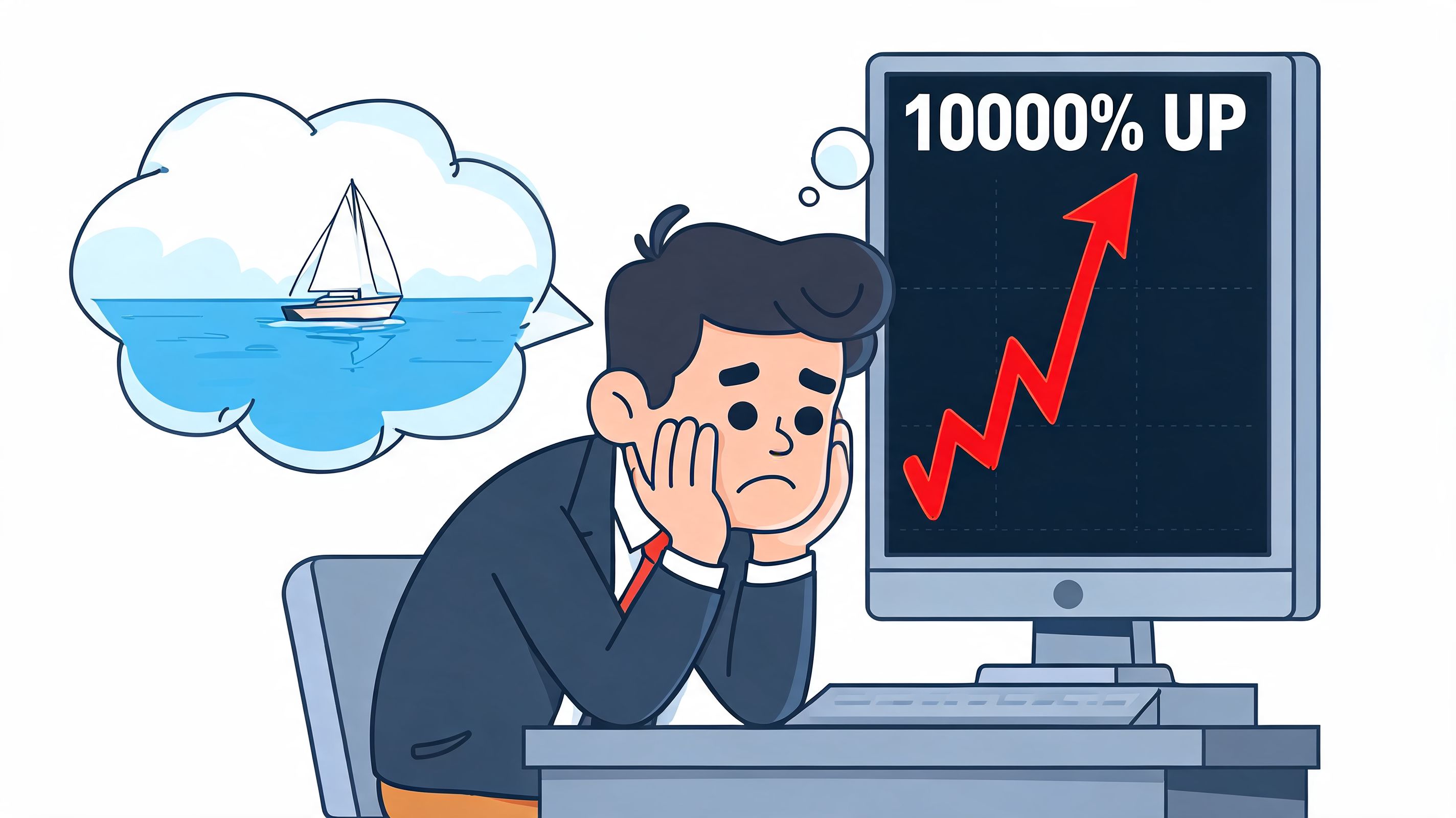
The problem wasn't conviction. It was where he was looking. If your process begins with price, you're already late. Price is the result. The useful signals usually show up earlier in pair creation, liquidity behavior, and wallet participation.
A more practical launch filter combines rising liquidity in new pairs, wallet interaction patterns that separate distributed buying from concentrated accumulation, and price action consistency across multiple timeframes, as described in this practical Dexscreener filtering breakdown. That's the shift from reactive trading to proactive on-chain analysis.
The traders who consistently catch early moves usually aren't doing anything mystical. They're running a repeatable workflow:
Practical rule: A scanner should feed ideas, not trigger blind entries.
That distinction matters. A scanner tells you something happened. It doesn't tell you whether the move came from a disciplined wallet, a promotional push, a farm-and-dump group, or a trader with a long history of terrible exits.
When traders say they want to catch “100x opportunities,” what they usually need is not more aggression. They need a system that listens to the chain before social media notices.
That system has two halves. First, discover signals early. Second, validate the wallets behind those signals before risking capital. Without the second half, scan in dex becomes a firehose of false urgency. With it, you start trading from evidence instead of adrenaline.
Good scanning starts with intent. If you don't define what you're hunting, every alert looks important and none of them are useful.
Some traders want new pair launches on Base. Others care more about established Solana tokens showing fresh whale accumulation. Some only want copy-trading candidates from wallets that trade specific sectors. Those are different jobs, and they need different screens.
DEX scanning technology now monitors activity across 90+ blockchains and supports 500+ decentralized exchanges, while processing three core event types: token swaps, liquidity additions or removals, and token transfers, according to this overview of modern DEX scanner infrastructure. That breadth is useful, but it can also bury you in irrelevant data.
Start by narrowing your field.
If you need a baseline on scanner interfaces and how traders use them, this Wallet Finder article on what Dexscreener is is a useful primer.
Most traders overvalue swaps because swaps are visible and exciting. In practice, the more useful edge often comes from reading swaps beside liquidity and transfers.
Here's the quick working model.
| Signal | What It Can Indicate | Potential Red Flag |
|---|---|---|
| New swaps | Real market interest, initial price discovery, momentum starting | One wallet driving most activity |
| Liquidity addition | Team preparation, improved tradability, early setup for active trading | Temporary liquidity meant to attract buyers before removal |
| Liquidity removal | Risk reduction by insiders is unlikely. More often it signals danger | Rug behavior or deteriorating exit conditions |
| Token transfers | Distribution, wallet clustering, internal positioning | Tokens moving to fresh anonymous wallets right after launch |
A useful listening post has layers.
The first layer is broad market discovery. You want to see fresh pairs, active swaps, and unusual transfer patterns. The second layer is narrowing by conditions that fit your style. The third layer is wallet review. Most traders stop at layer two and wonder why their hit rate is poor.
I prefer setting up separate views for different jobs instead of one giant dashboard. One screen for fresh pairs. Another for active wallets. Another for tokens already showing orderly follow-through. That separation keeps you from mixing discovery trades with validation trades.
The cleaner the feed, the calmer the decisions.
When I'm teaching someone to scan in dex, I tell them to care about three things first:
Liquidity behavior
Rising liquidity matters because it affects whether a move can continue without collapsing on the next wave of sellers.
Transfer behavior
Immediate token shuffling to unknown wallets can change the risk profile fast, especially when the chart still looks clean.
Participation quality
A move supported by broad wallet participation reads differently from one dominated by a small cluster.
That's enough to create a focused environment. You don't need more indicators yet. You need fewer distractions and better interpretation.
Raw scanner feeds are noisy by default. The edge comes from turning a broad stream of events into a short list of conditions that match how profitable wallets behave.
That means using filters as a decision gate, not as decoration.

Professional DEX traders often work through a four-stage process: real-time pair creation detection, custom alert configuration, historical backtesting, and community validation. In the same source, traders filtering by 90-day win streak consistency and positive PnL history achieved 62-71% profitable copy trades, as noted in this analysis of advanced filtering and wallet performance.
That framework is practical because each stage solves a different problem.
A tool-specific walkthrough of tighter wallet screens appears in this guide to advanced filters for whale wallet tracking.
Most bad filters are too broad. They catch “activity,” but not quality.
A better filter stack usually combines multiple conditions such as:
Here's a practical way to think about filter quality.
| Filter type | Useful when | Weak version | Better version |
|---|---|---|---|
| New pair filter | You want early discovery | Any new pair | New pair plus rising liquidity and broad wallet participation |
| Momentum filter | You want continuation trades | Any token with a spike | Token with consistent price action across timeframes |
| Smart money filter | You want copy-trade ideas | Any large buy | Buy from wallets with proven consistency |
| Risk filter | You want cleaner alerts | Ignore obvious rugs only | Exclude concentration, suspicious transfers, and unstable structure |
A lot of scanner pain comes from seeing too many low-quality tokens. It's better to filter them out than to debate them after the fact.
The most common trash signatures are straightforward:
I also separate “interesting” from “actionable.” A token can be worth tracking without being worth buying.
Here's a useful visual walkthrough before you build your next screen:
The temptation is to build endless combinations. Don't.
One clean filter for launches, one for momentum continuation, and one for monitored wallets is enough for most traders. If you keep changing criteria every day, you'll never know whether the process is working or whether you're just curve-fitting the last move you missed.
Most traders fail because they get the signal right and the source wrong.
A scanner alert that shows a large buy can still be terrible trade input. The wallet might be a serial loser, a promotion wallet, a bot with bad exits, or a trader who sizes recklessly and survives only because they spray enough entries. If you don't validate wallet history, scan in dex becomes a polished way to copy bad behavior faster.

Internal data cited in this practical guide on scanner false signals and wallet validation shows that 68% of scanner-highlighted “smart money” buys in Solana memecoins had negative PnL over 7 days when mirrored without filtering for >60% win streaks and >2x average returns. The same source says prioritizing wallet validation over raw signals can reduce drawdowns by 45%.
That's the missing bridge between spotting movement and trading it responsibly.
When I review a wallet, I'm not asking whether it had a few good trades. I'm asking whether its behavior is repeatable and whether I can realistically follow it.
Use this checklist:
If you want a structured process for this review, this guide to analyzing wallet history for better trades lays out the key checks.
You can usually classify a wallet fast once you stop staring at one trade and start reading the full tape.
| Wallet profile | What you usually see | Why it matters |
|---|---|---|
| Sharp trader | Repeatable entries, sensible exits, stable behavior across trades | Easier to trust as a signal source |
| Degen gambler | Chaotic entries, oversized swings, inconsistent holding periods | Hard to mirror and harder to survive following |
| Promotional wallet | Buys that look timely but don't produce durable results | Scanner sees action, you inherit the downside |
| Specialist wallet | Strong in one niche, weaker outside it | Copy only in its known lane |
Validation test: If you can't explain why a wallet wins, don't copy it.
One tool can materially improve the workflow. Wallet Finder.ai aggregates wallet trading history, PnL, win streaks, entry and exit timing, and position sizing across major chains, which helps turn scanner alerts into researched candidates instead of impulse trades.
That matters because wallet context often changes the interpretation of the same alert. A modest buy from a disciplined wallet can be a better signal than an eye-catching buy from an account with a messy history. Once you see enough examples, the chart stops being the first thing you trust.
Once you've built a set of validated wallets and token conditions, manual tracking gets sloppy. You miss entries, react late, and start forcing trades because the process is no longer keeping pace with the market.
Automation fixes the speed problem. It does not fix bad judgment.
For copy trading on volatile pairs, execution delays beyond 3-5 seconds can create 15-30% slippage variance compared with the original wallet's entry price, according to this deep dive on advanced DEX scanner latency and execution. That's why alert speed matters so much when you scan in dex for fast-moving tokens.
A weak alert says, “something moved.” A useful alert says, “this moved and matches my trade criteria.”
Good alert logic usually includes:
You want alerts delivered where you act. Telegram and push notifications work because they reduce delay between signal and review. Email is usually too slow for fast pairs.
Beginners often encounter issues. They copy the idea and the size as if the wallet they follow has the same capital, risk tolerance, liquidity access, and exit speed.
It doesn't.
Use your own position-sizing rules. For highly speculative trades, I prefer hard caps that are set before the alert ever triggers. The exact number depends on your account and tolerance for volatility, but the principle is fixed: mirror the thesis, not the wallet's size.
A simple risk framework works better than a fancy one:
Fast alerts help you enter on time. Small sizing helps you survive being wrong.
If you need to choose between speed and discipline, choose discipline every time. There will always be another alert. There won't always be another account balance.
A scanner can help you find trades. It can't decide which losses you should avoid, which wins you should protect, or when your process is degrading.
That part is on you.

The traders who last in this environment usually do a few unglamorous things very well. They define exits before entries. They avoid turning one wallet into a hero. They review their tracked accounts often enough to notice when edge turns into noise.
Relying on a single wallet is fragile. Even strong wallets go cold, switch style, or trade conditions that don't suit your execution.
A better approach is to follow a small basket of validated wallets with different strengths. One might be better at fresh launches. Another may handle momentum continuation well. Another may specialize in a sector you understand. That diversification won't eliminate risk, but it can keep one bad read from wrecking your month.
A lot of traders only review after a loss streak. That's late.
Review your scanner process when trades are going well too. Check whether your copied wallets still enter cleanly, whether your alert logic is still useful, and whether you've drifted into lower-quality setups because the feed feels busy. Prune wallets that stop behaving like the trader you originally chose to follow.
Here's a compact framework worth keeping in front of you:
A DEX scanner finds opportunities. A disciplined process creates profit.
That line sounds simple, but it's the whole game. The scanner is discovery infrastructure. Your filters, wallet checks, alert logic, sizing, and review habits are the actual strategy.
If you want a practical way to turn scanner alerts into tradable ideas, Wallet Finder.ai can help you review wallet history, compare PnL behavior, build watchlists, and track buys and sells in real time across major chains without relying on raw signal noise alone.