What is DYOR? A Trader's Guide to Crypto Research
Learn what is DYOR (Do Your Own Research) and why it's critical in crypto. Our guide provides a full checklist, on-chain methods, and tools to invest smarter.

May 2, 2026
Wallet Finder

May 2, 2026

You open X or Telegram for five minutes, see a token ripping, and suddenly every post sounds certain. The chart looks unstoppable. The comments are full of conviction. Someone claims the team is elite, the community is early, and the next leg up is obvious.
That’s exactly when DYOR matters.
In crypto, most bad decisions don’t feel reckless in the moment. They feel urgent, social, and time-sensitive. You tell yourself you’ll research after entry. Then the price reverses, liquidity vanishes, or you realize the only thing you knew was that other people were excited.
What is DYOR? It means Do Your Own Research. In practice, it means you verify a project’s claims, incentives, team, token structure, and on-chain behavior before you risk capital.
That sounds basic. It isn’t. Many still outsource conviction to influencers, group chats, and momentum.
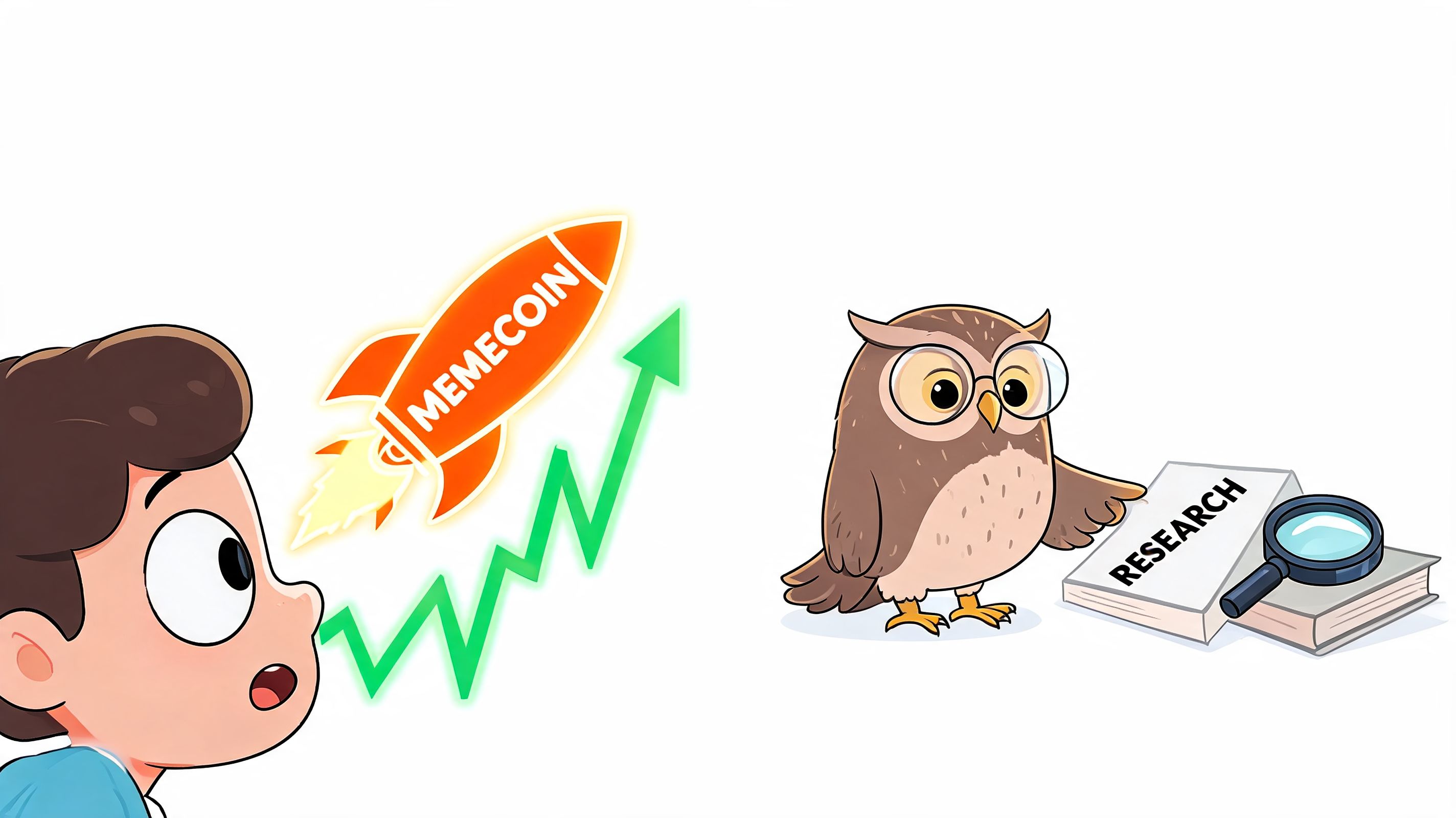
DYOR became a core crypto principle during the 2016 to 2018 ICO boom, when the market was flooded with fraudulent projects and the community started pushing due diligence as a defense against scams and misinformation, as explained in CoinMarketCap’s DYOR glossary entry.
A lot of newer investors treat DYOR like a disclaimer. It’s not. It’s your filter against manipulation.
When you strip away the acronym, the idea is simple: you are responsible for your capital. Nobody on social media shares your downside. Promoters get engagement. Early buyers get exit liquidity. Anonymous callers disappear. You keep the loss.
Practical rule: If your thesis can be summarized as “smart accounts are talking about it,” you don’t have a thesis yet.
Good research doesn’t guarantee a winning trade. It does something more important. It helps you reject bad trades before they cost you money.
It also changes how you size positions. If you’ve checked the token distribution, confirmed liquidity, and understood what token releases can hit the market, you’ll trade with a plan instead of emotion. If you haven’t, you’re guessing with extra steps.
That’s why DYOR matters most when a trade looks easiest. Hype compresses decision time. Proper research slows you down just enough to avoid obvious mistakes.
Fundamental research answers a simple question before you ever care about upside: does this project deserve your attention at all.
Without that filter, traders end up stitching together conviction from social posts, a green candle, and a few screenshots in Telegram. That is how bad projects pass as good ones. A clear framework cuts through that noise. The four pillars below are the ones that matter most.
Start with the whitepaper, docs, and roadmap. The job here is to test whether the project solves a real problem and whether the team can explain it clearly.
Check four things:
Vague language is a warning sign. If the docs promise to “revolutionize” an area but never explain user behavior, incentives, or why blockchain is needed, move on.
If you want a better process for reading docs, this guide on how to read a crypto white paper helps sharpen that part of your process.
Teams matter because execution matters.
Look for public identities, technical credibility, prior products, code activity, and evidence that the team has built through difficult market periods. Anonymous founders do exist in crypto, and some have shipped real products, but anonymity raises the proof standard. In that case, the code, treasury behavior, governance record, and on-chain activity need to be much stronger.
Backers are useful context, not a shortcut. Good funds get early access and still back weak projects. Treat investor names as one input alongside shipping history, token structure, and user adoption.
A credible team usually leaves evidence behind. GitHub commits, technical threads, product demos, governance participation, and specific progress updates are harder to fake than a polished brand account.
In this context, a lot of retail gets hurt.
A project can have a clean website, active community channels, and a chart that looks strong, while the token itself is structured badly for anyone buying in the open market. Check supply, vesting, release schedules, insider allocations, emissions, treasury control, and where liquidity sits. If insiders got a much better entry and their tokens start becoming available soon, your risk is obvious.
The key question is incentive alignment. Does the token design support long-term use and value capture, or does it require a steady stream of new buyers to keep price pressure afloat?
This is also the point where surface-level research stops being enough. Reading the tokenomics page is useful, but serious research means verifying wallet concentration, treasury movements, and token release behavior on-chain. Tools such as Wallet Finder.ai help quantify who holds, accumulates, and distributes the token. That gives you evidence, not marketing copy.
Community quality shows up in the kind of conversation happening when price is unstable.
Healthy communities discuss product updates, partnerships, governance proposals, integrations, fee changes, and risk. Weak communities obsess over price targets, post recycled talking points, and swarm basic questions. That behavior often shows a project being supported by promotion first and usage second.
Check X, Discord, Telegram, and replies from the official team. Look for whether hard questions get answered, whether criticism stays visible, and whether engagement appears organic. Then compare that social activity with on-chain reality. If the timeline looks busy but user growth, holder quality, and wallet activity do not support the story, believe the chain.
Research gets easier when you stop treating it like an open-ended hunt for information. Use a repeatable checklist. The point isn’t to know everything. The point is to know enough to reject weak setups quickly and spend more time on the few that survive scrutiny.

A strong starting workflow is laid out in this walkthrough on how to analyze crypto projects. Use that process, then tighten it with the checklist below.
Before you get attached to a chart, answer these questions:
Does the project have working docs
Broken links, vague docs, and missing technical details are often enough reason to move on.
Can you identify the token contract
Verify you’re looking at the right asset on the right chain. A surprising number of mistakes start here.
Is there a clear use case
If you can’t explain why the token should exist beyond trading, your edge probably isn’t research. It’s timing.
Has the team shown consistent execution
Check whether updates are regular, specific, and tied to actual product progress.
This part matters more than the marketing.
A token can have strong branding and still be a poor instrument to hold if the supply overhang is obvious.
You don’t need to be a smart contract engineer to ask better questions.
Use a simple verification pass:
If a project says “audited” but makes the report hard to find, treat that as a warning, not reassurance.
A decent project can still be a bad trade if the market setup is wrong.
Review:
This part is less about sentiment and more about pattern recognition.
Healthy signs include thoughtful questions, product feedback, and transparent responses from the team. Weak signs include constant price discussion, fake urgency, and hostility toward skepticism. If every post sounds like a sales script, step back.
Use a simple pass, fail, or watchlist outcome.
| Decision | What it means | What to do |
|---|---|---|
| Pass | The project has unresolved issues or weak evidence | Skip it and move on |
| Watchlist | The idea is interesting but key pieces are missing | Wait for better data |
| Trade | The fundamentals and market structure are good enough for a defined risk entry | Enter small, with a plan |
That last part matters. DYOR should lead to a position plan, not just a coin opinion.
You find a token that looks clean on the surface. The site is polished, the community is active, and the chart is starting to move. Then you check the chain and see three wallets control most of the liquid supply, one wallet has been feeding tokens into the pool for days, and the “organic” volume is mostly circular. That is why on-chain work matters.
Fundamental research covers the story. On-chain analysis tests whether the money flow, holder structure, and liquidity support that story.
For a practical framework, study this guide to on-chain analysis for crypto research.
Holder concentration is one of the fastest ways to separate a real market from a fragile one.
A concentrated supply does not always make a token untradeable. Teams, treasuries, vesting wallets, bridges, and exchange wallets can distort the holder list. The job is to identify who controls supply that can hit the market, and how quickly it can move.
Focus on three questions:
A top-10 holder list is only the start. Serious research means clustering wallets, checking transfer patterns, and separating operational wallets from genuine distribution.
Good on-chain research gets better when you stop following accounts and start following execution.
The wallets worth studying are not the ones with one lucky trade. They are the ones that show repeatable behavior across multiple tokens and market conditions. Early entries, disciplined sizing, partial exits into strength, and consistent rotation out of weak setups are all patterns you can verify on-chain.
Check:
Modern tools save time. A platform like Wallet Finder.ai helps surface wallet behavior that would take hours to piece together manually across explorers and DEX screens.
Paper gains mean little if you cannot exit without moving the market against yourself.
Avoid fixed liquidity rules copied from social posts. The right threshold depends on your order size, the chain, the pair, and how fast liquidity can disappear. A micro-cap on Solana, a fresh Base token, and a Uniswap v3 pair with concentrated liquidity all behave differently.
What matters in practice is tradable depth.
Check for:
I care less about a big number on a dashboard and more about whether a realistic exit stays inside my slippage limit.
DYOR's importance is amplified. A project can sound credible and still show weak behavior on-chain.
Common mismatches are easy to spot once you know where to look. Community growth with no growth in active holders. Bullish posts while experienced wallets are reducing exposure. “Strong demand” that comes from a handful of linked wallets trading back and forth. Locked tokens that still move through related addresses.
On-chain analysis does not predict every move. It does give you better evidence than marketing, screenshots, or recycled threads. That edge matters, especially in DeFi where bad holder structure and weak liquidity can turn a decent idea into a bad trade fast.
A trader with ten tabs open is not better informed by default. In fast markets, that setup usually leads to slower entries, worse exits, and decisions made under pressure because the useful signal is buried under noise.
That is the tool problem in DYOR. The issue is rarely access to data. The issue is turning raw on-chain activity into something you can act on before the trade is gone.
![]()
The best research tools reduce time-to-conviction without cutting corners on evidence. They help answer practical questions fast.
That is the difference between a tool that looks useful and one that improves your process.
No single platform covers the whole job well. Good traders usually combine a few tools and accept the trade-offs.
| Tool type | Best use | Limitation |
|---|---|---|
| Block explorers | Contract checks, holder lists, transaction review | Slow for pattern analysis across many wallets |
| Dune | Custom dashboards and query-driven analysis | Powerful, but requires more setup and interpretation |
| Nansen | Wallet labeling and broader entity context | Strong for context, less direct for many copy-trading workflows |
| Wallet tracking platforms | Monitoring profitable wallets, entries, exits, and behavior over time | Quality depends on filtering and alert design |
Wallet tracking is where many traders gain a real edge now, especially on chains where narratives move faster than can be manually researched. A strong wallet tracker does more than show who bought a token. It lets you judge whether the buyer is genuinely worth following, whether the position size is meaningful, and whether multiple skilled wallets are reaching the same conclusion independently.
That last part matters. One profitable wallet entering can be noise. A cluster of wallets with strong prior performance entering within a tight window is often worth immediate attention.
A short product walkthrough can help make that more concrete:
The usual time sink is not research. It is repetitive monitoring that should have been automated already.
Rebuilding the same lists, checking the same addresses one by one, and scanning social posts for confirmation creates the feeling of discipline while adding very little edge. I would rather spend that time asking harder questions: Are the wallets I track still trading well? Are they scaling into strength or averaging into weakness? Are they exiting into retail demand?
Tools like Wallet Finder.ai are useful because they push DYOR toward evidence you can measure. Instead of relying on broad checklists alone, you can rank wallets by realized performance, monitor behavior across chains, and spot token interest before the narrative is fully priced in. That is a better use of your attention.
Use tools to automate collection. Keep judgment manual. That split usually produces better trades than either extreme.
You buy a token after seeing a clean narrative on X, a fast-moving Telegram chat, and a chart that looks ready to break out. Two hours later, liquidity starts thinning, a top wallet sells into strength, and you realize your "research" never got past the story.
That pattern is common because bad DYOR usually fails in predictable ways. Traders start with a conclusion, then collect reasons to support it. In crypto, that gets expensive fast, especially when off-chain excitement is not matched by wallet behavior, holder quality, or contract safety.
The fix is simple to state and harder to follow. Treat every attractive idea like it is trying to fool you until the evidence holds up.
Confirmation bias is the first problem. A trader reads bullish threads, watches the community count rise, and ignores the fact that smart money is not participating or is already distributing. If the on-chain picture conflicts with the narrative, the conflict matters more than the story.
Outsourced trust is next. Callers, influencers, and paid groups can surface ideas, but they cannot do your risk management for you. I use outside sources as leads, not as proof. The trade only becomes real after I check holders, liquidity, contract permissions, and wallet flows myself.
Red-flag tolerance is the one that does the most damage. Traders often spot the problem, then talk themselves into ignoring it because the upside still looks large. A bad cap table, weak liquidity, or an admin key with broad powers is not a minor concern. It is part of the trade.
The market does not punish you for missing a good trade. It punishes you for staying in a bad one too long.
| Red Flag | What It Could Mean | Your Action |
|---|---|---|
| Anonymous team with no credible history | Low accountability and harder verification | Demand stronger evidence from code, treasury transparency, and on-chain behavior. If it’s missing, skip |
| Vague whitepaper or recycled docs | Weak product thinking or marketing-first design | Compare claims to actual product and move on if specifics are absent |
| Highly concentrated token ownership | Elevated dump risk and insider control | Inspect top holders and reduce size or avoid the trade |
| Thin liquidity | Difficult exits and exaggerated price moves | Treat paper gains cautiously and avoid oversized entries |
| Community focused only on price | Manufactured hype instead of real adoption | Watch, don’t chase |
| Hard-to-find audit information | Security claims may be weak or cosmetic | Verify reports directly before taking exposure |
| Admin powers that are too broad | Centralized control over critical contract behavior | Read permissions carefully and assume governance risk |
| Roadmap promises without delivered milestones | Execution risk and credibility issues | Wait for proof, not promises |
A strong narrative can coexist with weak market structure. That is why on-chain work matters. Wallet analysis helps answer the questions that marketing cannot. Who bought first? Who is selling now? Are respected wallets building size, or is the holder base mostly small accounts chasing momentum? Tools like Wallet Finder.ai are useful here because they let you check actual wallet history, compare entry timing, and see whether conviction is showing up in capital, not just posts.
My rule is straightforward. If two or three meaningful red flags appear at once, I stop looking for reasons to force the trade. In many cases, the edge comes from passing.
Strong DYOR is less about finding a perfect token and more about filtering out the obvious losers before they touch your book.