Arcadia Coin Show 2026: The Ultimate Attendee Guide

Wallet Finder

Blank calendar icon with grid of squares representing days.

April 28, 2026

You’re probably in one of two camps right now. You either want to attend the arcadia coin show for the first time and don’t want to look lost, or you already collect and you’re wondering whether this show is worth a full day of attention.

It is, if you approach it correctly.

A good coin show isn’t just a room full of cases. It’s a live market. You can compare dealers side by side, handle material you’d never trust from a blurry online photo, ask direct questions, and learn faster in a few hours than you can from weeks of scrolling listings. The arcadia coin show is especially useful because it sits in that sweet spot between approachable and serious. New collectors can get oriented without intimidation, and experienced buyers can still find reasons to walk every aisle carefully.

Your Gateway to the Arcadia Coin Show

For a first-timer, the biggest hurdle is usually uncertainty. You don’t know whether the room will feel welcoming, whether prices will be over your head, or whether you’ll need expert-level knowledge just to ask a decent question.

The arcadia coin show solves a lot of that upfront. It’s a 2-day event with over 80 tables of dealers, a $4 admission, free parking, and free expert appraisals on site, according to California Coin Events' Arcadia Coin Show listing. That combination matters more than it sounds. A room with that many tables gives you comparison shopping. Low admission removes the pressure to “make the trip count” with a rushed purchase. Free appraisals give beginners a safe way to ask questions without committing to a sale.
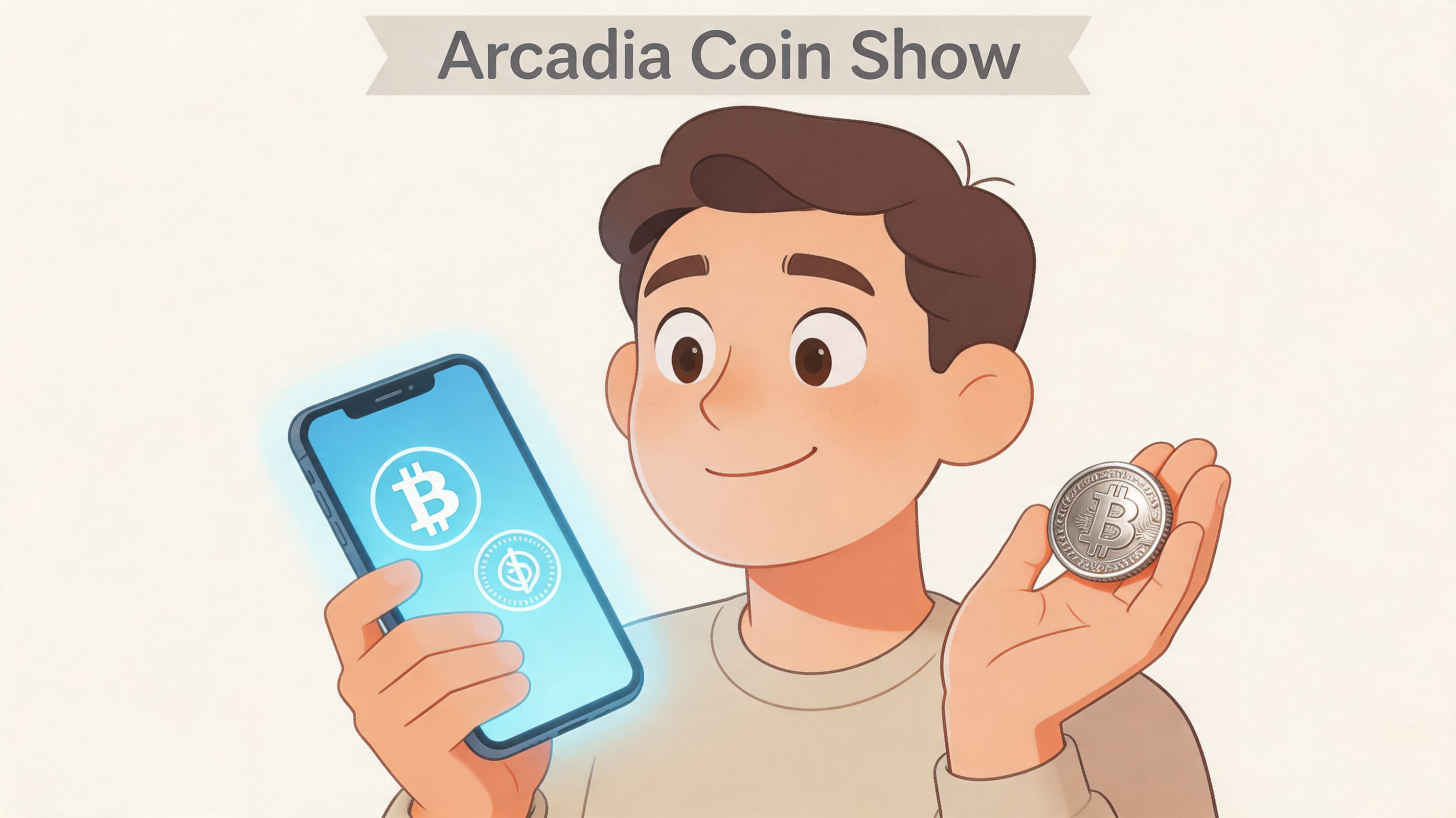
A young man holds a physical Bitcoin coin while looking at a digital Bitcoin logo on his phone.

Why this show works for beginners

A lot of larger shows can overwhelm new collectors because every case looks important and every price tag feels like a test. Arcadia tends to work better as a learning environment because the mix is broad. You’ll see rare coins, currency, bullion, jewelry, and other collectibles in one pass. That helps you learn what draws your attention before you start spending seriously.

If you’re coming from the crypto side, this is also one of the easiest ways to understand real-world asset behavior with your own eyes. Physical buyers care about eye appeal, trust, liquidity, and dealer reputation. Those same forces show up in digital markets too, just with different wrappers.

Practical rule: Don’t treat your first walk through the room as a buying trip. Treat it as price discovery.

What experienced collectors still get from it

Veteran collectors don’t attend a show like this because they expect every table to hold a hidden rarity. They attend because a room with many dealers creates real-time comparison. You can test your own read on pricing, see how fast better material moves, and gauge how dealers describe quality when they’re face to face with buyers.

That’s the main appeal of arcadia coin show. It’s accessible enough for a first visit, but active enough to sharpen your market instincts.

Mark Your Calendar Show Dates Location and Logistics

The practical side is straightforward, and that’s a good thing. If you know where to go, when to arrive, and how to pace the day, you remove most of the friction that keeps first-timers from attending.

The show is held at 50 West Duarte Road in Arcadia, California. Parking is free, which sounds minor until you’ve been to enough events where parking becomes an extra decision, extra cost, and extra annoyance. Here, you can focus on the floor.

When to expect the show

The arcadia coin show runs multiple times a year. Historical scheduling shows events in January, April, and October, with consistent operating hours of 10 AM to 5 PM, based on the show’s official video history at the Arcadia Coin, Currency and Collectibles Show YouTube announcement.

That regular cadence matters for planning. If one date doesn’t fit your schedule, you’re not waiting forever for another chance. It also changes how you should think about buying. You don’t need to force a mediocre purchase out of fear that this is your only shot.

Logistics that make the day easier

Use this quick reference before you head out:

DetailWhat to know
Venue50 West Duarte Road, Arcadia, California
Format2-day coin, currency, bullion, jewelry, and collectibles event
HoursTypically 10 AM to 5 PM
ParkingFree
Best use of timeArrive early if you want first look. Arrive later if you prefer a calmer pace

Arrival strategy

If you’re buying, earlier usually works better. Fresh inventory gets the most attention, and better material often gets spoken for first.

If you’re selling or getting appraisals, mid-show can be more comfortable because the early rush has passed and conversations can slow down. Dealers are more likely to talk through what they’re seeing when they’re not handling a crowd all at once.

The easiest way to enjoy a coin show is to remove avoidable stress before you walk in. Know the address, know the hours, know your plan.

One small but important note

Because the schedule has been regular across multiple points in the year, check the current listing before you go rather than assuming the next event follows the exact same weekend pattern. The habit to build is simple. Confirm the date, confirm your route, and give yourself enough time to make one slow lap before making any decisions.

Your Pre-Show Checklist What to Bring and Know

Preparation changes the whole day. Most bad show decisions happen before you ever approach a table. They happen when you arrive without a budget, without a want list, and without any way to inspect what you’re seeing.

A smart show bag doesn’t need to be elaborate. It needs to help you stay focused, careful, and hard to rush.

Your Arcadia Coin Show Toolkit

ItemReason
CashSome sellers negotiate more comfortably in cash, and it helps you stick to a hard limit
Photo IDUseful if you’re selling material and a dealer wants a clean transaction record
LoupeLets you inspect surfaces, marks, wear, and strike quality more carefully
Notebook or phone notesTrack asking prices, table numbers, and follow-up thoughts
Want listKeeps you from drifting into random purchases
Small storage box or flipsProtects anything you buy before you get home
Water and a light snackPrevents rushed decisions when you’re tired and hungry

What to bring if you’re buying

Cash is still practical at a coin show. Not because every dealer requires it, but because cash changes your behavior. It makes your limit visible. If you brought one amount for bullion and another for collector pieces, you’re less likely to blur those categories in the moment.

A want list matters even more. Keep it simple. Write down the series you collect, the dates or types you need, the grade range you’ll accept, and the maximum you’re willing to pay for each. If you don’t have that list, every attractive coin becomes “maybe,” and “maybe” is how budgets disappear.

If you’re newer to coin inspection, a loupe helps, but it won’t replace judgment. It’s best used to slow you down. Look at high points for wear, fields for distractions, and edges if the holder allows it.

What to bring if you’re selling

Bring your coins organized. Don’t dump loose material into a bag and expect a strong offer. Group similar items together, label anything with known attribution, and be honest with yourself about what is bullion, what is collector material, and what is mostly sentimental.

If you have inherited coins and don’t know where to start, use the appraisal opportunity first, then compare dealer reactions. If one person is enthusiastic and another barely looks up, that difference tells you something.

For collectors who want a fast way to pre-sort loose finds before a show, a guide to using a coin scanner machine for identification and triage can help you arrive with a cleaner shortlist.

The minimum grading knowledge you should have

You don’t need to master grading before attending, but you do need a basic framework. Condition drives price, and small grade differences can matter a lot.

Use this beginner lens:

  • Heavily worn coins often trade mostly on type, date, and affordability.
  • Mid-grade coins need balanced wear, readable detail, and decent surfaces.
  • Higher-grade coins demand sharper detail, better eye appeal, and fewer distractions.

Also learn the difference between technical detail and eye appeal. Two coins can have similar wear but look very different in hand. One has clean, even color and fewer marks. The other looks dull or disturbed. Buyers pay attention to that, whether they use the term or not.

Bring less stuff than you think you need, but bring more discipline than you think you need.

Mastering the Floor Pro Tips for Buying and Selling

The floor has its own rhythm. Some tables invite browsing. Some are run by dealers who want quick, direct questions. Some reward repeat passes because the right coin doesn’t stand out until you’ve seen enough other material to compare it against.

If you’re new, good floor behavior is simple. Be polite, be patient, and don’t touch a coin until the dealer hands it to you.

A five-step guide on how to navigate and master an Arcadia coin show for collectors.

How to approach a table

A clean opening works better than a clever one. Try one of these:

  • For buying: “Could I please see that Morgan dollar in the center case?”
  • For comparing: “I’m looking for problem-free type in this series. Is there one here you’d recommend?”
  • For selling: “I brought a small group. Would you mind taking a quick look and telling me what category you’d put them in?”

That last phrase matters. Asking a dealer to “put them in a category” often gets you a more useful first read than asking, “What are these worth?” One question starts a conversation. The other can force a rushed number before context is clear.

Handling etiquette and inspection

When a dealer hands you a raw coin, hold it carefully by the edges over the case or pad area. Don’t walk away from the table with it in hand. Don’t breathe on it and rub it. Don’t flip it with your thumb like pocket change.

Look for three things first:

  1. Surface quality
    Ignore the label or the date for a moment. Ask whether the coin looks original, cleaned, scratched, spotted, or unusually bright.

  2. Eye appeal
    Some coins are technically fine and still uninspiring. Others pull you in immediately. That reaction matters because it affects resale and collector demand.

  3. Price context
    Don’t ask, “Is this your best price?” as your first move. Ask, “Is there any flexibility on this one?” after you’ve shown real interest.

A practical companion if you’re evaluating collectible issues before you buy is this look at spintria coins for sale and how to assess niche material.

Buying and selling in real show conditions

Here’s a common buying scenario. You spot a slabbed coin that looks strong for the grade. You ask to see it, inspect the surfaces, and compare it mentally to a similar coin you saw two rows back. If this one has better eye appeal and the asking price is in line with the room, buy it. Don’t lose a clearly better coin while trying to save a tiny amount.

Here’s the selling version. You bring in a small box of mixed coins. One dealer offers quickly on the bullion and barely comments on the rest. Another takes more time and points out that a few pieces deserve separate treatment. The second dealer may or may not have the highest offer, but they’ve given you more information. That’s often worth a second conversation.

The show’s appraisal angle can be useful here. According to 10times' Arcadia coin show listing, the show includes diverse inventory such as PCGS and NGC slabbed items, and its free appraisals can lead to a 25% uplift in seller confidence and realized prices, with attendees often realizing $200-500 per appraisal session. I’d treat that less as a guaranteed outcome and more as proof that informed sellers usually make better decisions than rushed ones.

This video gives a feel for the show environment before you go:

What works and what doesn’t

What works:

  • Walking the room once before spending
  • Comparing like with like
  • Asking direct questions
  • Using appraisals to frame a sale before taking offers
  • Leaving space in your budget for the coin you didn’t expect to find

What doesn’t:

  • Buying the first acceptable example you see
  • Treating every slab as equally attractive
  • Arguing grading with a dealer at length
  • Trying to negotiate every item as if it’s a contest
  • Selling inherited material to the first bidder without context

A coin show rewards calm buyers. The people who get into trouble are usually the ones trying to prove they know more than they do, or trying to force every deal.

Decoding Value A Practical Guide to Coin Pricing

Beginners often assume price comes from rarity alone. It doesn’t. Plenty of scarce coins trade at modest levels, and plenty of available coins bring strong money because collectors genuinely want them in that exact form.

In practice, coin pricing at a show usually rests on three things working together. Rarity, condition, and demand. If you can judge those three with some discipline, you’ll stop feeling like prices are random.

A hand holding a coin, illustrating factors like rarity and condition that determine its final value.

Rarity isn’t just low mintage

A coin can have a low original mintage and still be surprisingly obtainable if enough pieces survived. The opposite happens too. Some issues had broader production but are hard to locate in attractive, original condition.

That’s why experienced buyers don’t just ask, “How many were made?” They ask whether nice examples appear regularly, whether they trade easily, and whether the grade they want is common or difficult.

Condition decides the spread

Condition is where pricing often widens fast. A coin that’s merely acceptable may be affordable. A coin with cleaner surfaces, stronger detail, and better eye appeal can jump well beyond that.

At the show, you’ll likely see certified material from services like PCGS and NGC. Slabs help with market confidence and resale liquidity, but they don’t eliminate judgment. Two coins in the same holdered grade can still differ in look, originality, and buyer appeal.

Use this quick comparison mindset:

FactorLower-value outcomeHigher-value outcome
SurfacesHairlines, spots, cleaning, distractionsCleaner, more original look
Strike and detailSoft or flat appearanceSharper detail where expected
Eye appealDull or unevenBalanced, attractive, easy to like
Holder statusRaw with uncertaintyCertified and easier to compare

Demand changes everything

Demand is the market’s mood plus collector tradition. Some series have deep followings. Others are specialist areas with fewer buyers. Neither is automatically better. It just changes how easy it is to buy well and sell well.

Here, bullion and numismatic value part ways.

  • A bullion item is driven primarily by metal content and the premium a buyer will accept.
  • A numismatic coin carries collector value that can far exceed melt.
  • Some pieces sit between those poles, where both metal and collector interest matter.

That distinction is critical at arcadia coin show because the room includes coins, notes, bullion, jewelry, and related collectibles. If you don’t separate “metal play” from “collector play,” you’ll misread pricing all day.

A better way to think about price tags

Don’t ask whether a coin is cheap or expensive in isolation. Ask whether the price makes sense for that exact coin in that exact room on that day.

A useful mental checklist:

  • Would I still like this coin if the label were covered?
  • Does this piece look better, worse, or about the same as others in the room?
  • Am I paying for metal, scarcity, certified confidence, or eye appeal?
  • If I needed to sell later, who would want this and why?

The market doesn’t price coins as abstract objects. Buyers price the specific coin in front of them.

That shift in thinking is what turns a casual browser into a disciplined buyer.

Beyond the Booth Advanced Strategies and Follow-Up

Most attendees go home, put the coins away, and consider the trip finished. That’s fine for hobby collecting, but it leaves information on the table.

The better approach is to treat the show as both a marketplace and a signal source. You’re not only evaluating what you bought. You’re evaluating what dealers emphasized, what moved quickly, what sat untouched, and where bullion conversations felt unusually active.

What increased frequency changes

The more often a show runs, the more you should pay attention to repetition. According to the show’s Eventbrite description, some analysts note that the move toward more frequent scheduling creates a risk of inventory dilution, while also opening a lane for traders who want to connect physical bullion demand with digital hedging behavior, as noted in the Arcadia Coin Show Eventbrite listing.

For collectors, that means patience becomes more valuable. If you’re seeing the same material appear again and again, scarcity may be lower than the sticker suggests. For sellers, repeated dealer presence can help because you can learn who consistently prices fairly and who mostly fishes for uninformed inventory.

A practical bridge to digital asset thinking

If you come from DeFi or on-chain research, a physical show can sharpen your instincts in a way screens don’t. You hear what people are asking for. You notice whether gold and silver interest feels defensive, speculative, or purely collector-driven. You see whether buyers are chasing certified liquidity or raw bargains.

That’s useful because tokenized or gold-backed narratives often move on sentiment, not just charts. A physical market won’t give you a trading signal by itself, but it can help frame one. Local enthusiasm for bullion, repeated talk around premium pressure, or stronger-than-expected demand for tangible stores of value can all become part of your broader thesis.

If you want to keep that workflow disciplined after the show, build a simple post-show log:

  • What categories got the most visible attention
  • Which inventory types seemed repetitive
  • Whether bullion chatter felt stronger than collector chatter
  • What you learned from appraisals or dealer reactions
  • Whether your original want list held up under live market conditions

For traders who like blending real-world observations with digital research habits, a toolset built around a coin counter app for tracking and organizing coin-related activity can help turn loose observations into something you can compare over time.

The collector who follows up well usually learns more than the collector who buys well.


If you like connecting real-world market behavior with smarter digital research, Wallet Finder.ai is worth a look. It helps you track on-chain wallet activity across major ecosystems, study how profitable wallets enter and exit positions, and build watchlists around smart-money behavior. For anyone exploring the overlap between physical asset interest, token narratives, and disciplined market timing, it’s a practical research layer to add after a trip to the arcadia coin show.