Master Google Trend API Python for Crypto Signals
Unlock crypto signals using google trend api python. This 2026 guide covers pytrends, alternatives, queries, rate limits, and data visualization for traders.

April 27, 2026
Wallet Finder

April 27, 2026

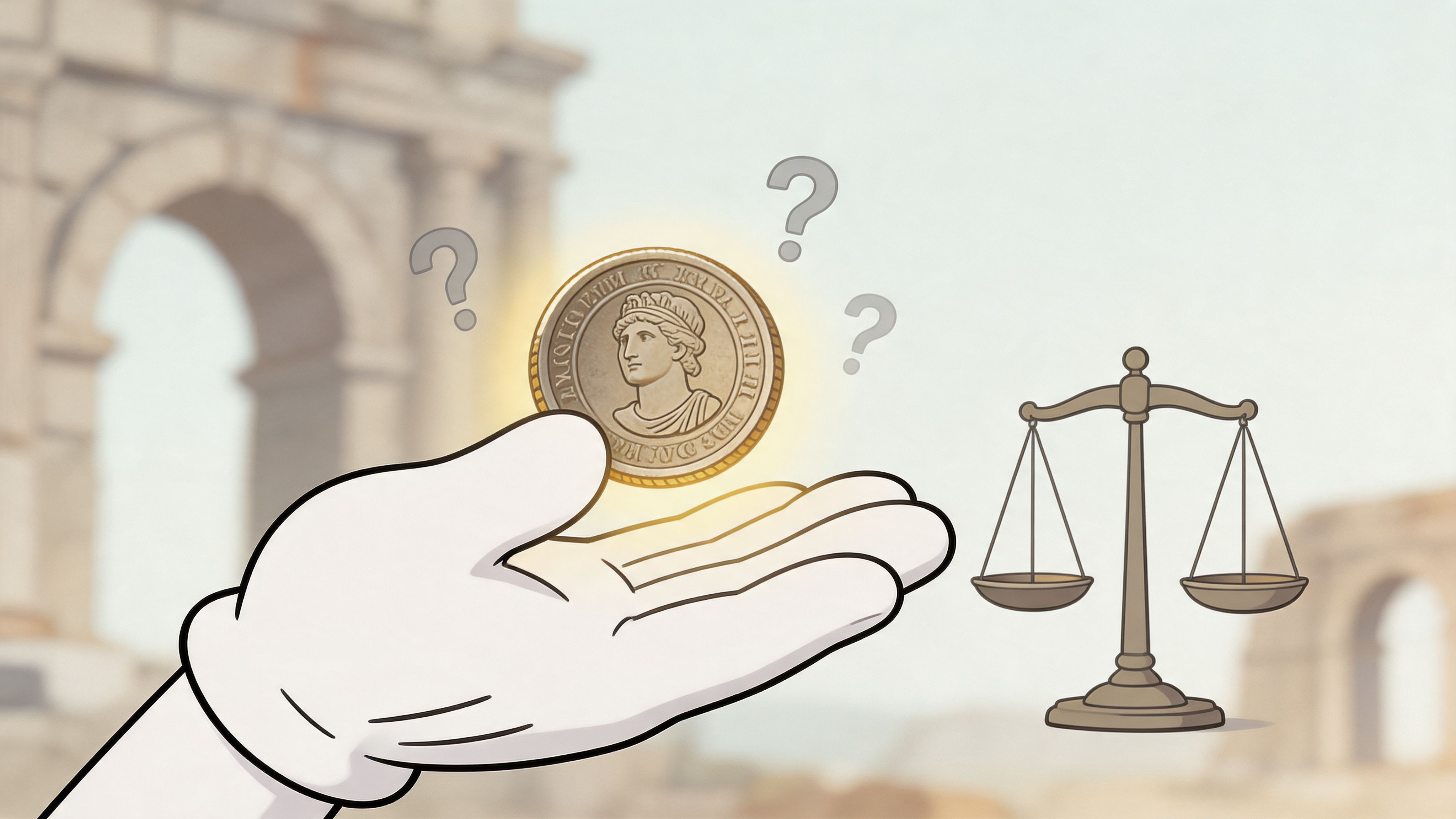
You found a listing for spintria coins for sale, the photos look dramatic, the description says “ancient Roman brothel token,” and the price seems either suspiciously low or painfully high. That’s the normal starting point with spintriae. They sit in one of the murkiest corners of ancient numismatics, where rarity, erotic imagery, and collector curiosity attract both serious dealers and a flood of replicas.
The appeal is obvious. A real spintria is a compact, provocative object from early Imperial Rome, and few artifacts spark conversation faster. The problem is just as obvious once you spend time in the market. Authentic pieces are scarce, replicas are everywhere, and many sellers lean on the mystery of these tokens to hide weak attribution or poor authenticity standards.
A careful buyer can still do well here. The key is to stop treating spintriae like impulse buys and start treating them like specialist material. You need to know what a spintria is, what it isn’t, how genuine examples are examined, where reputable offerings tend to appear, and when to walk away.

Most newcomers meet spintriae through a marketplace search, not a museum catalog. That’s why the first lesson is practical rather than romantic. If you search spintria coins for sale, you’re not entering a broad, transparent market. You’re entering a niche where authentic material appears sporadically and modern copies often outnumber real pieces by a wide margin.
That doesn’t mean you should avoid them. It means you should buy with a framework. Spintriae attract collectors because they combine Roman history, unresolved function, and strong visual impact in one small object. They also punish rushed decisions more than many mainstream Roman coin types.
Three habits separate good purchases from expensive mistakes:
Practical rule: Buy the evidence, not the legend.
A sound purchase usually comes from the same process seasoned collectors use elsewhere in ancient numismatics. Study the type. Compare examples. Vet the seller. Ask direct questions. If the answers come back vague, defensive, or oddly theatrical, move on.
A newcomer usually sees the image first. An explicit scene on one side, a Roman numeral in a wreath on the other, and a seller calling it a "rare Roman brothel token." That is exactly why the history matters. If you know what spintriae are, and also what we still do not know about them, weak listings become easier to spot.
According to the Wikipedia entry on spintriae, these pieces are generally placed in the early Imperial period and are associated with limited first-century CE production. They are small copper-alloy tokens, often around 24 mm, with erotic imagery on one face and numerals running from I to XVI on the reverse. Higher numerals are much scarcer in the market, which affects both price and the likelihood of false rarity claims.

Spintriae are usually described as tokens, not regular Roman coinage. That distinction matters. A seller may call them "coins" because buyers search that term, but their accepted place in numismatics is closer to a specialized token series than to an imperial denomination.
That is also where some confusion starts. There is the ancient Roman object, and there is a modern crypto token using the same name. Collectors of Roman material should keep those worlds separate. A listing that blurs them, chases novelty, or treats the ancient token like a meme asset is already telling you something about the seller's level of seriousness.
A genuine spintria usually follows a narrow visual formula. The erotic side tends to show a couple rather than a random mythological or decorative subject. The reverse carries a Roman numeral framed by a wreath. Once you have handled a few published examples, the type becomes recognizable very quickly.
Collectors pay attention to four basics:
Those points are practical, not academic. A piece that wanders too far from this pattern needs a convincing explanation, and most online sellers do not have one.
The old label is "brothel token." It survives because the imagery makes the theory easy to repeat, and easy stories sell. Some collectors also find it plausible that images could have helped identify services in a transactional setting.
The problem is proof. Direct ancient evidence tying spintriae to brothels is thin.
Other interpretations have stayed in circulation for good reason. Scholars and dealers have proposed gaming use, admission control, or bathhouse locker functions. The numbered reverses fit those ideas at least as comfortably as the brothel theory does. After years in this field, I treat any single-use claim as sales language unless the seller presents it as one theory among several.
If a dealer states the function as settled fact, read the rest of the listing with extra caution.
These pieces are often noted for lacking the kind of circulation wear seen on ordinary Roman bronze coins. As noted earlier, that supports the view that they served a specialized purpose outside normal monetary exchange.
For buyers, this changes the baseline. A genuine spintria should still look ancient. It should not look freshly cast, chemically stripped, or artificially aged. But it also should not be judged by the same wear expectations you would bring to a sestertius that spent years in day-to-day circulation.
This is one of the easier places to go wrong. New collectors often assume heavy wear proves age. On spintriae, heavy smoothing or broad, even wear can be a warning sign rather than a comfort.
The scenes are explicit, but they are not random. They belong to a Roman visual culture that could be frank in certain contexts and highly coded in others. That helps explain why spintriae hold such strong appeal today. They offer a direct, uncomfortable, and fascinating glimpse into a corner of Roman life that standard coin portraits rarely touch.
They also attract replicas for the same reason. The imagery is memorable, easy to market, and easy to sensationalize.
| Historical point | Why it matters to buyers |
|---|---|
| Early Imperial token series, not mainstream coinage | Sellers who describe them like standard Roman coins may not understand the type |
| Erotic scene paired with numeral in wreath | Major design departures need explanation |
| Numerals run from I to XVI | Strange numbering claims should be checked carefully |
| Higher numerals are scarcer | "Common" examples with high numerals deserve skepticism |
| Often described as lacking normal circulation wear | Surface expectations differ from ordinary Roman bronze coins |
Collectors who understand the historical logic of the type are harder to fool. That is the true reward of studying spintriae before buying one. You stop reacting to the legend and start judging the object.
A purchase's success or failure often comes down to this. Spintriae are copied constantly because the type is famous, visually memorable, and easy to market to non-specialists. If you only remember one part of this guide, make it this one.
The most useful hard reference in the replica problem comes from Artifactoria’s spintria replica listing and related authentication summary. It notes that authenticating spintriae involves checking hand-struck die irregularities under magnification, verifying copper alloy composition that is typically 90 to 95% copper, and confirming weight at 5 to 8 g with diameter around 20 to 25 mm. The same source states that a NumisBids 2025 analysis found 65% of “spintria” listings on eBay failed spectrometry tests.

Real spintriae are ancient, hand-struck objects. They should not look mechanically perfect. Under magnification, you’re looking for the small irregularities that come from ancient dies and manual striking.
What often goes wrong with replicas is excessive uniformity. The edges look too regular. The devices look too evenly impressed. The fields can feel unnaturally flat or processed.
Use a loupe first. If you need help comparing surface detail at close range, even a general guide to imaging tools such as this overview of a coin scanner machine can help you think more clearly about what clear diagnostic photography should reveal.
If the coin looks “too finished,” it usually is.
A listing photo can make almost anything look old. That’s why you need the basic physical checks.
Here’s the working checklist I’d use before I even think about payment:
Measure diameter
Authentic examples should fall in the expected range. If a seller can’t provide a diameter, that’s a problem.
Check weight
Ask for the exact weight. It should make sense for the type.
Ask about metal
A credible seller should at least identify it as a copper-alloy token and understand why that matters.
Study edge photos
Many fakes fall apart at the edge. Casting seams, modern filing, and suspiciously even borders often show there first.
Request magnified shots
Close images of the numeral side, wreath, and key figure details often reveal whether the style holds together.
Ancient authenticity is not just chemistry and calipers. Style is one of the strongest filters. A spintria should look like Roman die work, not like a modern fantasy object based on Roman themes.
Many replicas fail. They often exaggerate the erotic scene, sharpen details in the wrong places, or render anatomy and drapery in a way that feels modern. The reverse numerals can also look wrong. Either too stiff, too decorative, or too clean.
If you haven’t handled authentic Roman bronzes before, compare the offered token to vetted dealer examples, not to random marketplace listings. Learn the visual language of genuine engraving. It takes some time, but it pays off.
A hard-to-read token with old provenance is often safer than a bright, flashy specimen with no paper trail. In specialist ancient material, provenance doesn’t just add prestige. It helps establish that the object has circulated through serious hands.
Ask direct questions:
A seller who has answers is much easier to trust than one who repeats “guaranteed authentic.”
Dealer test: Ask one precise question about weight, metal, or provenance. Serious sellers answer directly. Weak sellers pivot back to the story.
For lower-value replicas sold as replicas, there’s nothing to authenticate. For an object offered as a genuine Roman spintria, outside review can be worth the cost and delay.
Third-party authentication or specialist dealer vetting is useful when:
It’s less useful when the listing already shows unmistakable red flags. Don’t pay for formal confirmation of what common sense already tells you.
| Checkpoint | What works | What does not |
|---|---|---|
| Surface review | Integrated age and natural-looking patina | Painted, powdery, or uniform “old” finish |
| Strike character | Ancient irregularity | Mechanical neatness or cast softness |
| Measurements | Seller provides exact weight and size | Seller avoids specifics |
| Style | Roman-looking engraving and numeral forms | Modernized erotic scene or awkward lettering |
| Seller behavior | Clear answers and return policy | Evasion, pressure, or dramatic claims |
The biggest mistake I see is overconfidence after one good sign. A convincing patina doesn’t prove authenticity. A plausible weight doesn’t prove authenticity. A serious assessment combines style, fabric, measurements, and seller credibility. Leave out one of those, and you’re guessing.
The venue matters almost as much as the object. Two listings can show the same numeral, the same general design, and similarly flattering photos, yet one comes from a specialist ancient-coin dealer and the other from a seller moving decorative replicas. That difference changes the whole risk profile.
A useful market anchor appears in this VCoins listing for a pedigree spintria, which describes authentic originals as “extremely rare.” The same source also reflects the split market clearly. Serious numismatic venues handle scarce ancient pieces, while replica-heavy platforms carry modern brass or zinc copies in large numbers.
| Venue Type | Authenticity Risk | Price Level | Selection | Best For |
|---|---|---|---|---|
| Specialized numismatic marketplaces | Lower than general marketplaces | Higher | Narrow but stronger | Buyers who want vetted ancient material |
| Major auction houses | Moderate if you can evaluate cataloging and terms | Often strong competition | Intermittent | Experienced collectors chasing better pieces |
| General marketplaces | High | Mixed | Large, but replica-heavy | Buyers of replicas, curios, or study pieces |
| Antique and handmade platforms | Very high for “ancient” claims | Usually accessible | Many replicas | Decorative copies and educational props |
If you want a genuine spintria, start with specialist venues and dealers who already work in ancient coins. VCoins is a good example of the kind of marketplace where reputation matters and catalog descriptions tend to be more disciplined than on broad consumer platforms.
What works here is the dealer network itself. Sellers know they’re talking to collectors who ask hard questions. Listings are usually better photographed, and terms are often clearer.
Trade-off: selection is thin. You may wait a long time for a type, numeral, or style you like.
Auction houses can be a strong route for advanced buyers. They sometimes surface unusual material, especially pedigreed pieces. The advantage is that serious auction firms usually provide formal descriptions, decent photos, and a public record.
The downside is speed and competition. New buyers often get caught up in the excitement of a rare offering and stop applying discipline. A poor spintria bought in an auction is still a poor spintria.
Many people often begin here, yet it is also where the greatest caution is essential. Platforms that mix collectibles, decor, fantasy reproductions, and genuine antiquities in one search result create confusion fast.
If you browse these venues, separate your goals immediately:
A useful way to think about modern copies is the same way collectors think about manufactured novelty pieces or reproductions in adjacent categories. This overview of a 3D print coin is about a different subject, but it highlights a broader point that matters here too. Reproduction technologies and replica culture make visual resemblance easy. That raises the burden on the buyer.
Before buying from any venue, ask these questions in writing:
If the seller dodges even one of these, your answer is already in front of you.
Search results for “spintria” can send you in two completely different directions. One is the Roman token discussed in this guide. The other is a modern digital asset.
According to the CoinMarketCap page for Spintria, Spintria (SP) is a utility token on the TON ecosystem. It is entirely unrelated to the Roman token. The same page describes it as a low-liquidity asset with a circulating supply of roughly 53 million SP, a market cap under $200K, and notes that it is down over 94% from its all-time high.
That distinction matters because buyers often land on the wrong result and assume they’re researching the same thing. They aren’t.
If you’re collecting ancient material, use search terms like:
If your interest is digital assets, start with the token’s contract and exchange context instead. A primer on a token contract address helps explain the kind of identifier that matters in crypto. None of that has anything to do with authenticating a Roman token.
| Term | What it refers to |
|---|---|
| Spintria | Ancient Roman token with erotic scene and numeral |
| Spintria SP | Modern crypto token on TON |
This mix-up is easy to fix once you know it exists. Just don’t let a crypto search result, exchange chart, or token page distract you from numismatic due diligence when you’re trying to buy an ancient object.
By the time you’re ready to buy, you should be able to do two things at once. First, stay excited about the object. Second, become completely unemotional about the transaction. That combination protects you.

Use this in order. Don’t skip steps because the listing “feels right.”
Define your target
Decide whether you want an authentic Roman spintria or an honest modern replica. A lot of confusion disappears once you make that choice.
Read the listing like a catalog entry
Strip away the drama. Look for the essentials: attribution, diameter, weight, metal, reverse numeral, surface description, provenance, and terms.
Inspect the photos critically
You want clear shots of both sides and the edge if possible. If the photos are dark, filtered, distant, or cropped around trouble spots, ask for better ones.
Check the seller’s language
Good language is specific. Weak language leans on buzzwords like “museum quality,” “estate find,” or “possibly ancient” without supporting detail.
Ask for provenance
Even modest provenance helps. Prior dealer history, old tickets, invoices, or mention of an earlier sale all strengthen confidence.
Compare before buying
Put the offered piece next to vetted examples from specialist dealers. Don’t compare it only to random marketplace listings.
A collector usually gets in trouble before payment, not after. The mistake is often agreeing to trust without enough evidence.
Once the piece still looks plausible after the first round, tighten the process.
These questions do two jobs. They gather facts, and they test the seller. Serious sellers don’t resent precise questions.
Use a payment method that leaves a record. Save screenshots of the listing, seller messages, invoice, and return terms. If the description changes later, your saved copy matters.
Avoid buying expensive ancient material through informal arrangements unless you already know the dealer well. The more ambiguous the payment path, the harder it becomes to unwind a bad purchase.
Don’t celebrate first. Inspect first.
Start with a calm, methodical review:
If the coin immediately raises doubts, stop handling it and contact the seller quickly. A return window closes faster than buyer hesitation.
Spintriae are ancient copper-alloy objects. They need stable, careful storage, not overhandling and not amateur cleaning.
Preservation insight: The safest ancient coin is usually the one left alone.
If you want to display a spintria, use a holder or presentation format that avoids direct abrasion and keeps the environment stable. Good display should support the object, not squeeze it or expose it to constant touching.
For collectors who enjoy the historical side, I also recommend keeping a short written note with the token. Include the numeral, imagery, seller, purchase date, and any provenance details. That habit sounds simple, but it pays off later when your collection becomes easier to manage, insure, or eventually sell.
Before you say yes, ask yourself four blunt questions:
| Final question | If the answer is no |
|---|---|
| Do I understand what this piece is supposed to be? | Stop and study more |
| Do the measurements and style make sense? | Pass |
| Do I trust the seller’s knowledge and terms? | Pass |
| Would I still buy this if the story were less sensational? | Reconsider |
That last one matters. Spintriae generate a lot of heat because of the erotic imagery and the brothel-token legend. Strip that away for a moment. If the object still stands up as a serious ancient artifact with credible attribution, then you may have a real buying opportunity.
Wallet Finder.ai helps traders cut through noisy markets by tracking smart money activity across major chains, surfacing wallet histories, entry and exit behavior, and token movements in one place. If you like research-driven decisions and want a clearer view of who’s buying what on-chain, explore Wallet Finder.ai.