AVC Coins Live: Your Guide to Tracking & Trading
Master AVC coins live tracking. This guide shows you how to monitor prices, find top wallets with Wallet Finder.ai, analyze PnL, and copy-trade with confidence.

April 20, 2026
Wallet Finder

April 20, 2026

You send BTC to an exchange, a cold wallet, or a bridge deposit address. Then it just sits there. The wallet says pending. The mempool is crowded. The trade you wanted to make is moving without you.
That’s the moment when a bitcoin transaction accelerator stops being a niche tool and becomes a trading tool. If you run time-sensitive strategies, a stuck transaction isn’t just annoying. It can mean a missed entry, a delayed hedge, or a broken copy-trade sequence.
The practical question isn’t only how to speed it up. It’s whether paying to speed it up makes financial sense versus waiting, replacing the fee yourself, or using a mining-pool-backed service. That trade-off matters more than most guides admit.
A stuck Bitcoin transaction usually comes down to one thing. Your fee wasn’t attractive enough for miners relative to what else is waiting.
Bitcoin has limited block space. When too many transactions arrive at once, they pile into the mempool, which is basically a waiting room for unconfirmed transactions. Miners choose which transactions to include, and they usually prefer the ones that pay better fees.

If you’re trying to diagnose what’s happening, a blockchain explorer guide helps you check whether the transaction is broadcast, whether it’s replaceable, and whether a parent transaction is holding it up.
The most common cause is a low fee relative to current demand. You may have sent the transaction when conditions were calm, then the mempool filled up after a market move.
Other times, the fee looks reasonable but the transaction still gets buried because:
Practical rule: A bitcoin transaction accelerator doesn’t magically “fix Bitcoin.” It makes your transaction more attractive to a miner, either by direct miner access, rebroadcasting, or fee replacement.
If you’re moving funds for long-term storage, waiting can be fine. If you’re sending BTC to fund an account, settle a transfer, or position into another asset, delay has a cost.
That’s why accelerators became popular in the first place. ViaBTC launched one of the first Bitcoin transaction accelerators in 2017 as a response to congestion around Bitcoin’s 1MB block size limit, and its free tier became widely used because traders could submit a TXID and try to get priority without raising the on-chain fee aggressively, according to ViaBTC’s explanation of its accelerator service.
The key takeaway is simple. Your transaction is stuck because miners are picking other transactions first. Every acceleration method is just a different way to change that ranking.
Before you pay anyone, check whether your own wallet can solve the problem. In many cases, the fastest and cheapest fix is still inside the wallet you already used.
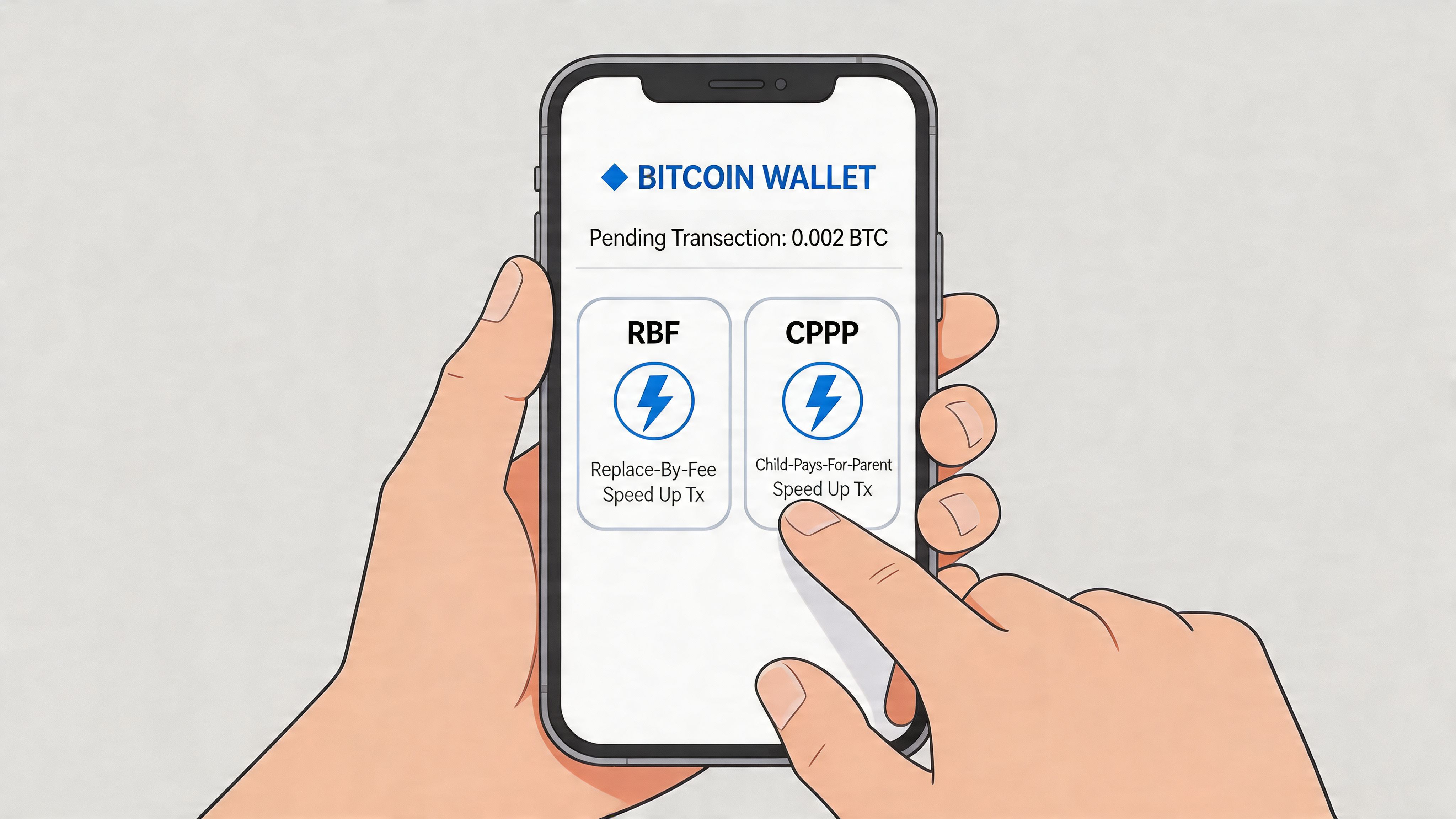
If the BTC originally came from an exchange wallet and you’re still learning the transfer flow, this walkthrough on sending funds from Coinbase is worth reviewing because wallet-level options vary depending on where the transaction started.
Replace-By-Fee, or RBF, lets you resend the same payment with a higher fee. The replacement transaction competes with the original and gives miners a better incentive to include it.
Use RBF when all of these are true:
This is the cleanest fix for most self-custody users. Wallets such as Electrum and other fee-aware wallets typically make this straightforward. You open the pending transaction, choose the bump or speed-up action, and approve a higher fee.
What matters in practice is not the label but the result. You’re telling the network, “Ignore my earlier cheaper version. Confirm this better-paying version instead.”
If your wallet has a built-in fee bump feature, use that before hunting for a third-party bitcoin transaction accelerator.
A few practical notes:
Child-Pays-For-Parent, or CPFP, is the backup move when RBF isn’t available. It works by creating a new transaction that spends the output from the stuck one. You attach a strong fee to the child transaction so miners want to confirm both together.
This is especially useful when:
Miners evaluate the package. If the combined fees are attractive enough, they confirm the parent so they can collect the child fee too.
That makes CPFP handy for traders moving funds between wallets they control. It’s less useful if the receiving side is an exchange deposit address you don’t control, because you can’t create the child transaction there.
Here’s a simple decision shortcut:
| Situation | Better move |
|---|---|
| You sent the transaction and wallet supports fee bump | RBF |
| You received the stuck output in your own wallet | CPFP |
| You used an exchange wallet with limited controls | Third-party accelerator |
| You need certainty fast and wallet options failed | Mining-pool-backed paid service |
A quick visual helps if you’ve never seen the wallet flow in action.
Some traders waste time with passive waiting when a fix was available. Others submit to random accelerator websites before checking whether the wallet itself can replace the transaction.
The weak approaches are usually:
If your wallet gives you RBF, start there. If not, see whether CPFP is possible. If neither route is open, then move to external acceleration.
A stuck withdrawal before a trade entry changes the math fast. The question is not whether an accelerator exists. The question is whether paying for one protects more profit than it costs.

Some services only rebroadcast your transaction to more nodes. That can help if the fee was reasonable and propagation was indeed the issue. Other services have a direct path to miners or mining pools, which gives them a better shot at getting your transaction into a block. Those are two different products, even if both use the label "accelerator."
For traders, that distinction has a direct financial impact. If a delayed deposit means missing a copy trade, losing a hedge, or failing to fund an arbitrage leg, the cheapest option is often the expensive one because it arrives too late.
Free accelerators are best for transactions that are mildly delayed, not badly priced. They are worth trying when there is no hard deadline and the original fee is close to current market conditions.
The catch is reliability.
Free queues fill up when mempools get crowded, and there is usually no service guarantee. Even if a free submission gets accepted, you still do not control timing. For someone consolidating UTXOs or moving coins between personal wallets, that may be fine. For someone waiting on a deposit to open or copy a position, it usually is not.
A good rule is simple. If being late costs more than a small acceleration fee, skip the free queue.
Paid accelerators make sense when speed has a measurable value. The stronger services are tied to miners or pools, or at least explain clearly how they get transactions in front of block producers.
That is the filter to use before paying. Do not focus on the homepage promise. Focus on the path to confirmation.
If a service cannot explain whether it has miner access, transaction eligibility rules, and a refund policy, treat it as low-confidence. In practice, paid acceleration only makes economic sense when the service gives you better odds than waiting and the fee is smaller than the cost of delay.
Network conditions also matter. During periods of rising difficulty and heavier competition for block space, even a decent service may quote longer timelines or reject low-fee transactions. A quick look at this Bitcoin mining difficulty chart guide helps explain why acceleration works better in some periods than others.
Free accelerators are optional tools. Paid accelerators are time-buying tools. Use them only when the time you gain is worth more than the fee.
| Method | What you are really paying for | Typical cost | Outcome certainty | Best use case |
|---|---|---|---|---|
| Free accelerator | Extra propagation or limited pool submission | Free | Low to variable | Non-urgent transfers where delay is annoying, not expensive |
| Paid pool-backed accelerator | Priority through miner or pool access | Service fee varies | Medium to high, depending on policy | Exchange deposits, trade funding, time-sensitive transfers |
| RBF | Higher fee on a replacement transaction | Additional on-chain fee | High if wallet supports it and fee is competitive | Self-custody sends you created |
| CPFP | Higher package fee by spending the stuck output | Additional on-chain fee | High if you control the child output | Wallet-to-wallet transfers you control on the receiving side |
A service is more credible if it is specific about what it can and cannot do. Check these points before sending money or submitting a TXID:
Then compare that cost against the trade you are trying to save.
If the transaction is a personal transfer with no deadline, paying for acceleration may waste money. If the transaction is funding an exchange account for a setup that could move before your deposit lands, paying can be rational even at a noticeably higher fee. The same logic applies to copy trading. A delayed top-up can turn a matched entry into slippage, and slippage can cost more than the accelerator.
Use this decision frame:
No time pressure, acceptable original fee
Try a free service or wait for mempool pressure to ease.
Trade depends on confirmation within a defined window
Price the missed opportunity first, then compare it with the accelerator fee.
Large transfer, failed free attempts, limited wallet controls
Use a paid service only if it explains its miner access and refund terms.
Very high urgency and meaningful capital at stake
Treat generic accelerators as a backup, not the primary plan.
The practical mistake is treating every stuck transaction the same. The right choice depends on the value of speed, not just the annoyance of waiting.
You spot a setup, send BTC to an exchange, and the transaction stalls in the mempool. At that point, a generic accelerator is no longer the interesting option. The real question is whether getting in front of an actual mining pool is worth the extra cost and effort before the trade window closes.
Contacting a mining pool directly is the power-user route because it targets the party that can include your transaction in a block. The process is straightforward, but it is rarely convenient. Pull the TXID from your wallet or block explorer, find the pool’s submission page or support channel, check its fee and policy requirements, and submit the request in the format it accepts.
The edge here is control. A pool can sometimes prioritize transactions its own systems accept, while a generic accelerator may do nothing more than rebroadcast your transaction and hope miners pick it up. For a trader, that distinction matters when a delayed confirmation turns into missed entry, failed collateral transfer, or forced slippage on a copy-trade allocation.
This route makes the most sense when wallet-side fixes are off the table and the transaction still has financial value if confirmed sooner rather than later. Typical cases include deposits from a wallet without RBF, transactions that cannot be rescued with CPFP, or transfers tied to a time-sensitive move where waiting costs more than paying.
If you want context on why congestion can stay high longer than expected, a Bitcoin difficulty chart explainer helps frame the mining side of the network, not just the mempool side.
There are trade-offs.
Some pools expose public forms. Others change their process without notice, limit the transaction types they will consider, or only respond during heavy congestion if the fee economics make sense for them. You also spend time verifying that you are dealing with a legitimate pool endpoint, which matters because fake accelerator pages and support impersonators show up whenever fees spike.
Use direct pool contact when three conditions are true:
That last point is what traders often miss. If the transaction is just a cold wallet transfer with no time pressure, direct outreach is usually overkill. If it is funding margin, posting collateral, or syncing capital into a copy-trading account before the lead trader’s fill drifts, the math changes fast.
I treat pool contact as a targeted tool, not a default habit. It takes more work, it can cost more, and it still offers no absolute guarantee. But when the downside of waiting is measurable and large, going closer to the block producer is often the most rational move.
Most articles stop at “use an accelerator.” That’s incomplete advice. The critical decision is whether the cost of speeding up is lower than the cost of waiting.
That’s the lens traders should use every time.

A useful framing comes from a market commentary that points out the gap directly: many guides explain the mechanics of acceleration but not when a $5-$50 acceleration fee is economically rational versus the opportunity cost of a delayed trade, as discussed in this analysis of the accelerator cost-benefit gap.
Use this question:
If I wait, what can I lose? If I accelerate, what do I pay?
If the expected loss from delay is obviously greater than the acceleration cost, the decision is easy. Pay and move on.
That expected loss can come from several places:
| Situation | Better choice |
|---|---|
| You’re moving long-term holdings with no deadline | Wait or use a free option |
| You can solve it in-wallet with RBF or CPFP | Fix it yourself |
| You’re funding a trade with clear time sensitivity | Consider paying for acceleration |
| You’re reacting emotionally with no defined downside from delay | Don’t pay yet |
The mistake is paying because pending feels uncomfortable. Pending is not the problem. Economic downside is the problem.
Desk rule: Treat accelerator fees like slippage control. If the fee is smaller than the damage from delay, it’s a cost of execution, not a nuisance charge.
Some accelerator services are credible because they explain their miner relationships, refund policies, or submission conditions. Others are just payment forms with vague promises.
Before using any service, check:
A block explorer should stay in your workflow even after payment. Confirm that the transaction is still propagating, that the status changes if a replacement occurs, and that it confirms rather than merely showing “seen by” more nodes.
Here’s the blunt version from trading practice:
The strongest habit is pre-commitment. Decide now what threshold makes a paid accelerator worth it for your style of trading. If you only make that decision in the middle of a live setup, you’ll either overpay or freeze.
A solid acceleration plan is simple. Start with the tool closest to the transaction, then escalate only when the economics justify it.
If your wallet supports RBF, use it. If you control the stuck output and can build a CPFP transaction, use that. If wallet-native options aren’t available and the transfer isn’t urgent, try a reputable free accelerator. If the transfer has real time value, move to a paid service with mining-pool access. For the highest-stakes situations, submit directly to a mining pool.
This isn’t just operational hygiene. It’s part of trade execution.
Advanced accelerators that integrate with mining pools and automate fee bumping are described as reaching 95-98% confirmation success within 4-12 hours during peak congestion, and the same source says API-driven integration can boost copy-trade timing by 80% when a BTC leg delays entry, according to Mudrex’s overview of accelerator tools and trader workflows. Treat that as a reminder that confirmation logistics can affect strategy performance, not just wallet convenience.
The professional approach is to prepare before the next stuck transaction happens:
A bitcoin transaction accelerator is not something you should reach for in panic. It should be part of your execution stack, used with clear rules and a clear cost threshold.
If you track smart money and mirror trades across chains, timing matters. Wallet Finder.ai helps traders monitor profitable wallets, spot entries and exits faster, and act on on-chain moves with less delay. Use it to tighten your research loop so a stuck transfer doesn’t wreck the rest of your trade plan.