Bull Run Dates: A Trader's Guide to Crypto Cycles
Explore historical crypto bull run dates and learn to predict future cycles. This guide covers key indicators and actionable strategies using Wallet Finder.ai.

May 3, 2026
Wallet Finder

May 3, 2026

Have you found a special coin from an inheritance or a random jar of change? The first thrill is great, but the real question is, "What's it worth?" You need a professional evaluation to find out, and that's where this guide comes in.
You don't just need someone who buys gold; you need an expert who can spot a rare mint mark or understand your coin's history. We'll show you where to look, what to ask, and how to get a fair deal.
First, what kind of appraisal do you need? Selling common silver dollars is different from evaluating a complex collection of pre-1933 gold coins. The type of coin you have points you to the right expert.
For common bullion, one type of evaluator works. For rare, high-value pieces, you'll need someone with a completely different skill set.
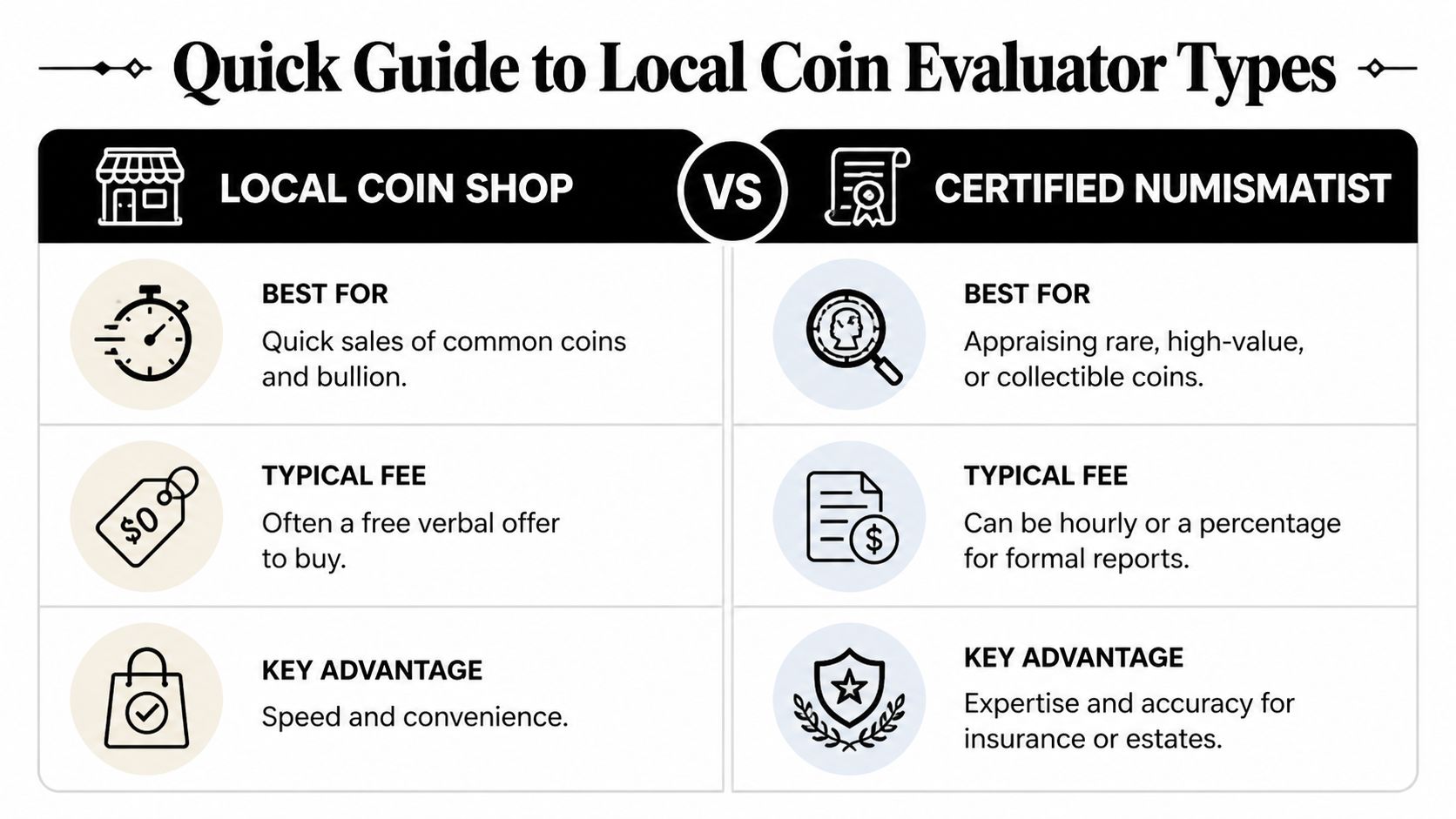
A local coin shop is best for speed with common items. A certified numismatist provides the specialized expertise needed for rare or high-value coins.
To help you decide where to start your search, here's a quick breakdown of the most common places to find a local coin evaluator.
| Evaluator Type | Best For | Typical Fee Structure | Key Advantage |
|---|---|---|---|
| Local Coin Shop | Quick sales of common bullion or circulated coins | Usually free; offer is based on their purchase price | Speed and convenience |
| Certified Numismatist | Rare, high-value, or collectible coins | Hourly rate or percentage of the appraised value | In-depth expertise and formal documentation |
| Pawn Shop | Immediate cash for items of moderate value | Free; offer is based on loan or purchase value | Fast cash, but offers are typically lower |
| Coin Show Dealer | Getting multiple opinions; buying/selling in one place | Often free verbal appraisals to attract business | Access to many experts and a competitive market |
Each option serves a different purpose. Your goal will determine which one is the right fit.
Coin appraisal is changing. The industry is shifting toward hybrid models that mix online convenience with in-person expertise, with some projecting a 75% shift to these models by 2026.
For example, some companies now offer a 3-step appraisal plan that lets collectors sell rare coins from home. These services often boast satisfaction rates as high as 90% by providing free online appraisals, followed by immediate payment upon verification. You can see an example of this modern approach for Minnesota coin buyers.
Finding a trustworthy "coin evaluator near me" is more than a Google search. The best experts are deeply connected to the coin collecting community. You need a numismatist who lives and breathes rare coins, not just a shop that buys gold.
Here are four actionable steps to find a true professional:
Your first stop should be a dedicated coin shop. A real numismatic shop feels more like a small museum than a pawn store.
Actionable Steps:
Coin shows are temporary, super-concentrated markets with dozens of dealers in one place. They are perfect for getting multiple opinions quickly.
Actionable Steps:
Walking the floor of a coin show is like speed-dating for appraisers. It’s the quickest way to gauge market interest and get a feel for what multiple experts think your coin is worth, all in one afternoon.
Most large cities have a local coin club, many affiliated with the American Numismatic Association (ANA). These clubs are goldmines of unbiased knowledge.
Actionable Steps:
For insurance, estate planning, or legal reasons, you need a formal, written appraisal from a certified appraiser. They typically charge an hourly fee instead of making an offer to buy.
Actionable Steps:
You’ve found a few potential "coin evaluators near me." Now, you must verify their trustworthiness. Before letting anyone near your coins, do some homework.
Start with online research. Check reviews on Google, Yelp, and the Better Business Bureau (BBB). Look for patterns. Are customers praising fair prices, or are there complaints about lowball offers and pushy tactics? A consistent theme of negative feedback is a major red flag.
In numismatics, reputation is everything. Serious professionals are almost always members of major industry organizations, signifying a commitment to ethical standards.
Key Affiliations to Look For:
A dealer's affiliations tell a story. Membership in groups like the PNG or ANA demonstrates a public commitment to fairness and expertise. It's an easy-to-verify signal that they operate within the established norms of the numismatic world.
Take a market like Minneapolis, for example. The area has a high concentration of dealers, with 52 BBB-accredited and listed coin businesses. That's about one dealer for every 12,000 residents in the metro, well above the national average. With a projected 28% rise in gold and silver demand from 2024-2026, knowing how to pick the right expert becomes even more crucial.

A short phone call or email can tell you almost everything. Think of it as a brief interview to vet their expertise.
Here is a checklist of questions to ask:
Walking into an appraisal prepared makes a huge difference. It turns you from a passive observer into an informed participant. First, know what not to do.
The Golden Rule: NEVER clean your coins. This is a common and costly mistake. The tarnish, or patina, is a crucial part of a coin's history. Scrubbing it can cause micro-scratches and erase decades of natural toning, potentially destroying over 50% of a rare coin's value.
Before meeting with a coin evaluator near me, organize what you have. A simple list shows you're serious and prepared.
How to Create Your Inventory:
Organizing your collection helps you track every piece during the appraisal.
![]()
A professional appraisal is a methodical process. An expert will handle your coins by the edges and use specific tools.
Expect the evaluator to use a jeweler's loupe for close inspection, a digital scale to verify weight, and standard reference guides like the "Red Book." Their process should be completely transparent, and they should be happy to explain what they're looking for as they go.
They will assess key factors: grade (condition), rarity, errors, mint mark, and market demand. This hands-on process is why a physical evaluation is superior to online tools. While technology is improving, you can learn about its current limitations by reading our article on the best coin scanner machine.
Let's discuss the financial side. Understanding how an evaluator charges is key to building trust and avoiding unfair deals.
Appraisal costs vary depending on your needs. Clarify this from the start.
Always get a clear breakdown of the fee structure before the appraisal begins.
A great evaluator educates you. A shady one uses pressure and confusing terms. Here are some of the biggest warning signs.
An evaluator's job is to give you an honest, informed opinion on value. If their main goal seems to be making a fast buck instead of explaining your coin’s history and worth, it’s time to get a second opinion.
Spotting these tactics is your best defense. If you encounter any, pause and find another expert.

Knowing deceptive practices can save you from a major financial hit.
Common Red Flags When Choosing a Coin Evaluator
| Red Flag | What It Means | Your Best Response |
|---|---|---|
| High-Pressure Sales Tactics | The evaluator insists you must sell right now because the "offer is only good today." | This is a classic tactic to prevent you from getting other offers. A fair offer will still be fair tomorrow. Politely decline and leave. |
| Refusal to Explain Pricing | You get a single, lump-sum offer for your entire collection with no item-by-item breakdown. | They may be hiding a high-value coin among common ones. Always insist on an itemized offer. |
| Discouraging Second Opinions | They claim no one else will offer more or that other local dealers are dishonest. | A confident professional is never afraid of fair competition. This is a huge sign of insecurity. |
| "Bait and Switch" Offers | You receive a great price over the phone, but it drops dramatically once you arrive in person. | They are banking on you not wanting to leave empty-handed. Be prepared to walk away if the offer doesn't match the estimate. |
These are common tricks, so stay vigilant. Your gut feeling is a powerful tool. A professional transaction should feel respectful and transparent. If something feels off, it probably is. Never feel pressured to accept a deal.
Even after finding a "coin evaluator near me," some questions may remain. Here are answers to the most common concerns.
The cost depends on your needs.
Verbal Offer to Buy: Usually free. A dealer looks at your coins and makes a purchase offer. This is not a formal appraisal.
Formal Written Appraisal: Needed for insurance or legal reasons. This professional service costs $75 to $200 per hour, based on the appraiser's expertise.
A "free appraisal" is almost always just an offer to buy. A paid, formal appraisal is a professional service delivering a detailed, documented valuation with zero pressure to sell. Make sure you know which one you need before you go.
It depends. Grading a coin with services like PCGS or NGC costs $30 to $75 per coin plus shipping. It only makes sense in specific cases.
Consider grading before an appraisal if:
For most coins, hold off. A trustworthy local evaluator can tell you which coins are candidates for professional grading.
The "value" is not always what a dealer will pay you.
Appraisal Value (Retail): The coin's price in a retail setting. An insurance appraisal uses this value.
Wholesale Offer: The price a dealer pays you. It's lower than retail to cover overhead and profit margin. Expect wholesale offers to be 20-40% below retail.
Melt Value: For common gold or silver bullion coins, this is the base value of the precious metal content.
Online evaluation is tempting but risky. Mailing your collection is stressful. While some services have good reputations with insured shipping, the risk of loss, damage, or a lowball offer is higher than a face-to-face meeting.
For most people, finding a trusted local coin evaluator near me is the safer, smarter, and more educational choice. It lets you build a relationship, ask questions, and keep your coins secure.
Wallet Finder.ai helps DeFi traders discover and mirror the strategies of top-performing wallets in real time. Our platform provides the data and alerts you need to act on smart money movements before the crowd. Start your 7-day trial and find your edge at https://www.walletfinder.ai.