
Uphold Crypto Wallet: A Trader's Guide for 2026
Explore the Uphold crypto wallet in-depth. Our 2026 guide covers fees, security, supported assets, and how traders can use it with tools like Wallet Finder.ai.
Most traders give bad advice about the uphold crypto wallet.
They treat it like a pure exchange if they are TradFi-first, or dismiss it as too custodial if they are DeFi-first. Both views miss the useful middle ground. Uphold works best as a bridge. It is not the wallet I would use for every on-chain action, and it is not the exchange I would use for every advanced execution workflow. But as a multi-asset hub, fiat ramp, and fast conversion layer, it solves a real trading problem.
That problem is friction.
If you move between bank balances, stablecoins, majors like BTC and ETH, and occasional rotation into metals or fiat, a fragmented setup slows you down. Uphold’s appeal is that it collapses a lot of that movement into one place, then lets you push assets outward when you need a fully non-custodial environment.
For traders, that distinction matters. A wallet is not just about storage. It is about how quickly you can reposition capital, how many assets you can access without awkward pair routing, and how much operational drag you create for yourself when the market moves.
Why Uphold Is More Than Just a Crypto Wallet
A lot of DeFi traders dismiss Uphold too early because it is custodial. That misses the part of the workflow where it earns its place.
Uphold is less about self-custody and more about capital movement. In practice, it works as a multi-asset hub where you can move between fiat, crypto, stablecoins, and other supported assets without building your own route across several apps and trading pairs. For traders who need fast funding, exits, and reallocation, that matters more than the label on the product.
Value emerges at the edges of DeFi.
If your workflow starts with bank money, passes through majors or stablecoins, and then ends in an on-chain wallet for copy trading or DeFi execution, Uphold can remove a lot of setup friction. It handles the messy conversion step, then lets you send capital out to the wallet you use for smart contracts, staking, or protocol access. The same logic applies in reverse when you want to bring profits back, reduce exposure, or rotate into fiat.
That makes it useful for specific jobs:
- Fiat on-ramp: fund an account and get into crypto without juggling multiple platforms first.
- Cross-asset rotation: switch positions without planning every intermediate trading pair yourself.
- Off-ramp and profit management: move out of volatile assets and simplify the path back to cash.
- Portfolio parking: hold value in one dashboard before deploying it back on-chain.
Traders focused on cross-asset liquidity usually get more from Uphold than holders who mainly want long-term self-custody and minimal platform dependence.
That trade-off should be stated plainly. Uphold is strong at access, conversion, and operational simplicity. It is weaker as a pure on-chain command center. If you spend most of your time approving contracts, bridging across ecosystems, or managing assets inside DeFi protocols, a fully non-custodial wallet should still sit at the center of your stack.
Use Uphold for what it does well. Get money in, convert efficiently, move funds out, and cash out cleanly when needed. For Wallet Finder.ai users, that makes it a practical complement to on-chain copy trading, not a replacement for the wallet that signs your DeFi transactions.
Understanding the Uphold Wallet Architecture
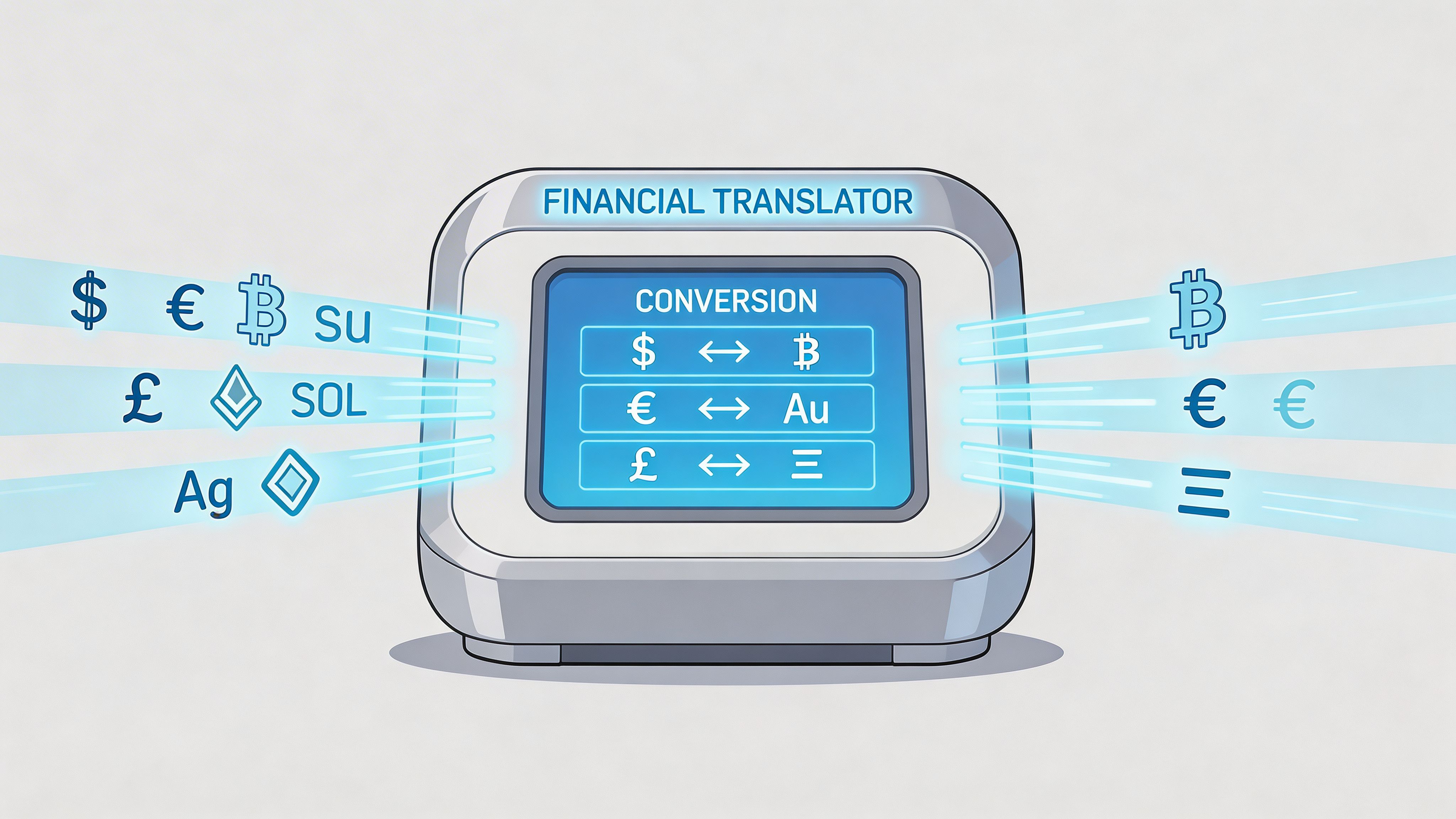
Uphold's architecture is built to convert value across asset classes without making you manage a chain of trading pairs first. That is the primary difference.
How the trading engine changes the workflow
On a standard exchange or wallet setup, execution often starts with route planning. You check which pair exists, whether liquidity is good enough, and whether you need an extra conversion before funds are ready to leave the platform. Uphold reduces that operational work by centering the experience on the asset you have and the asset you want.
For active traders, that matters more than the interface polish. It changes how quickly capital can move from bank deposit to crypto, from one token thesis to another, or from crypto back into fiat or metals without building a manual path every time.
The practical workflow is simpler:
start asset, choose target asset, review the price, confirm.
That does not guarantee the best execution in every market condition. It does mean Uphold handles much of the conversion logic internally, which is useful when speed and convenience matter more than full control over every route.
Custodial first, built for access rather than pure self-custody
Uphold is primarily a custodial system. That choice shapes everything else.
The account model is built for access, recovery, compliance, and cross-asset movement. A non-custodial wallet is built for signing transactions, holding your own keys, and interacting directly with smart contracts. Those are different jobs, and traders get better results when they treat them that way instead of expecting one product to cover both equally well.
The custodial structure gives Uphold a few clear advantages:
- Easier account recovery
- Simpler fiat funding and withdrawals
- Faster movement between supported asset classes
- Less operational risk from losing seed phrases
It also creates real limits:
- You do not control the keys in the same way you do with MetaMask or Phantom
- Access can be affected by compliance checks and regional rules
- The platform is less suited to constant dApp interaction
- It is not the wallet I would keep at the center of a DeFi-heavy workflow
That last point matters for Wallet Finder.ai users. If you copy trade on-chain, test wallets, or rotate into new ecosystems quickly, Uphold works best as the funding and settlement layer around that activity. Move money in, convert efficiently, send capital to your self-custody wallet, execute on-chain, then bring profits back when you want to reduce risk or cash out.
The architecture makes more sense when you separate roles
Traders often make the wrong comparison and ask whether Uphold can replace a non-custodial wallet. In practice, the better question is whether it improves the parts of the workflow that happen before and after on-chain execution.
For many traders, the answer is yes.
Use Uphold as the hub for deposits, conversions, and exits. Use a self-custody wallet for approvals, protocol access, staking, and chain-native DeFi. That split keeps the convenience of a managed multi-asset account without forcing it into a role it was not built to handle.
Key Features and Supported Assets on Uphold
Traders who use Uphold well usually stop treating it like a pure wallet.
Its edge is speed between asset classes. You can move from fiat to BTC, from BTC to a stablecoin, or from crypto exposure into metals inside one account, then send funds out to the wallet you use for on-chain execution. For Wallet Finder.ai users, that matters more than a long feature list. The practical value is having one place to fund, convert, park capital, and cash out without breaking your workflow every time market conditions change.
Asset coverage that changes how you trade
Uphold supports a wide mix of assets inside the same account, including:
- Fiat currencies
- Major cryptocurrencies
- Stablecoins
- Precious metals
- Other supported digital assets
That mix is the point.
A self-custody wallet is better for contract approvals, token discovery, LP management, and direct protocol access. Uphold is better when you need to change risk quickly across categories. If a copied DeFi trade closes and you want to reduce exposure fast, converting part of the position into fiat or a stable asset on one platform is simpler than stitching that process together across multiple apps.
Supported networks matter, but only for the right job
Uphold lists support for multiple blockchain networks and external transfers for selected assets through its platform and apps. In practice, the important question is not the raw network count. It is whether the chains you actively fund are covered well enough for deposits, withdrawals, and rebalancing.
For many active traders, the relevant overlap is clear:
- Ethereum for established DeFi activity and stablecoin settlement
- Solana for faster trading cycles and higher-beta opportunities
- Base for newer strategies with lower transaction costs
If those are part of your normal rotation, Uphold can work well as the account that sits between your bank and your on-chain wallet.
If you need help with access before using those transfers, this Uphold wallet login guide covers the account side.
Features that earn their place
Plenty of platforms advertise everything. These are the features that matter in real use:
| Feature | Why it matters in practice |
|---|---|
| Instant conversion between supported assets | Cuts down the friction of selling in one venue, transferring, then rebuying elsewhere |
| Multi-asset account structure | Lets you manage crypto, cash balances, and defensive positions from one dashboard |
| External wallet transfers | Makes Uphold useful as an on-ramp and off-ramp instead of a closed system |
| Mobile and desktop access | Helps when you need to react to volatility without waiting to get back to a full trading setup |
| Simple portfolio rebalancing | Useful for trimming risk after a profitable on-chain run or rotating back into cash |
Start tracking smart money today
Join thousands of traders using WalletFinder.ai to find profitable wallets and copy their trades.
Start Free Trial →Get weekly market alpha
Pre-breakout setups, whale moves, and OSINT signals. Free, every Thursday.


