
Top 10 Wallet Tracker Reddit Picks for 2026
Searching for the best wallet tracker reddit recommends? Explore our 2026 list of top tools for copy-trading, PnL analysis, and real-time whale alerts.
Most wallet tracker Reddit threads answer the wrong question. They compare dashboards, screenshots, and pricing pages, but they don't tell you which tool helps you act fast enough to copy a wallet before the move is gone.
That gap matters more now because wallet behavior itself has become mainstream. Global digital wallet adoption is projected to reach 52.6% in 2024 and grow by 15.3% to over two-thirds of the global population by 2029. In crypto, the same pattern shows up in trader behavior. More people want wallet-first workflows, alerts, and follow-the-money signals instead of just token charts.
If you've been digging through wallet tracker Reddit posts looking for the best setup, what becomes clear is that no single tool wins every use case. Some are built for discovery. Some are built for fast alerts. Some are better for verification after you spot a move somewhere else. And some look impressive until you try to use them in a live copy-trading workflow and realize the data is too shallow, the alerts are too slow, or the interface adds friction when timing matters.
Practical rule: For copy-trading, the best wallet tracker isn't the one with the prettiest dashboard. It's the one that helps you decide in seconds whether a wallet is worth following, whether the trade is copyable, and whether the token is too risky to touch.
Here are the tools that keep coming up in serious trader discussions, with the trade-offs that are important.
1. Wallet Finder.ai
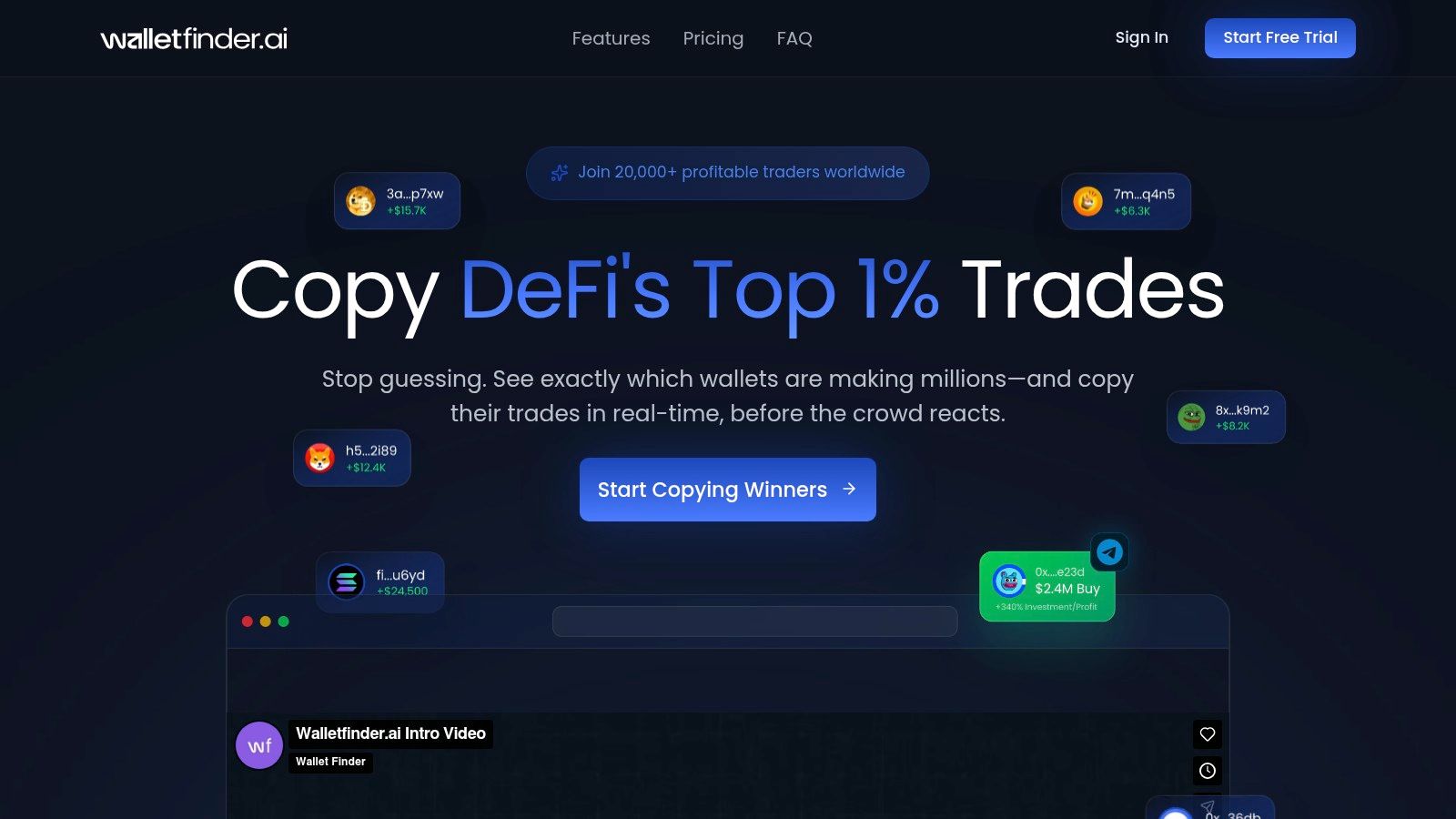
Wallet Finder.ai is the closest fit for traders who want a wallet tracker to feed a real copy-trading process, not just satisfy curiosity. Its strength is turning raw on-chain activity into a ranked stream of wallets, trades, and tokens you can filter by behavior.
Instead of making you manually piece together whether a wallet is smart, lucky, or reckless, it surfaces full trading history, PnL, win rate, entry and exit timing, position sizing, and historical charts. That matters because copying wallets without context is how traders end up tailing someone else's exit liquidity.
Why it works for copy trading
Wallet Finder.ai is built around a practical sequence. First, find wallets with behavior that matches your risk appetite. Then save them to a watchlist. Then route alerts to Telegram or mobile push so you can react when they buy, swap, or sell.
For active DeFi traders, that workflow is much tighter than jumping between a block explorer, a portfolio viewer, and a separate alerting app.
A few features stand out:
- Behavior-first filters: Sort wallets by returns, consistency, recent gains, or risk profile instead of just chasing loud addresses.
- Trade-level detail: Check whether a wallet scales in carefully, apes into illiquid names, or exits too fast for followers to mirror.
- Token intelligence: Review holder distribution, contract checks, scam flags, and social signals before copying the wallet's move.
- Research depth: Export datasets and build custom charts if you run your own offline analysis.
Where traders get the most value
This is the kind of tool that helps in two specific situations. One is pre-market research, when you're building a list of wallets worth watching. The other is live execution, when you need instant alerts and enough historical context to know whether to act.
The platform also offers a 7-day trial, with masked addresses and some usage limits, then paid tiers for broader access. Higher plans provide more reveals, more advanced analytics, and stronger research workflows. Security is clearly part of the positioning too, with encrypted connections, no private key storage, and authentication handled through AWS Cognito in the U.S.
Most wallet trackers show what happened. Wallet Finder.ai is better when you need to decide whether what happened is repeatable.
Pros:
- Fast signal flow: Real-time, multi-chain alerts through Telegram and mobile push support quick copy-trading decisions.
- Stronger wallet vetting: PnL, streaks, timing, and sizing help separate disciplined traders from one-hit wonders.
- Useful token risk filters: Contract and distribution checks reduce obvious mistakes.
- Flexible buying path: Trial access helps test the workflow before committing.
Cons:
- On-chain only: It can't tell you whether a wallet had off-chain information, private allocations, or coordination.
- Paid depth: Casual traders may find the best features live behind higher tiers.
2. Nansen
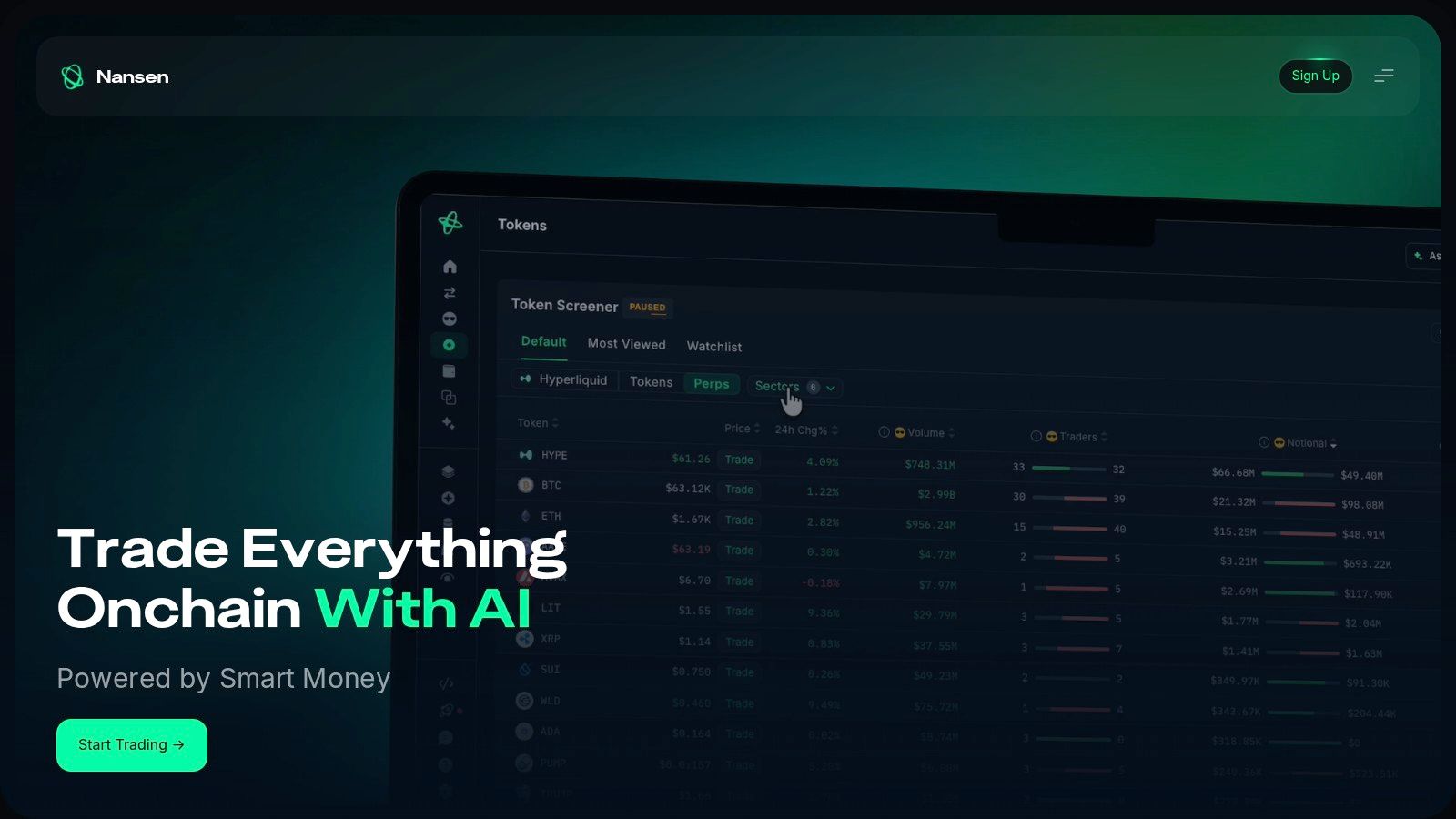
Nansen is the tool many traders graduate to when they stop asking, "What did this wallet buy?" and start asking, "Who is behind this flow, and which cohort does it belong to?" Its value is less about raw speed and more about labeled context.
That labeling is why Nansen shows up so often in wallet tracker Reddit threads from more advanced users. Smart Money labels, entity profiling, and flow dashboards make it easier to find clusters of wallets behaving in similar ways.
Best use case
Nansen is strong when you're researching before placing a trade. If you're trying to identify whether buying pressure is coming from funds, insiders, experienced traders, or random wallets, its profiler and netflow views save time.
For copy-trading, I wouldn't use it as my only tool. I'd use it to validate the wallet cohort, then pair it with something more execution-focused. If you want a practical primer on tracking larger players, this guide to crypto whale tracker workflows is a good complement.
- Best for: Wallet discovery, entity research, and labeled flow analysis
- Less ideal for: Traders who want the simplest alert-first setup
- Watch out for: Learning curve on deeper features
The downside is obvious once you get inside. Nansen rewards users who know what they're looking for. If you don't already have a process, the platform can feel like too much surface area and not enough direction.
3. Arkham Intelligence
Arkham Intelligence is one of the better choices when attribution matters more than portfolio convenience. If a wallet tracker Reddit thread is focused on whales, exchange-linked movement, exploit wallets, or known entities, Arkham usually enters the conversation fast.
Its graph visualizer is the main reason. Instead of reading one wallet in isolation, you can map wallet relationships and trace network behavior. That makes it useful for traders who care about whether a move came from a fund, a market maker, a bridge path, or a cluster of linked addresses.
Where Arkham shines
Arkham fits traders who think like investigators. You can set alerts by entity, size, token, or chain, then use the labels and visual relationships to understand whether the transaction deserves attention.
That's especially helpful when you don't want to blindly copy a trade but do want to understand where smart capital is positioning. If you're building a stronger base in crypto on-chain analysis, Arkham is a solid tool to keep in rotation.
A labeled wallet is useful. A labeled wallet connected to a network of related wallets is far more useful.
Pros and cons are fairly straightforward:
- Strong upside: Better context for deanonymization and wallet relationships
- Good alerting: Suitable for tracking notable entities and large moves
- Main limitation: Labels still need cross-checking, because attribution isn't perfect
- Workflow trade-off: Better for research and context than fast, efficient copy execution
4. DeBank
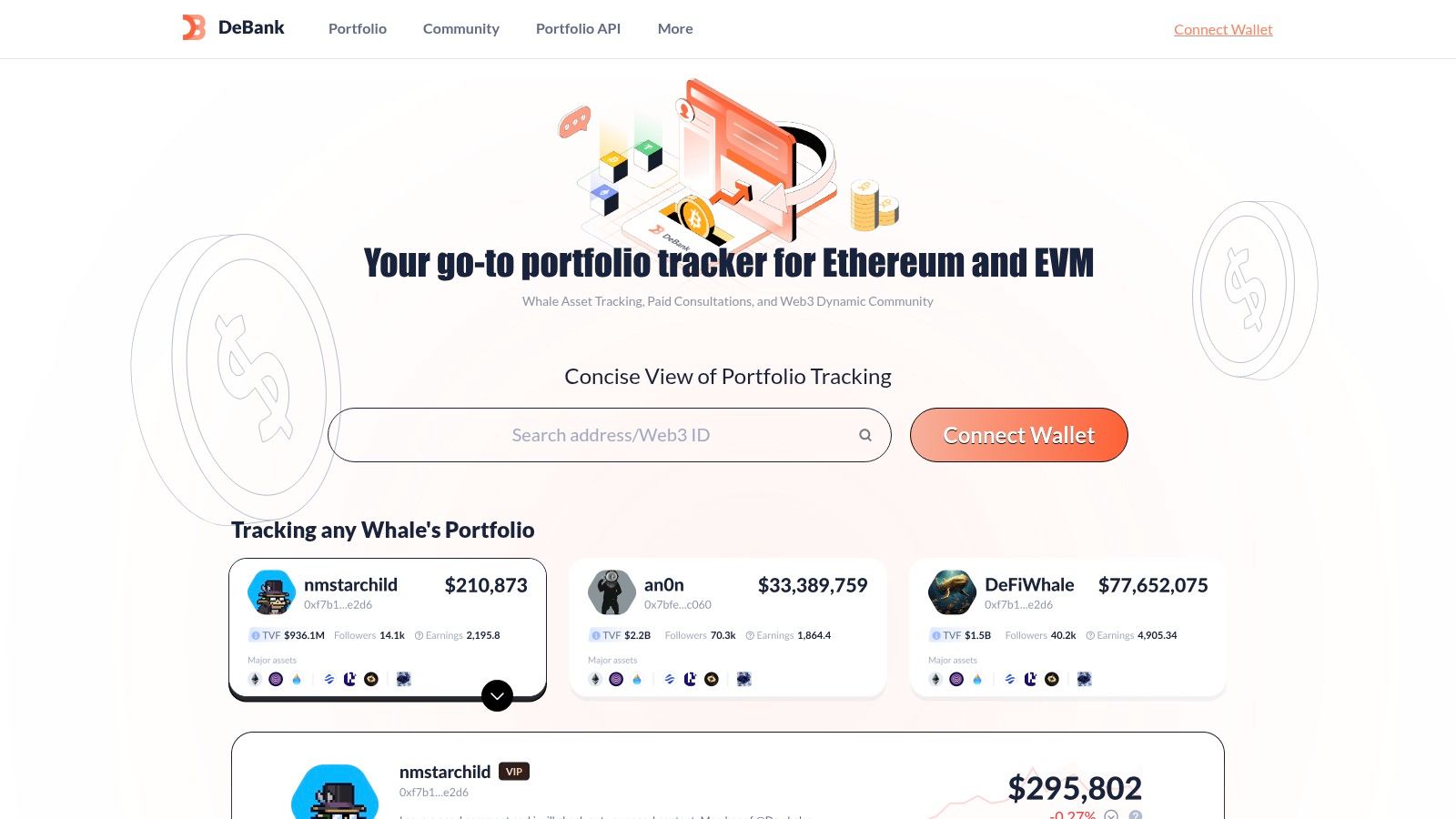
DeBank wins on speed of understanding. Paste an EVM wallet address, and you get a human-readable view of positions, token balances, protocol exposure, and decoded transactions without much friction.
That simplicity is why traders keep recommending it. If your job is to monitor what a wallet is doing all day, not run a full forensic investigation, DeBank is often faster than more complex intelligence suites.
The practical edge
For copy-trading, DeBank works well as a second-screen tool. You catch a wallet alert somewhere else, then use DeBank to quickly inspect current holdings, protocol usage, and recent actions. That flow is smooth because the transaction decoding is readable enough for fast decisions.
Its Stream layer also adds a social dimension, though that's not the core reason serious traders use it.
- Use it for: Quick watch-only tracking of EVM wallets
- Strong point: Clean decoding and portfolio visibility
- Weak point: Best coverage stays on EVM, so multi-chain traders may need backup tools
If most of your wallet tracker Reddit research revolves around Ethereum and adjacent EVM chains, DeBank deserves a spot in the stack.
5. Zerion
Zerion sits in a useful middle ground. It's more polished than a bare explorer, more mobile-friendly than many pro tools, and more practical for notifications than people often expect.
That matters if you don't live at a desk all day. A lot of wallet tracker Reddit recommendations overlook how many trades are managed from a phone, especially when traders are just trying to monitor wallets, watchlists, and a few key tokens without opening a full analytics workstation.
Who should use it
Zerion is a strong fit for traders who need watch-only monitoring with decent alerts and a better mobile experience. It also works well for people who want notifications forwarded into Slack, Discord, or email through integrations.
Its Premium tier adds more advanced wallet PnL views, but the main appeal is still usability.
- Good fit: Mobile-first traders and users who want flexible notifications
- Helpful feature: Watchlists for both addresses and tokens
- Trade-off: Coverage depth and analytics can feel lighter than specialist intelligence platforms
If your workflow is "track a short list of wallets, get alerted, then investigate deeper elsewhere," Zerion does that job well.
6. Zapper
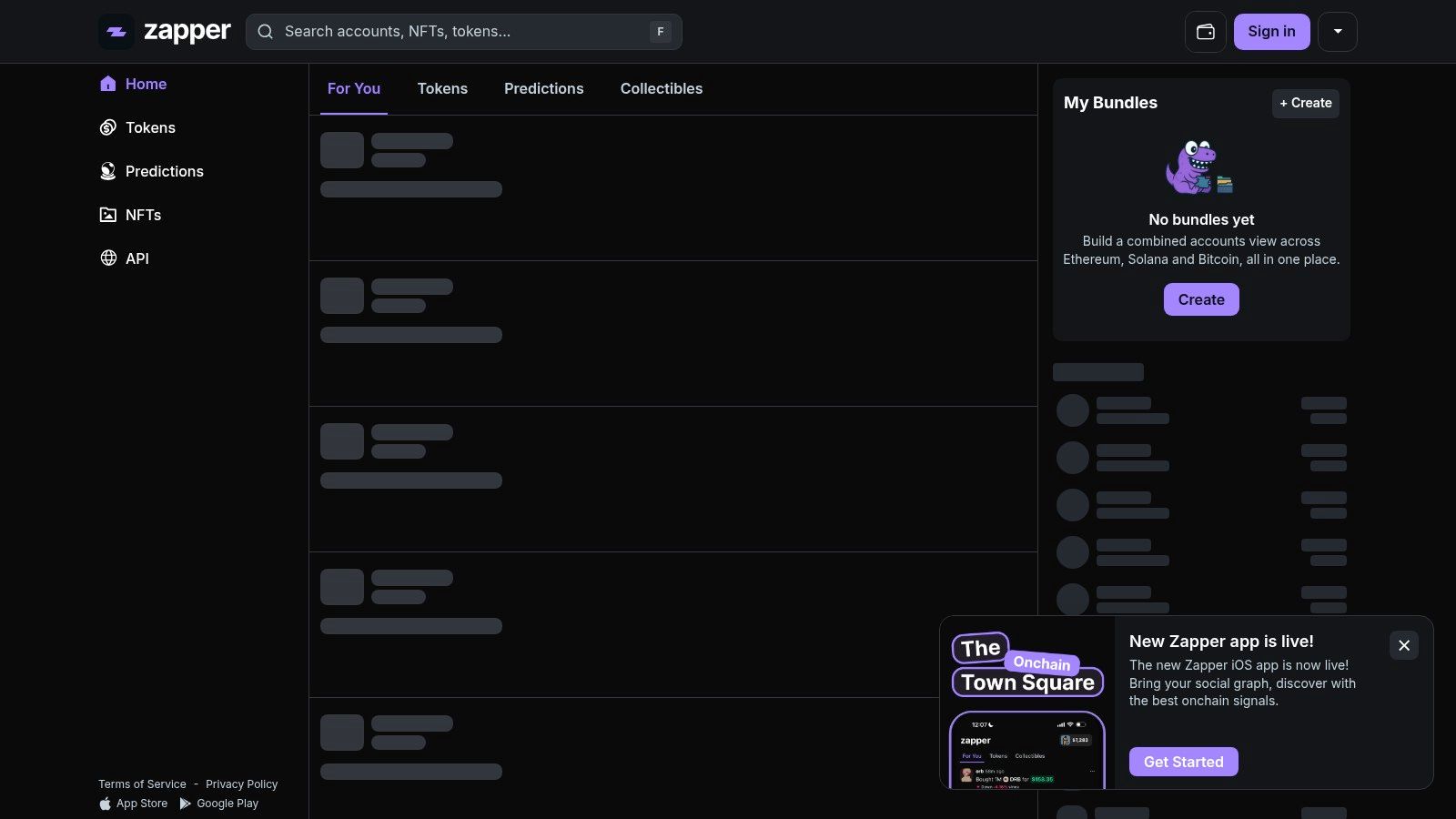
Zapper has been around long enough that many traders trust it as a simple watch-only layer. Its biggest advantage is low friction. You paste a wallet, and it gives you balances, positions, and NFTs in a format that's easy to scan.
For cold wallet monitoring and broad EVM portfolio tracking, that's enough.
What it does well
Zapper isn't the tool I'd choose for high-conviction copy-trading research. It doesn't push as hard into wallet intelligence, labeling, or trade-by-trade evaluation as the more trader-focused options higher on this list.
But it does one thing reliably. It gives you a quick read on where a wallet is deployed across protocols.
- Best for: Read-only wallet tracking and DeFi portfolio snapshots
- Useful angle: Monitoring inactive or cold wallets without connecting anything
- Limitation: Analytics and alerts aren't as granular as dedicated trading intel tools
For traders who keep seeing Zapper in wallet tracker Reddit discussions, the reason is simple. It's easy to use, and it doesn't try to be more than it is.
7. Birdeye
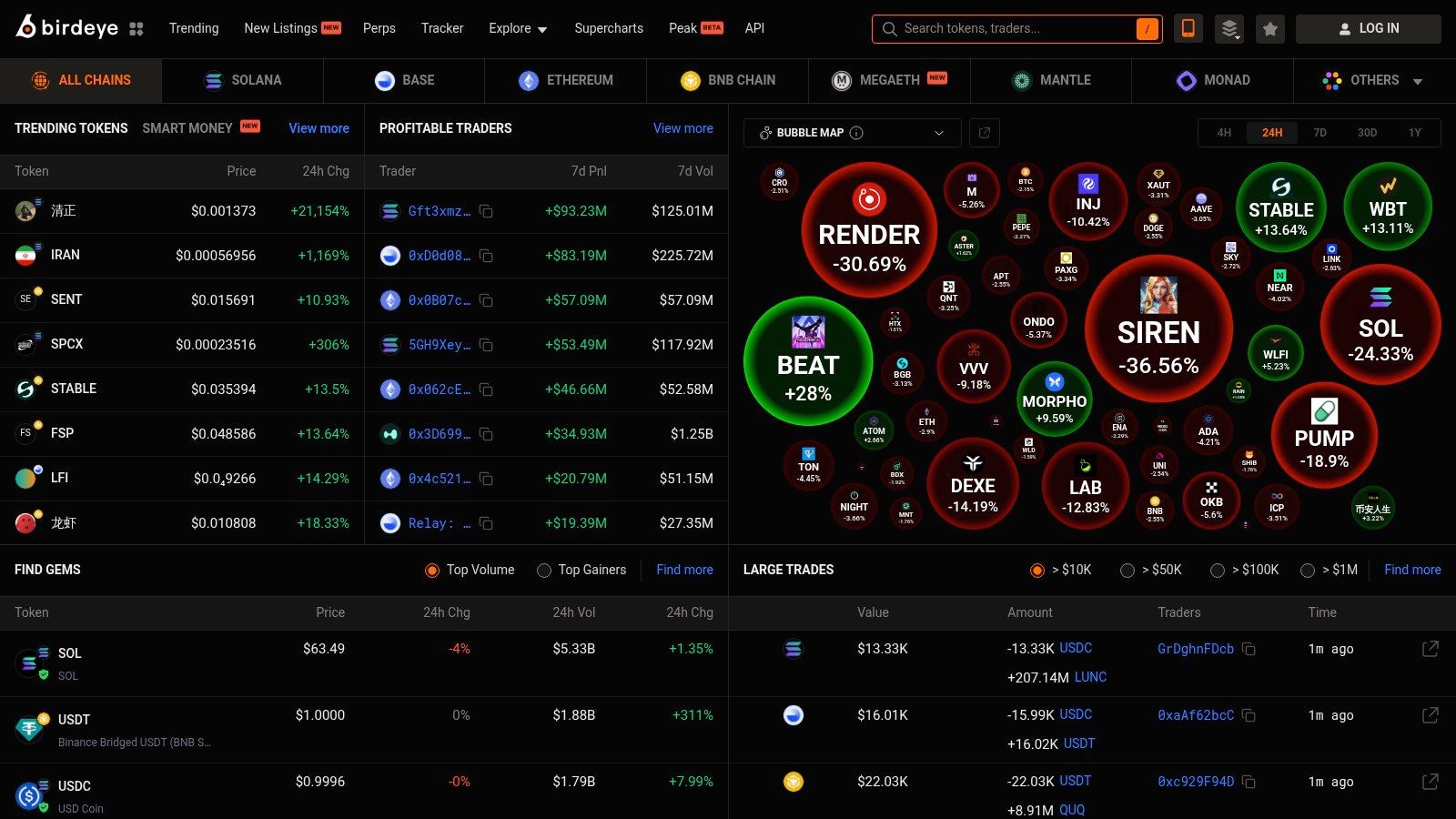
Birdeye is built for speed. If your trading style leans toward fast rotations, emerging tokens, and memecoin flows, Birdeye feels more natural than slower, research-heavy platforms.
It started with a strong Solana reputation, and that trader-first DNA still shows. Wallet pages, token analytics, real-time DEX feeds, and quick alerts all support short decision windows.
Why degens like it
Birdeye is useful when you care less about who a wallet belongs to and more about what just happened. Large buys, wallet watchlists, and token activity are easy to surface. That makes it attractive for copy-traders trying to shadow momentum wallets during early token phases.
If the trade only matters for the next few minutes, speed matters more than a perfect research report.
A few trade-offs matter:
- Strong point: Fast interface for emerging-token monitoring
- Helpful for: Wallet activity alerts and large transaction spotting
- Less strong: Historical depth can feel thinner than enterprise-grade suites
For live traders, Birdeye is often better as a reaction tool than a deep conviction tool.
8. DexCheck
DexCheck is one of the more obviously copy-trading-oriented tools in this group. The Address Analyzer, smart trader tracking, and Telegram wallet alert bot all point toward traders who want wallet moves piped directly into an actionable feed.
That focus makes it appealing for people who don't just want analytics. They want alerts, wallet PnL views, and a trade-by-trade breakdown they can act on.
Where it fits best
DexCheck is strongest when you already know your style. If you want to follow active traders, set alerts around wallet behavior, and keep most of your workflow inside Telegram plus a browser dashboard, it lines up well.
The token-gated side can be a drawback for some users, though. If you dislike access models tied to platform tokens, that friction is real.
- Good for: Traders who want wallet analytics tied directly to alerts and bots
- Useful feature: Real-time wallet PnL and trade history views
- Main drawback: Some advanced access is gated in ways casual users may dislike
This is one of those tools that can be very effective if its workflow matches how you already trade.
9. GMGN.ai
GMGN.ai is unapologetically built for speed-chasers. Wallet Radar and the Wallet Tracker view are the features most traders care about, because they put followed wallet activity in one place and make it easy to react.
If you're trading fast chains or early token launches, that matters more than polished long-form analytics.
The real trade-off
GMGN.ai can absolutely help you catch fresh wallet activity, especially when your setup depends on notifications and fast token monitoring. But it isn't the platform I'd trust for deep historical evaluation of whether a wallet has durable edge.
That doesn't make it weak. It just means you should use it for the phase it's built for.
- Use it for: Real-time monitoring of hot wallets and trending activity
- Best environment: High-speed trading, sniping, and rotation-heavy markets
- Don't expect: The same depth of exportable history or institutional research tooling you'd get elsewhere
Wallet tracker Reddit threads often split into two camps. Research-first traders tend to prefer labeled analytics. Execution-first traders often end up liking GMGN.ai more.
10. Etherscan
Etherscan is the baseline tool every Ethereum trader should still keep open. It's not flashy, and that's exactly why it stays useful.
The Watch List and alert functions are simple, reliable, and Ethereum-native. When you want raw confirmation of transfers, token movement, or basic wallet activity, Etherscan strips away a lot of noise.
Why it still belongs in the stack
For copy-trading, Etherscan isn't enough on its own. There are no behavior labels, no wallet PnL calculations, and no smart interpretation layer. But it's excellent as a verification source when another platform surfaces a move and you want to confirm what happened on-chain.
It's also a good place to start if you want a lighter alerting setup before paying for a more advanced product. If you're comparing options for signal delivery, this roundup of the best crypto alerts app choices helps frame where explorer alerts stop and trader-focused alerts begin.
- Best use: Free Ethereum monitoring and basic address alerts
- Big advantage: Lightweight, trusted, and easy to set up
- Main limit: Ethereum-centric, with no higher-level wallet intelligence
Top 10 Wallet Tracker Tools Comparison
Which tracker actually helps you copy trades with less noise and fewer avoidable mistakes?
Reddit threads usually surface the same tension. Traders want speed, but they also want enough context to tell a smart entry from random wallet activity. That is the useful way to compare this list. Not by feature count alone, but by how well each tool handles discovery, verification, privacy trade-offs, and alert quality once real money is involved.
| Product | Best for copy-trading workflow | Security and privacy considerations | Pricing and value | Best fit |
|---|---|---|---|---|
| 🏆 Wallet Finder.ai | Real-time multi-chain wallet alerts with PnL, win rate, entries, exits, and position sizing. Strong if you want trader-level context before mirroring a move. | Read-only tracking is straightforward, but alert automation still deserves the same wallet hygiene you would apply to any third-party tool. | Trial available. Paid tiers range from entry-level plans to higher monthly and lifetime options. | Copy-traders, active traders, analysts |
| Nansen | Smart Money labels and wallet profiling help filter for higher-signal addresses. Better for research-led copying than fast execution. | Entity labeling is useful, but some traders will see deanonymization depth as a privacy trade-off rather than a benefit. | Paid product with higher costs as you add deeper history and API access. | Researchers, funds, serious analysts |
| Arkham Intelligence | Good for tracing wallet relationships and following entities across clusters. Useful when you need to examine who is really behind activity. | Strong attribution is the core feature, and the privacy implications are obvious. Best handled as an investigation tool, not a casual tracker. | Access varies by plan and feature set. | Investigators, advanced traders, on-chain researchers |
| DeBank | Fast portfolio review, decoded transactions, and social wallet discovery. Useful for monitoring known wallets, less precise for pure signal filtering. | Public wallet visibility and social features are convenient, but they also make exposure easier if you prefer a lower-profile workflow. | Mostly free, with paid social features layered on top. | Retail users, EVM traders, wallet watchers |
| Zerion | Strong mobile tracking, alerts, and portfolio monitoring. Better for staying on top of wallets you already follow than sourcing alpha from scratch. | Non-custodial design helps, but mobile alerting setups still need careful app-permission and device-security habits. | Free base plan with paid upgrades for advanced tracking and PnL views. | Mobile-first traders, portfolio trackers |
| Zapper | Simple watchlists and read-only wallet tracking make it useful for monitoring cold wallets or basic public addresses. | Read-only setup lowers operational risk, which is a real advantage for traders who want separation from execution wallets. | Free core product, paid API for heavier use. | Beginners, cold-wallet monitors, developers |
| Birdeye | Fast DEX-centric feeds and whale alerts suit short timeframes. Good for Solana and fast-moving token flows where seconds matter. | Speed matters here, but speed also increases the risk of reacting to low-quality signals without enough confirmation. | Paid tiers increase alert capacity and data access. | Memecoin traders, short-term speculators |
| DexCheck | Address analysis, smart trader tracking, and bot integrations fit active copy-trading workflows well. | Telegram bot convenience is useful, but bot-based workflows need strict account security and clean separation from funded wallets. | Some advanced features are tied to paid access or token-gated tiers. | Bot users, active copy-traders |
| GMGN.ai | Built for low-latency monitoring and early wallet movement detection. Strong fit for traders chasing very early entries. | Early-entry tools attract aggressive trading behavior. That raises the cost of bad signals, poor opsec, and fake momentum. | Public pricing is not always clear, so value is harder to judge before testing. | Snipers, high-speed traders |
| Etherscan (Watch List & Alerts) | Best as a confirmation layer for Ethereum wallet activity. Useful after another tracker surfaces a move. | Explorer-based monitoring is simple and lower risk because it avoids extra abstraction and social overlays. | Free. | Ethereum users, verifiers, researchers |
Start tracking smart money today
Join thousands of traders using WalletFinder.ai to find profitable wallets and copy their trades.
Start Free Trial →

