
Top 10 Best Crypto Copy Trading Platforms for 2026
Find the best crypto copy trading platform. We compare 10 top services like eToro, Wallet Finder.ai, and dHEDGE for fees, features, and real-world risk.
Find & Copy the Best Crypto Traders
A widely cited 2023 survey found that 93% of crypto futures copy traders and 82% of spot copy traders were profitable, while about 84% of new crypto traders lost money in their first year trading alone. That doesn't mean copy trading is easy money. It means trader selection and risk controls matter more than the label on the strategy.
Crypto markets still punish lazy due diligence. The best crypto copy trading setups don't just show a leaderboard. They help you judge consistency, control downside, and decide whether you want to copy a centralized exchange trader, a rule-based bot, or an on-chain wallet.
That last part matters more in 2026 than most roundups admit. Copy trading now spans two very different worlds. One is the familiar CEX model, where a platform mirrors positions for you. The other is on-chain mirror trading, where you track wallets, inspect their history, and act on smart-money flows yourself. If you only look at one side, you're missing half the market.
Copy and social trading also isn't some niche corner anymore. The industry was valued at $2.2 billion in 2021 and is projected to reach $3.77 billion by 2028, implying a 7.8% CAGR. Infrastructure is still expanding, and that's why trader discovery, automation, analytics, and risk tooling keep improving.
Here are the 10 platforms and tools I'd shortlist.
1. Wallet Finder.ai

Most copy-trading platforms still live inside closed exchange ecosystems. Wallet Finder.ai belongs to the other camp. It helps traders track on-chain wallets and mirror ideas from actual wallet activity instead of copying a profile on a CEX leaderboard.
That difference matters in practice. On-chain tracking gives you more context around entries, exits, sizing changes, token selection, and whether a wallet is still trading the same way it did during its strongest stretch. It also asks more from the user. You still need to judge timing, liquidity, slippage, and contract risk before following any move.
I rate it as a research and alert tool first, not a one-click copy engine. The workflow is straightforward. Screen for wallets, save the ones with repeatable behavior, set alerts, then decide whether a trade is worth taking. For traders learning the difference between exchange-based copying and manual wallet mirroring, this guide to copy trading for beginners gives helpful context.
Why it stands out
The main advantage is visibility. You are not staring at a wallet address in a block explorer and trying to piece the story together manually. You can review trade history, PnL patterns, position sizing, entry and exit timing, holder distribution, and token-level data in one place.
It also covers the part many copy-trading roundups gloss over. A profitable wallet is not automatically a good wallet to follow. Some rotate into thin, low-quality tokens where retail gets trapped on the exit. Tools like contract checks, scam filters, social metrics, and token analytics help reduce that risk, though they do not remove it.
Practical rule: Wallet alerts are only useful if your filters are tight. Otherwise you end up reacting to noise, late entries, and trades you should have ignored.
I find it most useful for DeFi-native traders who already know how to execute on-chain and want better trader discovery. Researchers and more systematic users can also get value from exports, saved screens, and custom charting.
Pros and cons
Real-time alerts: Telegram and push notifications help you catch wallet activity quickly.
Detailed wallet analytics: Trade history, wallet behavior, and performance data are easier to review than in a raw block explorer.
Good filtering workflow: You can sort for consistency, returns, and recent performance, then export results for deeper analysis.
Useful risk screening: Token and contract checks help flag obvious low-quality setups before you chase them.
Manual execution required: This is closer to mirror-trading research than automated copy trading.
Trial access is limited: Some of the useful wallet detail is gated.
Less beginner-friendly than CEX copy platforms: Traders who want automatic position replication may prefer a centralized option.
For this list, I would place it in the on-chain mirror-trading bucket rather than the traditional copy-trading bucket. That is exactly why it deserves space here. If you want a full view of the current market, you need both sides. The CEX platforms automate execution. Tools like this help you find and evaluate wallets before you act.
2. eToro CopyTrader

A large share of copy-trading users never touch a wallet tracker, a DEX, or an API. They want a regulated-looking interface, a clear copy button, and risk controls they can understand on day one. That is why eToro still matters in a list like this, even if it sits on the centralized side of the market.
eToro CopyTrader is one of the easiest places to start if the goal is to follow investors without setting up exchange keys or learning on-chain execution. The platform handles the replication mechanics for you, lets you spread capital across multiple traders, and includes a stop-copy loss threshold that is particularly useful in fast drawdowns. For newer users, that is a better safety feature than a flashy social feed.
I would not use eToro if the priority is broad altcoin access, DeFi exposure, or copying high-velocity crypto specialists. Its crypto offering is more curated than what you get from crypto-native platforms, and your experience will depend on region. Those limits are real. They are also part of why some users prefer it. Fewer moving parts, fewer chances to misconfigure something, and less temptation to chase every new coin.
Best use case
eToro fits investors who want copy trading to behave more like managed allocation than active trade operations. You choose traders, set amounts, monitor performance, and let the platform mirror positions inside its own system. If you are still learning the basics, this pairs well with a practical guide to copy trading for beginners.
It also adds an important contrast to the first entry in this list. Wallet tracking tools help you study and mirror on-chain behavior. eToro gives you a controlled, centralized copy workflow with far less setup. If you want a full view of modern copy trading, you need both models.
Pros and cons
Very approachable interface: Trader selection, funding, and monitoring are simple enough for first-time users.
Automatic proportional copying: Capital is mirrored by allocation, which makes multi-trader diversification easier to manage.
Practical risk controls: The stop-copy loss threshold is useful for limiting damage when a copied trader loses discipline.
Good fit for hands-off users: No API setup, wallet management, or manual trade execution.
Limited crypto depth: Advanced users looking for smaller tokens or DeFi strategies will hit the ceiling quickly.
Jurisdiction matters: Features and asset access vary by country.
Less useful for crypto specialists: If your goal is to mirror on-chain wallets or aggressive crypto-native traders, other tools on this list are better suited.
3. Shrimpy
Shrimpy takes a different approach from classic copy trading platforms. It's better to think of it as portfolio mirroring through exchange APIs rather than trade-by-trade social copying. You connect your own exchange accounts, keep custody there, and follow traders whose allocations rebalance into your portfolio.
That makes Shrimpy a practical choice for spot investors who don't want magnified futures exposure or hyperactive signal chasing. If the trader you follow shifts from one allocation mix to another, your portfolio adjusts with them. For many users, that's cleaner and easier to manage than trying to mirror every single entry and exit in a fast market.
Where Shrimpy works well
Shrimpy is strongest for lower-turnover copy styles. It suits users who think in allocations, baskets, and portfolio structure rather than short-term directional trades. If you're trying to build a disciplined spot portfolio across multiple exchanges, the platform's non-custodial API model is appealing.
It also helps that you can pause or resume automation without moving funds off your exchanges. That gives you more operational control than some fully managed systems.
- Non-custodial setup: Funds stay on your exchange accounts.
- Good for spot portfolio copying: Allocation mirroring is better suited to slower strategies than rapid-fire execution.
- Multi-exchange management: Useful if your assets are spread across venues.
- Backtesting and rebalancing tools: Helpful for users who care about portfolio construction, not just leaderboards.
The weakness is obvious. Shrimpy isn't built for traders who want tight replication of futures allowing amplified positions or intraday tactics. It also places more burden on leader selection because “alpha trader” quality varies widely.
Visit Shrimpy.
4. 3Commas

3Commas is for users who don't just want to copy traders. They want a toolkit. The platform blends signal following, bot templates, SmartTrade execution, and exchange API automation into one workflow. If you're already comfortable with order logic and you want more control than native exchange copy systems usually offer, 3Commas is a serious option.
This is not the easiest product on the list for beginners. It's one of the best crypto copy trading choices for advanced users who want to subscribe to strategies and then shape execution with trailing stops, take-profit rules, or conditional orders.
What actually makes it useful
3Commas works best when you treat the marketplace as an input, not a final answer. A strategy or signal provider can be worth following, but the primary value is combining that with your own risk configuration. The SmartTrade terminal helps there.
For users moving from discretionary trading into partial automation, the platform creates a useful bridge. It also pairs well with automated trading signals if you already evaluate outside signal quality and want more structured execution.
- Deep customization: SmartTrade, DCA, and grid tools give you more say in execution.
- Multi-exchange support: Good for users running more than one account.
- Strategy marketplace: Plenty of signals and bot templates to test.
- API-based custody model: Your funds remain on connected exchanges.
The biggest mistake with 3Commas is copying a marketplace strategy and leaving defaults untouched. Advanced tools only help if you actually use them.
The downside is platform complexity and subscription cost. It's easy to overbuild, overtrade, or subscribe to mediocre providers if you skip due diligence.
Visit 3Commas.
5. Zignaly

Zignaly is one of the better choices for users who don't want to configure APIs, tune bots, or manage every copied trade manually. Its profit-sharing model is closer to a managed service. You allocate capital to a trader strategy, and the manager earns on profits under a high-water-mark structure rather than charging like a simple subscription feed.
That incentive model is attractive because it's more aligned than many signal marketplaces. If the manager doesn't generate net new profit, there's less reason for them to get paid.
Who should use it
Zignaly suits passive users who want copy exposure with less technical setup. It's especially useful for people who know they won't monitor every trade and don't want to spend their time adjusting bot settings.
That convenience comes with a trade-off. You give up granular control over individual trade parameters. This is not the platform for traders who want to intervene constantly.
- Profit-sharing structure: Better incentive alignment than flat-fee subscriptions.
- Simple onboarding: Easier than many API-based automation platforms.
- Managed approach: Good for users who want a more hands-off experience.
- Low-friction entry: Friendly for people who aren't ready for complex tooling.
The practical risk is dependence on the manager and the underlying broker rails. Region and availability can also matter more here than with pure software platforms.
Visit Zignaly Profit Sharing.
6. Cryptohopper

Cryptohopper sits in the middle of copy trading and bot automation. You can subscribe to signalers and strategy templates, then run them through a cloud-hosted bot connected to your exchange. That makes it appealing for users who want more than simple mirroring but don't want to code their own systems.
Its marketplace has been around long enough that you can find many styles. That's a strength and a weakness. More choice means more ways to build a setup that fits you. It also means more junk to filter out.
Best for structured experimentation
Paper trading is one of the reasons Cryptohopper stays relevant. Before sending a strategy live, you can test how it behaves in your own environment. That's especially valuable if you're comparing signal providers with different turnover, logic, or market focus.
The AI-assisted strategy switching angle will appeal to some users, but I'd treat that as secondary. The core value is still its cloud-hosted automation and its established marketplace.
- Multiple copy modes: Signals, templates, and strategies create flexibility.
- Cloud-hosted bots: You don't have to run infrastructure yourself.
- Paper trading: Useful before risking capital on a provider.
- Established ecosystem: Plenty of community strategies and integrations.
The weak point is familiar. Third-party provider quality varies, and the subscription cost can stack on top of marketplace costs.
Visit Cryptohopper.
7. WunderTrading

WunderTrading is one of the easier platforms to recommend to users who are moving from manual trading into automation. It combines a trading terminal, copy marketplace, bots, and TradingView alert automation in one interface. That creates a gentler learning curve than some tools that feel built only for power users.
The free plan also matters. A lot of traders want to explore copy workflows before paying for a full automation stack, and WunderTrading gives them a place to start.
Why traders stick with it
The biggest strength here is workflow continuity. You can trade manually, test alerts, layer in DCA or grid automation, and then follow outside traders without changing platforms. That's useful if your process is still evolving.
WunderTrading is also good for traders who like TradingView and want their signal and execution flow tied together in one dashboard.
Don't treat a free tier as a reason to trust the marketplace. Use it as a reason to test the platform mechanics first.
- Free entry point: Easier to test than many paid-first tools.
- All-in-one terminal: Manual trading, bots, and copy workflows live in one place.
- TradingView integration: Strong fit for chart-driven traders.
- Multi-API management: Useful if you trade across several exchanges.
Its main limitation is inconsistency across regions and exchanges. Marketplace quality also still depends on who you follow.
Visit WunderTrading.
8. Kryll.io
Kryll.io is one of the better options if you prefer copying systems instead of copying personalities. That distinction matters. With trader-led copy platforms, a lot depends on one person's discretion. With Kryll, you're usually renting and running rule-based strategies on your own exchange account.
For users who value logic transparency, that's a big advantage. You can inspect strategy behavior, backtest it, and decide whether the rules fit your market view before going live.
Better for strategy-first users
The visual editor is the reason many traders start with Kryll. You don't need to code to understand or modify a strategy framework. That lowers the barrier for users who want more control than a one-click social platform allows.
This also makes Kryll useful for traders who eventually want to stop copying and start customizing. You can use marketplace strategies as a base, then evolve from there.
- Strategy-first copying: Less dependence on one trader's judgment.
- Visual editor: Good for non-coders who still want control.
- Backtesting and live stats: Helps with validation before deployment.
- Exchange API execution: You keep custody on your connected exchange.
The catch is that marketplace strategy quality varies sharply. A clean-looking ruleset can still fail in bad market conditions, so testing and position caps matter.
Visit Kryll.io.
9. dHEDGE
dHEDGE is one of the clearest examples of DeFi-native copy trading done through vaults. Instead of linking to a centralized platform and following a leaderboard, you deposit into a manager's on-chain vault and receive tokenized exposure to that strategy. Holdings, activity, and fees are visible on-chain, which gives you transparency that many CEX systems do not.
That transparency is the appeal. If you care about verifiable positions and don't want to rely on an exchange's internal reporting, dHEDGE is worth looking at.
Where it shines
dHEDGE is best for users who already understand Web3 wallets and are comfortable with on-chain interactions. It doesn't hide the technical layer, and that's both a benefit and a barrier.
Managers typically earn performance-based fees, which creates a cleaner incentive than flat subscriptions. But your experience still depends on manager quality, underlying protocol risk, and the realities of DeFi execution.
- Non-custodial model: You're interacting with an on-chain system, not handing control to a CEX copy feature.
- On-chain verifiability: Holdings and fees are transparent.
- Vault structure: Easy to understand as a pooled strategy format.
- DeFi-native exposure: Good fit for users already operating on-chain.
The drawback is usability. If you're not comfortable with wallets, gas costs, and smart contract risk, dHEDGE will feel more demanding than mainstream platforms.
Visit dHEDGE.
10. Hyperliquid Vaults
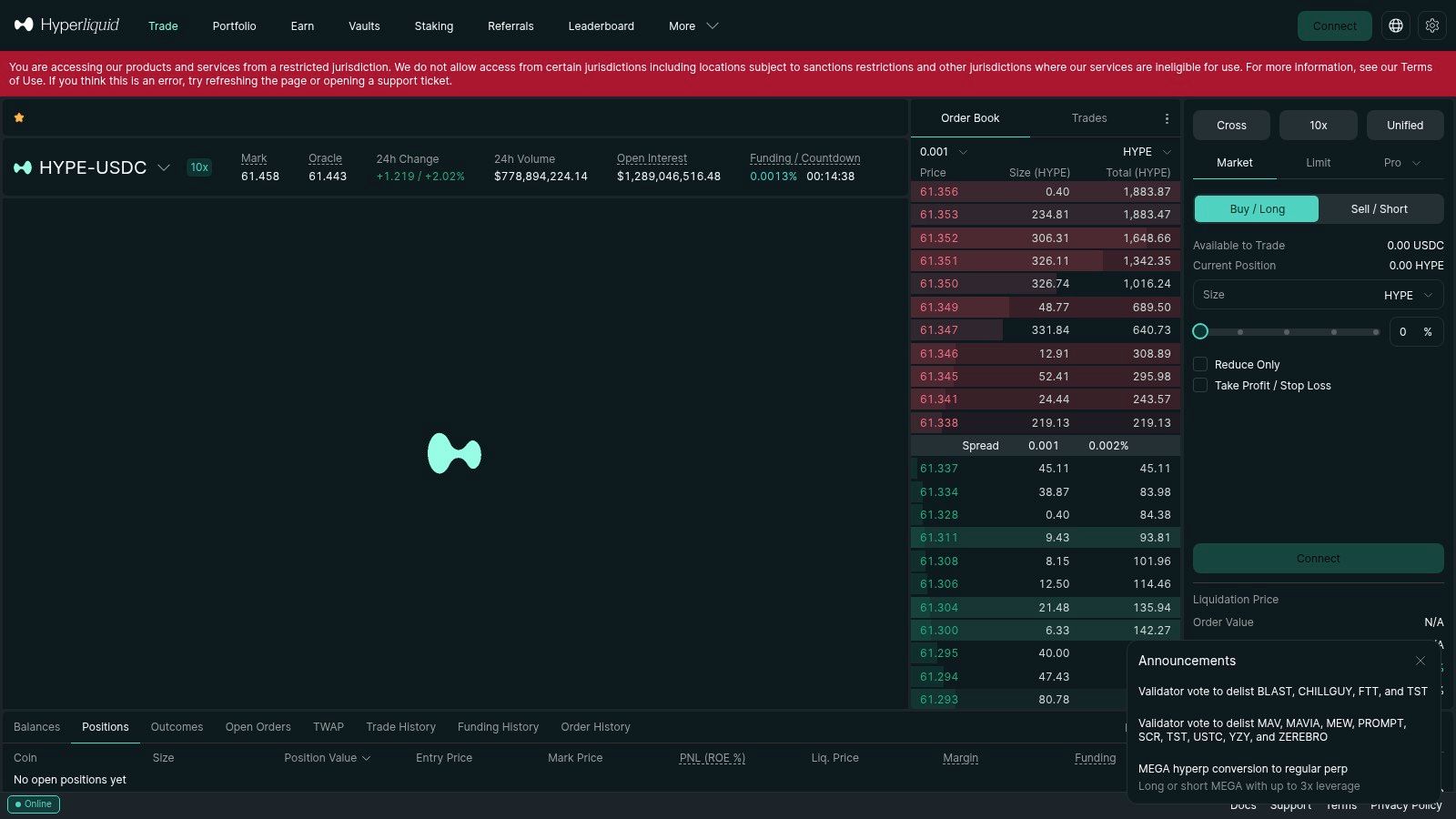
Hyperliquid Vaults represent the more advanced end of on-chain copy trading. This isn't about following wallets after the fact. It's about depositing into on-chain strategy vaults, often tied to perp exposure, with transparent positions and performance visible in the ecosystem. Third-party discovery interfaces make this easier, but the core model is still self-custodial and on-chain.
For experienced traders, this is one of the most interesting parts of the market. For beginners, it can also be one of the easiest ways to get hurt.
The real trade-off
What makes Hyperliquid Vaults compelling is transparency around strategy activity and the breadth of styles available. What makes them risky is the combination of perp mechanics, liquidation risk, and DeFi UX.
The industry's biggest coverage gap is evident. Mainstream rankings often push platform lists, but BitMEX's 2026 copy trading guide explicitly warns that high ROI alone isn't enough and says traders should examine drawdown, account history, and consistency, with attention to risk controls like proportional sizing and take-profit limits. That's especially true for on-chain perps, where strategy behavior can change fast across market regimes.
High headline returns in perp copy trading mean very little if the strategy falls apart in chop or volatility spikes.
- Self-custodial perp exposure: Attractive for advanced users who want on-chain control.
- Transparent accounting: Easier to inspect than many centralized products.
- Growing ecosystem of discovery tools: Better vault discovery than before.
- Strong fit for advanced strategy followers: Especially if you understand high-exposure trading products.
The downside is steep. You're taking smart contract risk, execution risk, and liquidation risk while navigating a more technical interface.
Visit Hyperliquid.
Top 10 Crypto Copy-Trading Platforms Comparison
A large share of copy-trading searches still lands on centralized platforms first. That misses half the market. The practical split today is between custodial, account-level copying on exchanges and brokers, and on-chain mirror workflows built around wallet tracking, vaults, and public trade data. If you are comparing tools seriously, that distinction matters more than marketing labels.
This table is best used as a fit check. It shows which products are built for simple retail mirroring, which ones are closer to bot automation, and which ones give direct exposure to on-chain trader behavior.
| Product | Core focus / USP | Key features (✨) | UX & quality (★) | Target audience (👥) | Pricing / value (💰) |
|---|---|---|---|---|---|
| Wallet Finder.ai | On-chain wallet discovery and real-time copy signals | ✨ Real-time Telegram and push alerts, cross-chain wallet analytics, advanced filters, exports, token security checks | ★★★★ Strong for research-first DeFi workflows | 👥 DeFi copy traders, on-chain researchers, active wallet trackers | 💰 Trial available; subscription plans and lifetime option |
| eToro CopyTrader | Regulated social trading with proportional auto-copy, including crypto exposure | ✨ Proportional mirroring, public performance stats, risk scoring, demo account | ★★★★ Polished onboarding and broad retail appeal | 👥 Beginners, retail investors, users who want a familiar broker UX | 💰 No separate copy fee; trading costs and minimums still apply |
| Shrimpy | API-based portfolio automation and allocation copying | ✨ Exchange API connection, portfolio rebalancing, backtesting, multi-exchange support | ★★★★ Clean for spot automation, less suited to high-speed trading | 👥 Spot investors managing assets across exchanges | 💰 Free and paid tiers; pricing depends on feature depth |
| 3Commas | Multi-exchange automation suite with strategy copying and bot controls | ✨ SmartTrade terminal, DCA bots, grid bots, signal integration, risk settings | ★★★★ Feature-rich, but setup takes time | 👥 Advanced traders, bot users, portfolio managers | 💰 Subscription required for deeper automation |
| Zignaly (Profit Sharing) | Managed copy model with profit-sharing and integrated broker execution | ✨ High-water-mark fee structure, manager marketplace, low starting allocation | ★★★☆ Easy to start, results depend heavily on manager quality | 👥 Hands-off investors who prefer managed exposure | 💰 Low entry point; success fees apply on profits |
| Cryptohopper (Mirror Trading) | Cloud-based strategy marketplace with mirror trading tools | ✨ Strategy marketplace, mirror trading, paper trading, AI-assisted strategy tools | ★★★☆ Flexible, but provider selection needs work | 👥 Traders testing systems before allocating real capital | 💰 Subscription plus possible provider costs |
| WunderTrading | Trading terminal and copy marketplace with TradingView integration | ✨ Copy marketplace, TradingView signal automation, multi-exchange API support, free plan | ★★★★ Good middle ground between manual and automated trading | 👥 Active traders adding automation without changing everything at once | 💰 Free tier available; paid plans scale with usage |
| Kryll.io | Visual strategy builder with marketplace access | ✨ Drag-and-drop strategy editor, backtesting, rentable strategies | ★★★☆ Useful for rule-based traders, less plug-and-play for beginners | 👥 Traders who want to build and test their own logic | 💰 Strategy rental and usage-based costs vary |
| dHEDGE | On-chain, non-custodial vault-style copy exposure | ✨ Public vaults, transparent fee logic, self-custody, on-chain performance history | ★★★★ Strong transparency, more technical than CEX tools | 👥 DeFi users who want manager exposure without giving up custody | 💰 Manager fees, protocol fees, and gas costs apply |
| Hyperliquid Vaults + UIs | On-chain perpetuals vaults with public strategy access | ✨ Native vaults, transparent on-chain activity, third-party discovery interfaces | ★★★★ Fast perp infrastructure, but risk is materially higher | 👥 Advanced users comfortable with perps, smart contracts, and volatile strategies | 💰 Vault share model, plus protocol and gas costs |
Start tracking smart money today
Join thousands of traders using WalletFinder.ai to find profitable wallets and copy their trades.
Start Free Trial →

