The 8 Best Stable Coins for Traders in 2026

Wallet Finder

Blank calendar icon with grid of squares representing days.

June 10, 2026

Stablecoins already sit at the center of crypto settlement, and their role keeps getting bigger. Between January and July 2025, they accounted for 30% of all on-chain crypto transaction volume, with annualized volume above USD 4 trillion. For traders, that means the best stable coin isn't just the one that holds a peg. It's the one that shows you where capital is moving before the rest of the market reacts.

That's the lens I use. A stablecoin is part cash position, part routing layer, part market signal. If a wallet suddenly shifts from idle USDC into DAI borrowing, or accumulates USDT on Tron before rotating into low-float altcoins, that flow matters more than a generic “safe vs risky” label.

The stablecoin market is also no longer a side pocket of crypto. J.P. Morgan Global Research said U.S. dollar-denominated stablecoins make up around 99% of the global stablecoin market, which it sized at about $225 billion and roughly 7% of the broader crypto ecosystem it tracked. It also projected further expansion, which is why stablecoins now function as core market infrastructure.

For copy traders, that changes the job. You're not only choosing a parking asset. You're choosing which money rail to monitor for supply expansion, exchange flows, velocity, bridge activity, and wallet clustering. The best stable coin for one strategy can be the wrong one for another.

1. USDC (USD Coin)

USDC is the cleanest starting point for most DeFi traders. When I want the clearest read on institutional-style positioning, I usually start with USDC because serious wallets often use it as their neutral base asset before entering ETH, liquid staking tokens, majors, or structured yield trades.

That matters because market concentration in stablecoins is still tight. CoinLedger notes that USDT and USDC together account for the majority of the market, and Cambridge's tracked leading stablecoins cover approximately 98% of the market across more than 100 identified stablecoins. In practice, USDC is one of the fastest ways to screen for meaningful smart-money rotation rather than random wallet noise.

What to watch on-chain

USDC gives better signals than people think. I don't just care whether a wallet holds it. I care where it came from, how long it sits, and what follows the inflow.

  • Exchange-to-wallet withdrawals: Large USDC withdrawals often signal dry powder moving on-chain for deployment into DeFi or spot accumulation.
  • Bridge migrations: USDC moving from Ethereum to Arbitrum, Base, or Solana can hint at where active traders expect better opportunities or lower execution costs.
  • Idle balance duration: If a top wallet accumulates USDC and waits, that often means pending entries rather than finished profit-taking.

A practical workflow is to monitor stablecoin fund flows with Wallet Finder.ai and separate treasury parking from actual deployment. Fast turnover usually means active trading. Slow accumulation often signals patient positioning.

Practical rule: USDC is best when you want high-signal entry and exit footprints from wallets that trade across multiple DeFi venues, not just one chain.

USDC also works well as your settlement asset when copying across ecosystems. If a wallet exits volatile positions back into USDC repeatedly, that behavior tells you as much about risk management as the original trade did.

2. Tether (USDT)

USDT is where speed and reach usually beat elegance. If USDC is often the clean institutional rail, USDT is often the broader market's working capital. It remains the stablecoin I watch most closely when I'm trying to catch momentum, especially in altcoin-heavy and retail-driven environments.

Boston Consulting Group reported that the stablecoin market cap exceeded $210 billion at the end of 2024, with about $26.1 trillion in transaction volumes, and roughly 88% of those volumes tied to arbitrage and trading pairs on crypto exchanges. That's the right backdrop for USDT. It thrives where traders need immediate liquidity and constant pair availability.
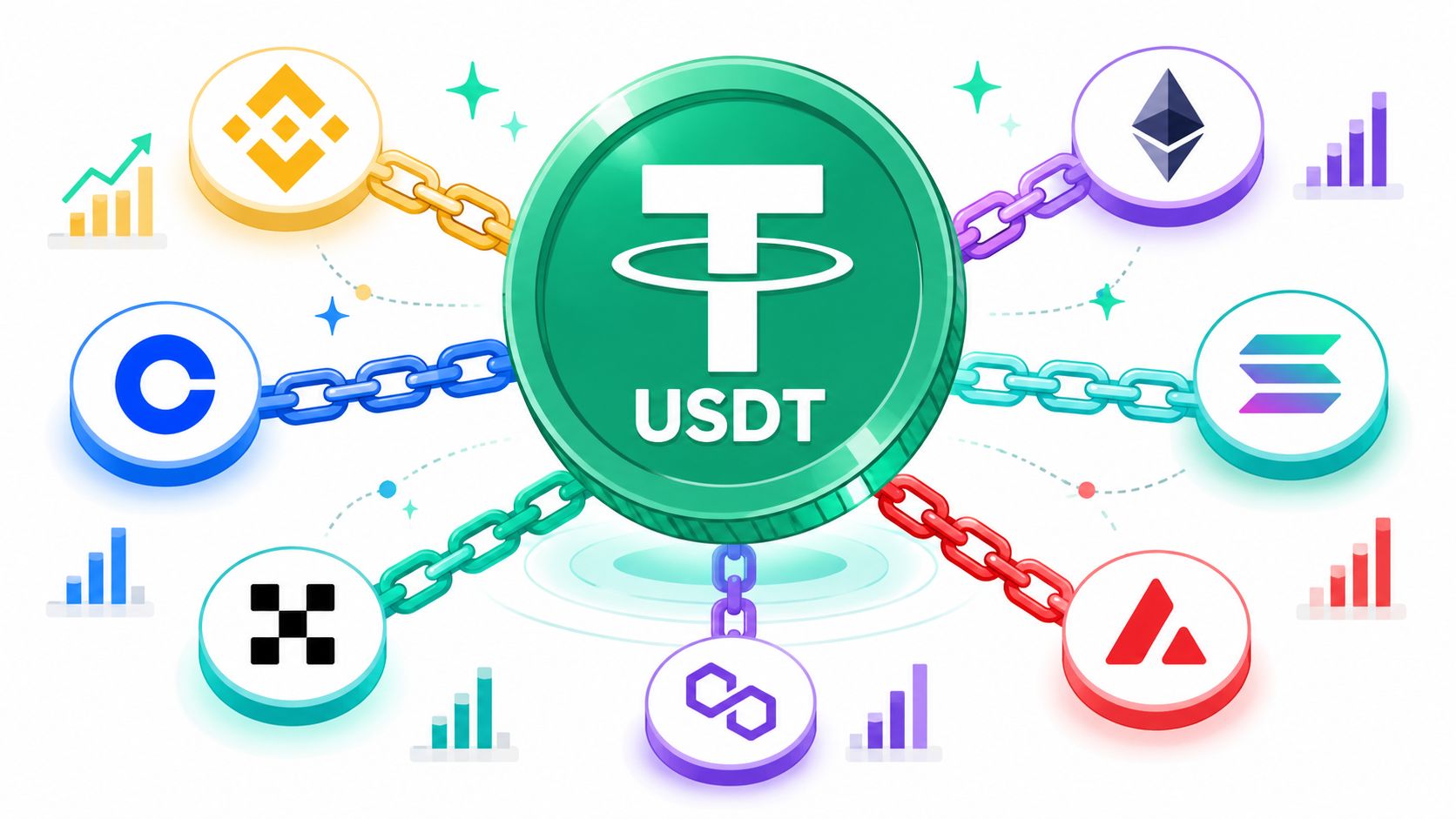
A digital illustration showing the Tether USDT token at the center connected to various cryptocurrency logos by chains.

How traders actually use it

USDT is often the better signal for risk-on behavior. On centralized exchanges, traders commonly rotate into it before moving into positions using borrowed capital, lower-liquidity majors, and the kind of altcoin baskets that don't always route through USDC first.

When I'm tracking copy-trading setups, I look for patterns like these:

  • Tron accumulation first: Wallets build USDT balances on Tron because transfers are cheap and fast, then disperse capital into exchanges or fresh wallets.
  • Exchange outflows before launches: USDT leaving exchanges into clustered wallets can hint at OTC routing, presale prep, or coordinated ecosystem trading.
  • Altcoin pair concentration: If a wallet consistently uses USDT as the quote asset for early positions, it's often a momentum trader rather than a passive allocator.

USDT is usually the best stable coin for traders who care more about breadth of market access than purity of structure.

What doesn't work is treating all USDT balances as bullish. Sometimes a wallet is just de-risking into the market's most convenient parking asset. The edge comes from pairing the balance change with venue data, token follow-through, and timing.

3. DAI (Decentralized Stablecoin)

DAI matters because it's still one of the clearest reads on DeFi-native borrowing strategies. If a trader uses DAI, there's a good chance they're working inside a protocol stack rather than just parking fiat exposure on-chain. That makes DAI useful for copy traders who want to understand how advanced wallets finance positions, not just what they buy.

I don't rank DAI as the best stable coin for every trader. I do rank it near the top for anyone who wants clean visibility into on-chain borrowing, collateral loops, and stablecoin-led strategy construction.

The signal hidden inside DAI usage

DAI tends to show up in more intentional setups. A wallet mints or borrows, deploys into correlated assets, then rotates back into DAI or another stable after the move. That sequence is much more informative than a simple buy.

Watch these behaviors:

  • DAI minting or borrowing before longs: This often points to amplified financial exposure entering the system through collateralized positions.
  • DAI cycling through Aave, Maker, or other lending layers: That usually means the wallet is optimizing capital efficiency, not just holding cash.
  • DAI returned after a profitable leg: This can indicate a trader has closed risk and is resetting for the next deployment.

For traders comparing stability with income, it helps to understand how stablecoin yield strategies work in practice. DAI is often central to those flows because it's integral to DeFi lending and carry strategies.
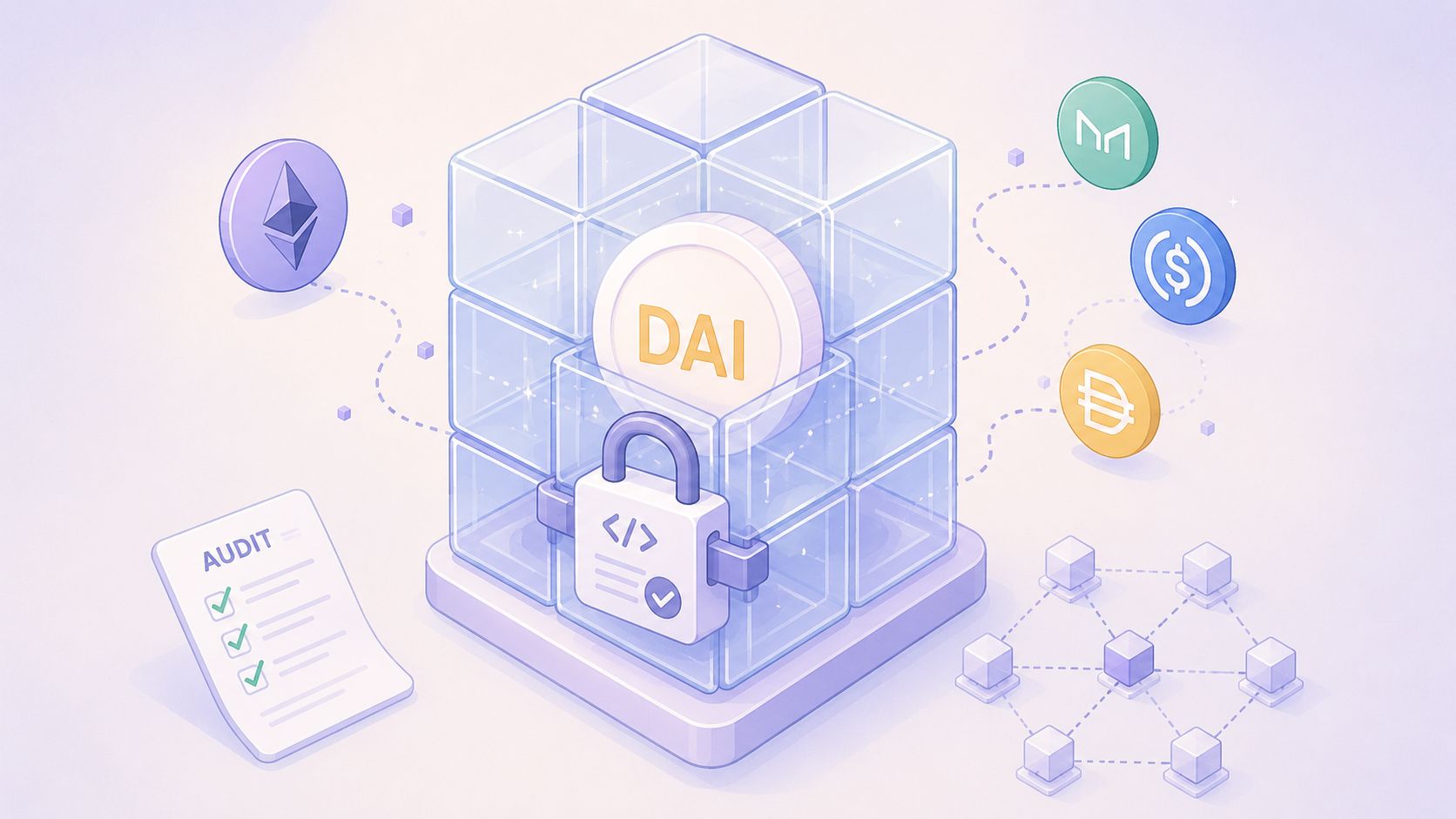
A digital illustration showing the DAI stablecoin inside a transparent vault with icons of connected crypto assets.

What doesn't work is buying DAI and assuming it gives you an edge by itself. The edge comes from watching DAI supply changes, borrower behavior, and how top wallets use it as a staging asset for delta-neutral or trades involving borrowed capital.

4. FRAX (Fractional Algorithmic Stablecoin)

FRAX is for traders who want information density. It's not the obvious pick for beginners, but it can be one of the best stable coin choices to monitor if you trade incentive-heavy DeFi ecosystems and care about reflexive flows.

Unlike plain reserve-backed stablecoins, FRAX tends to sit inside more engineered systems. That means its movement often tells you something about collateral confidence, protocol incentives, and expected yield compression or expansion.
A conceptual scale illustration balancing a blue stablecoin icon against a black Flux cryptocurrency icon.

Why FRAX is useful for copy traders

FRAX flows are often linked to wallets that actively farm, vote, rebalance, and arbitrage. That makes it a better signal asset than a passive holding asset. If a strong wallet starts building FRAX exposure, I don't read that as “seeking safety.” I read it as “preparing to use a specific DeFi lane.”

Good FRAX signals usually include:

  • Liquidity migration into FRAX pools: This can foreshadow farming or incentive-driven capital concentration.
  • FXS-linked positioning: When wallets pair FRAX activity with governance-token exposure, they're often expressing a view on protocol mechanics.
  • Short-lived parking before pool deployment: That pattern often marks active strategy execution rather than stable storage.

If you're tracking these moves, a guide to DeFi liquidity pools and how capital rotates through them is directly relevant because FRAX rarely lives in isolation. It usually sits inside a larger capital loop.

Later in the research process, it helps to watch protocol commentary and walkthroughs too:

What doesn't work with FRAX is lazy screening. A static wallet snapshot won't tell you much. You need sequence data. Where did the FRAX come from, how long did it stay, and which pool or strategy got funded next?

5. USDD (Decentralized Stablecoin by TRON)

USDD is a niche read, but it can be a very profitable niche. I pay attention to it mainly when I'm watching Tron-native activity, lower-fee speculation, and wallets that don't route through the typical Ethereum-first DeFi stack.

The best stable coin for copy trading isn't always the one with the strongest brand. Sometimes it's the one that reveals where underfollowed traders are moving early. USDD can do that inside the Tron ecosystem.

Where USDD becomes useful

USDD is most informative when it appears alongside fast wallet creation, memecoin discovery, or lending activity in Tron-based protocols. The signal here isn't “safe treasury management.” It's ecosystem-specific rotation.

These are the patterns worth watching:

  • Fresh-wallet funding in USDD: This can signal speculative deployment into newly launched Tron tokens.
  • USDD moving into lending venues first: That often points to traders preparing to amplify their market exposure or searching for local yield before rotating out.
  • Wallet clusters active during Asia trading hours: This context can help explain whether flows are retail-led, community-led, or part of a broader narrative cycle.

Small stablecoins can produce outsized signal value when they're concentrated inside one active ecosystem.

What doesn't work is using USDD as a default reserve asset across chains. Its value for traders is context. If you aren't actively tracking Tron wallets, Tron DEXs, and TRX-linked collateral conditions, USDD becomes harder to interpret.

6. PYUSD (PayPal USD)

PYUSD is less important for raw market breadth than USDT or USDC, but it matters because it can flag a different class of participant. When traders ask for the best stable coin, they often focus on depth and peg history. That's useful, but it misses another question. Which stablecoin best reveals where mainstream financial rails are testing on-chain behavior?

That's where PYUSD earns a place on the list. I watch it less for speed and more for intent.

What PYUSD can tell you

PYUSD flows can be useful when they show up in wallets that otherwise look conservative. A wallet that mostly interacts with established assets, reputable venues, and simple routing paths can still become a strong signal source if it starts bridging capital into DeFi using a mainstream-issued stablecoin.

Useful interpretations include:

  • Treasury-like accumulation before deployment: This can suggest measured entry rather than opportunistic momentum trading.
  • Transfers into large DEX venues: That often signals controlled testing of on-chain execution, not random retail flow.
  • Pair activity around major assets: PYUSD used against ETH or SOL can be a cleaner adoption signal than PYUSD touching obscure small caps.

The downside is that PYUSD still won't give you the same breadth of wallet behavior as USDT or USDC. If you're a copy trader trying to mirror fast-moving altcoin specialists, it won't be your primary stable. If you're tracking institutional curiosity and mainstream on-chain onboarding, it's much more interesting.

7. sUSD (Synthetic USD via Synthetix)

sUSD is a specialist's stablecoin. It's not where you start, but if you track derivatives traders, it can become one of the best stable coin signals in your toolkit. That's because sUSD often appears inside more advanced hedging and synthetic exposure workflows, especially around Synthetix-linked markets.

I don't use sUSD to gauge broad market sentiment. I use it to identify a narrower set of high-information wallets.

The pro-trader signal

sUSD becomes valuable when you track how it moves with derivatives positioning. A wallet minting or cycling sUSD may be expressing a view indirectly through synthetic assets rather than buying spot tokens outright.

The strongest signals tend to be:

  • sUSD minted near volatility expansion: This can imply a trader is preparing synthetic directional exposure or a hedge.
  • Flows between sUSD and synthetic majors: That often reveals professional positioning faster than wallet balances in spot assets do.
  • Debt-pool interaction paired with SNX behavior: This adds context on whether a trader is increasing or reducing protocol-specific exposure.

If a wallet uses sUSD consistently, don't judge it by spot-market logic. Judge it by exposure engineering.

What doesn't work is copying sUSD users blindly. Some of these strategies are tightly tied to protocol mechanics, debt exposure, or basis opportunities that won't translate well unless you understand the full position structure.

8. GHO (Aave Governance Stablecoin)

GHO is one of the more useful newer signals for DeFi-native capital amplification. Because it sits close to Aave's lending infrastructure, it can reveal how experienced wallets are financing risk inside one of DeFi's core credit venues.

For traders who live on lending markets, GHO deserves close attention. It may not be the best stable coin for every portfolio, but it's one of the best to monitor if your edge comes from following borrow demand and protocol-native positioning.

How to read GHO flows

GHO activity often gives context rather than headline excitement. If a wallet borrows GHO and quickly rotates into other assets, that's a sign of increased market exposure. If it borrows and parks, that can suggest preparation rather than conviction.

I focus on a few things:

  • Borrow growth from known active wallets: This usually shows willingness to add risk through credit rather than through idle capital.
  • GHO moving into Curve or stable routing venues: That can point to arbitrage, peg management, or planned deployment into wider DeFi.
  • Aave-centric wallet clusters: When several strong wallets increase GHO use around the same window, it often reflects shared opportunity recognition.

Chainalysis notes that stablecoins are primarily issued on Ethereum and Tron and come in multiple designs, including fiat-pegged, crypto-backed, commodity-backed, and Treasury-backed variants. That broader design spread matters for traders comparing regional usability, compliance preferences, and on-chain strategy fit in Chainalysis coverage of stablecoin popularity and design types.

GHO's limitation is simple. Outside Aave-centric workflows, it can be less informative than larger stables. Inside that ecosystem, though, it can be a sharp indicator of who is leaning into credit.

Top 8 Stablecoins Comparison

StablecoinImplementation Complexity 🔄Resource Requirements ⚡Expected Outcomes 📊⭐Ideal Use Cases 💡Key Advantages ⭐
USDC (USD Coin)Low 🔄, centralized issuer, multi‑chain integrationsHigh ⚡, banking relationships & reserve attestationsReliable settlement and institutional liquidity 📊⭐Cross‑chain settlements, institutional copy‑tradingHighest liquidity and institutional trust ⭐
Tether (USDT)Low 🔄, widely deployed across many chainsVery high ⚡, exchange integrations and deep poolsMassive trading volume and momentum signals 📊⭐CEX flow tracking, high‑volume trading & memecoin discoveryUnmatched exchange liquidity and volume ⭐
DAI (Decentralized)Medium 🔄, CDPs, governance and peg mechanismsOn‑chain collateral monitoring ⚡, multi‑asset backingDecentralized peg stability; low counterparty risk 📊⭐DeFi yield, leverage, on‑chain arbitrageFully decentralized, auditable collateral model ⭐
FRAX (Fractional Algorithmic)High 🔄, hybrid collateral + algorithmic controlsFXS ecosystem + USDC reserves ⚡, collateral ratio opsCapital‑efficient stable peg with algorithmic risk 📊Sophisticated DeFi strategies, leveraged farmingLower collateral needs; capital efficient ⭐
USDD (TRON)Low–Medium 🔄, TRON native smart contractsLow cost ⚡, TRX collateral, minimal feesFast, low‑fee settlement but limited liquidity 📊Asian memecoin trading, low‑fee DEX activityExtremely low fees and TRON ecosystem support ⭐
PYUSD (PayPal USD)Low 🔄, centralized, traditional finance issuerFiat reserves + PayPal rails ⚡, institutional complianceSignals mainstream institutional inflows; early liquidity 📊⭐On/off ramps, institutional DeFi adoption trackingPayPal backing and massive user reach ⭐
sUSD (Synthetix)High 🔄, synthetic issuance via SNX debt poolSNX collateral + derivatives infrastructure ⚡Derivatives settlement and leverage indicator 📊Tracking professional derivatives and hedging strategiesNative derivative integration; on‑chain leverage signals ⭐
GHO (Aave)High 🔄, protocol‑native issuance and governanceAave liquidity & AAVE governance ⚡, protocol collateralProtocol‑level borrowing and DeFi maturity signal 📊Aave lending/borrowing strategies and protocol analyticsNative Aave integration; decentralized protocol stablecoin ⭐

The Trader's Playbook: Choosing and Using Stablecoins

The best stable coin depends on what you're trying to copy. If you want broad signal coverage and deep market access, USDT and USDC usually sit at the top. If you want cleaner reads on DeFi's capital amplification, DAI and GHO often tell you more. If you're chasing specialist flows, FRAX, sUSD, and USDD can reveal pockets of opportunity that generic rankings miss.

The market itself keeps reinforcing that stablecoins are now infrastructure, not a side category. BVP noted that global fiat-backed stablecoin supply exceeded $273B in March 2026, up 40x from $6.8B in March 2020. That framing matters because traders are no longer choosing between “hold a dollar token” and “don't.” They're choosing between stability, yield, liquidity, protocol risk, and information value.

Here's the practical framework I use. Start with the strategy, then pick the stablecoin signals that map to it. USDC is strong for institutional-style DeFi routing. USDT is better for high-velocity market breadth and alt discovery. DAI and GHO are stronger for credit and collateral loops. FRAX and sUSD are higher-context instruments that reward deeper protocol awareness. PYUSD can help identify more mainstream capital testing on-chain rails. USDD can matter if your edge lives in Tron.

A few habits make this framework much more useful in live markets:

  • Track sequencing, not snapshots: A stablecoin balance only matters when you know what happened before and after it.
  • Separate parking from intent: Idle balances, fresh withdrawals, bridge transfers, and lending interactions all mean different things.
  • Watch wallet clusters, not single wallets: If several high-conviction traders move into the same stablecoin route, the signal usually strengthens.
  • Tie the stablecoin to the venue: USDT on Tron, DAI in Maker or Aave, and GHO around Aave-native flows all tell different stories.

The biggest mistake traders make is choosing a stablecoin once and never revisiting the decision. Good copy traders don't do that. They treat stablecoins as live market sensors. Follow issuance, burns, exchange deposits, bridge routes, lending activity, and pair rotation. That's where the alpha is.


Use Wallet Finder.ai to turn stablecoin flows into tradeable signals. You can track profitable wallets across major chains, monitor when smart money accumulates or deploys specific stablecoins, and set alerts for the transfers, swaps, and rotations that often happen before broader market moves become obvious.