
The Best DEX for Goats: A 2026 Trading Guide
Looking for a DEX for goats or other memecoins? Our 2026 guide covers the top 10 exchanges on Solana, ETH & Base, with tips on fees, slippage, and safety.
You’ve seen GOAT tickers rip across X, Telegram, and Dexscreener. Then you open a chart, try to buy, and reality hits. The pair is on the wrong chain, liquidity is thinner than it looked, slippage jumps the moment you size up, and three copycat contracts with the same name appear before you even click swap.
That’s the main problem with dex for goats. Finding hype is easy. Executing well is hard.
The traders who consistently do better usually aren’t just faster on the buy button. They follow wallets that are already positioning early, they verify the exact contract before touching anything, and they use the right venue for the chain instead of forcing every trade through their favorite app. GOAT on Solana is a different game from a goat-themed launch on Base or Ethereum. On Solana, speed and routing matter. On EVM chains, liquidity depth, MEV exposure, and quote quality matter more.
There’s also a specific Solana angle worth knowing. Goatseus Maximus, the GOAT token on Solana, uses a fee model that redistributes 100% of fees every 10 minutes, and Dexscreener currently shows it at about a $15.06M market cap with $1.3M in liquidity on Raydium, which makes it more interesting to analyze than the average meme coin because you can model fee-driven behavior instead of relying only on price action (Goatseus Maximus on Dexscreener).
That doesn’t make it safe. It just makes the trading workflow clearer.
The stack below is built for that workflow. First, find the wallets getting in early. Then verify where liquidity lives. Then execute on the venue that gives you the cleanest fill for that chain and pair. If you’re trading volatile animal-themed coins, that order matters more than any hot take on social media.
1. Wallet Finder.ai
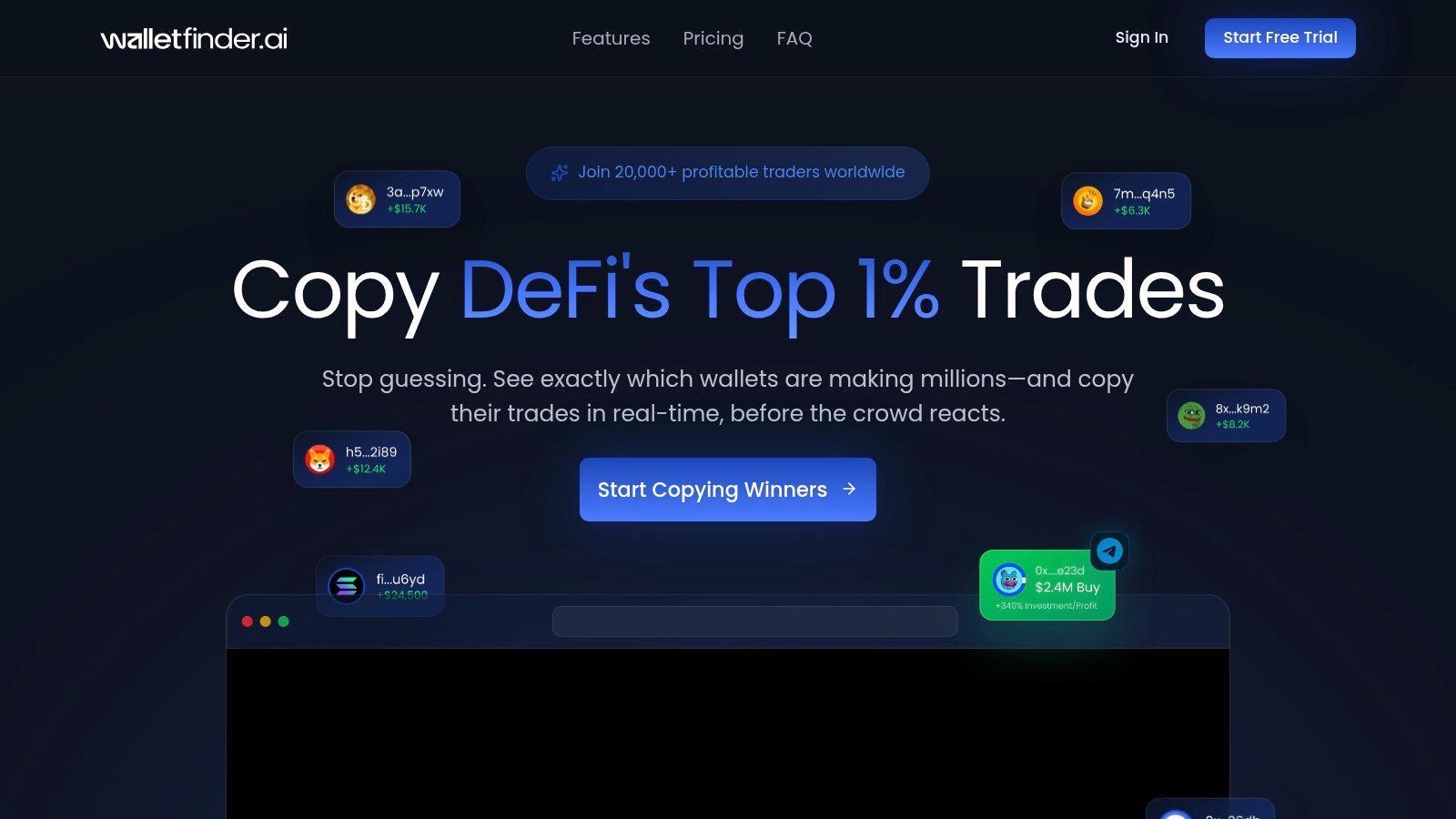
Wallet Finder.ai is the first tab I’d keep open for dex for goats, because bad execution usually starts with bad discovery. Most traders spend too much time staring at public hype and not enough time tracking who bought before the hype showed up.
This platform is built for on-chain wallet tracking across major ecosystems, including Ethereum, Solana, and Base. That matters when GOAT rotates across narratives and chains, because the wallet behavior often shows up before the social narrative does.
Why it earns the featured spot
Wallet Finder.ai is strongest when you stop treating it like a leaderboard and start using it like a filter for repeatable behavior. You’re not looking for one lucky moonbag. You’re looking for wallets that size positions in a way that makes sense, enter early without blindly aping every launch, and exit with discipline.
The useful parts are practical:
- Wallet-level trade history: You can inspect what a wallet bought, when it bought, how long it held, and how it rotated.
- PnL context: Raw win rate alone doesn’t tell you much. Position sizing and realized outcomes matter more.
- Alerts: If you track a wallet that consistently sniffs out meme rotations early, instant notifications save you from manually refreshing block explorers.
- Multi-chain workflow: You can follow wallets that move between Solana, Base, and Ethereum instead of staying trapped in one ecosystem.
If you want a deeper primer on what to look for in on-chain wallet behavior, Wallet Finder.ai’s guide to a crypto DeFi wallet is a useful starting point.
Practical rule: Don’t copy a wallet just because it caught one GOAT move. Track whether it handles entries, exits, and failed trades like a professional.
What works in real trading
For meme coins, I’d use Wallet Finder.ai in two passes.
First, filter for wallets with recent profitable activity in adjacent narratives. Animal memes, low-cap Solana rotations, fresh Base launches, things like that. Then look at whether those wallets are concentrating in one token or spraying capital everywhere. Concentration with good timing is usually more informative than a huge list of random buys.
Second, build a watchlist. Once a few smart wallets start clustering around the same contract, you’ve got something actionable. That still doesn’t mean buy instantly. It means check liquidity, verify contract identity, and choose the right DEX.
The platform is also easier to justify than piecing together your own workflow from explorers, Dexscreener tabs, Telegram channels, and spreadsheets. Manual research still matters, but this compresses the search time.
Trade-offs
The upside is obvious. You get faster signal discovery.
The downside is just as real. Following wallets without your own rules can make you late, overconfident, or stuck in someone else’s risk profile. A wallet can absorb volatility that would wreck a smaller trader using oversized entries.
That’s why I’d call Wallet Finder.ai the best research tool in this stack, not a magic button. Used well, it helps you spot GOAT trends earlier. Used badly, it turns into expensive shadow trading.
Website: Wallet Finder.ai
2. Uniswap
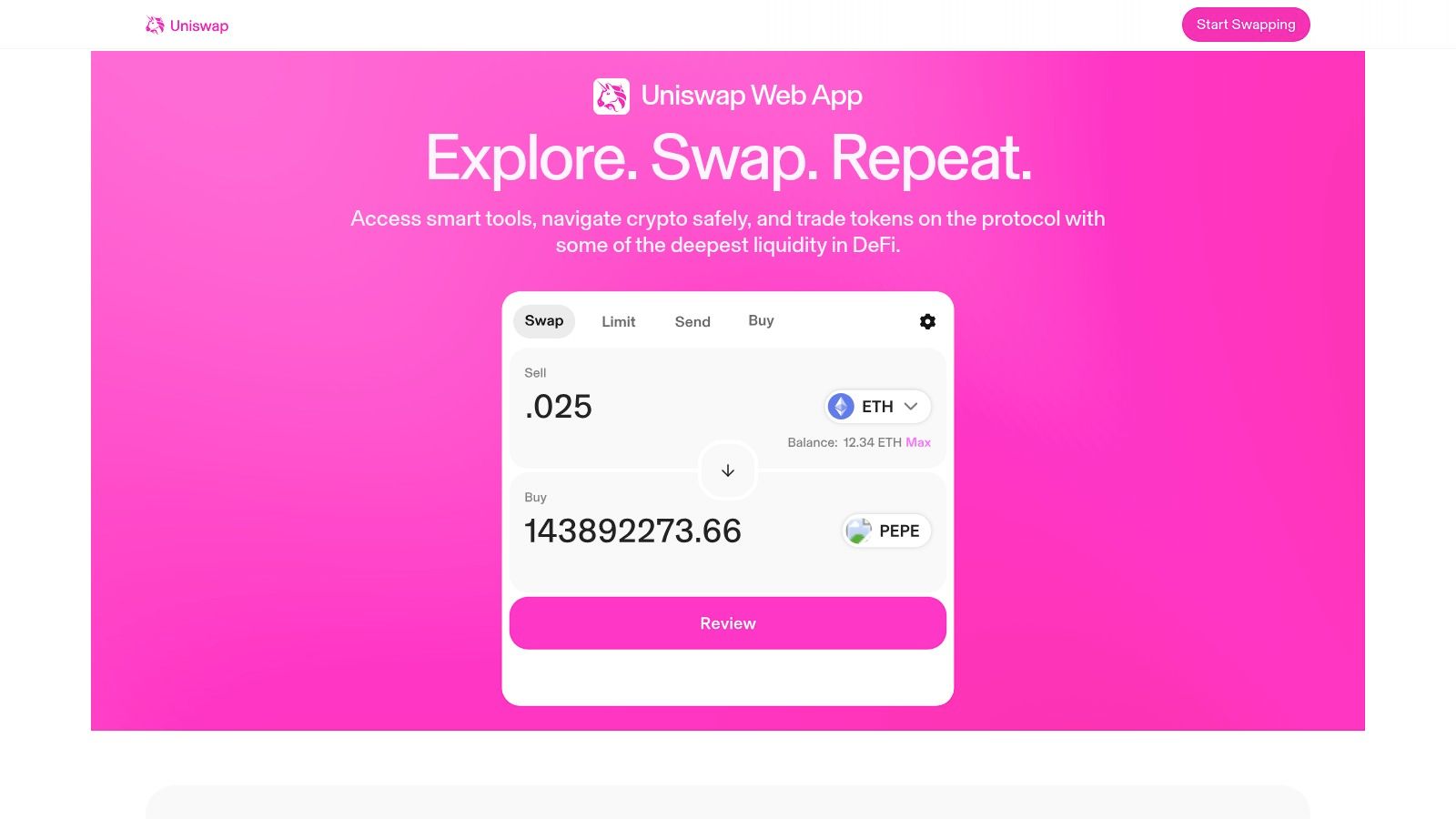
If the GOAT-style token you want is on Ethereum or Base and there’s meaningful EVM liquidity behind it, Uniswap is still the default venue I’d check first. Not because it wins every route, but because it usually sets the baseline for what a normal swap should look like.
A lot of newer traders overcomplicate this. They chase obscure routers when the pair they want already has enough liquidity on Uniswap to get in and out cleanly.
Where Uniswap fits
Uniswap is best when you need straightforward execution on EVM chains and don’t want to guess whether the interface is trying to do something clever behind the scenes. The flow is simple. Connect wallet, confirm contract, compare route, swap.
That simplicity matters for dex for goats because impostor tickers are common. If you’re moving fast, the clean UI helps, but it doesn’t replace contract verification.
There’s also a good conceptual explainer from Wallet Finder.ai on what does DEX do if you want a cleaner mental model for how venues like Uniswap source and process swaps.
The real trade-off
Uniswap is not always the cheapest path. On Ethereum mainnet, network costs can turn a decent meme trade into a bad one if your size is too small. That’s less of a problem on Base, where small speculative trades are easier to justify.
What I like most is that Uniswap usually answers one important question quickly. Is this token tradable at sane conditions, or does the chart only look good because nobody’s trying to size in?
- Best use case: Established EVM liquidity and fast contract-verified swaps.
- Main risk: Ethereum gas can punish small entries.
- Good habit: Check whether an aggregator beats the direct Uniswap route before finalizing.
If a GOAT trade only works when you ignore gas, slippage, and exit liquidity, it doesn’t work.
Website: Uniswap
3. Aerodrome

Aerodrome is where I’d look first for goat-themed tokens that are native to Base. Base has its own rhythm. When a token catches attention there, a lot of the meaningful liquidity can stay local instead of fragmenting across too many venues.
That’s where Aerodrome shines.
Why it matters on Base
Aerodrome tends to be the practical liquidity hub on Base for many active pairs. For traders, that usually means tighter execution on the tokens the chain cares about, rather than a giant token list filled with thin markets.
You don’t use Aerodrome because it looks fancy. You use it because Base-native flows often feel cleaner there.
For dex for goats, that’s useful in two scenarios:
- Fresh Base memes: Early trading often happens where local liquidity providers are already active.
- Repeat entries and exits: If you’re trading around a position instead of just aping once, cleaner spreads matter.
What I like less
Aerodrome can feel narrower than broader EVM aggregators. That’s not always bad. In fact, it’s often a strength. But if you’re trying to compare routes across many venues at once, it won’t replace a dedicated aggregator.
The other issue is practical. Some traders run into occasional browser or wallet flow quirks, especially on mobile. That’s not a thesis problem. It’s a workflow problem. On fast-moving meme trades, workflow friction can still cost you.
My approach is simple. If the GOAT token is Base-native, check Aerodrome early. If the quote looks competitive and the pool is real, it’s often the cleanest direct venue.
Best fit
- Use Aerodrome when: The token launched on Base and local liquidity is strong.
- Skip Aerodrome when: You need broad route comparison across multiple EVM DEXs.
- Watch for: Pool depth that looks fine for entry but weak for exit.
Website: Aerodrome
4. Raydium
Raydium is one of the core execution venues for Solana meme trading. If you trade GOAT on Solana long enough, you’ll end up using Raydium whether you plan to or not, because so much long-tail activity touches it directly or through an aggregator route.
For dex for goats on Solana, Raydium is where the chart often stops being theoretical and becomes executable.
Why Raydium matters for GOAT traders
The key advantage is speed. Solana traders care about fast confirmations and low friction because most meme setups don’t wait around for you to think through every detail. Raydium supports that style well.
It also matters specifically for Goatseus Maximus because the token’s liquidity on Raydium is visible and relevant to how the fee-redistribution structure trades. If a token distributes fees on a frequent cadence, traders start watching wallet timing around those cycles, and Raydium becomes part of that flow even when another interface is handling the route.
What traders get wrong
A lot of people assume Solana speed solves everything. It doesn’t. Raydium can list plenty of long-tail tokens quickly, and that’s both the opportunity and the danger.
You still need to verify the exact contract. You still need to inspect the pool. You still need to know whether the move came from genuine accumulation or from insiders rotating inventory.
- Strong point: Fast execution for Solana-native meme activity.
- Weak point: Token quality varies a lot.
- Non-negotiable: Don’t trust the ticker. Trust the contract.
Trading it well
Raydium works best when you already know what you’re buying and why. It’s not the best place to start discovery from scratch. It’s the place to act after discovery is done.
That’s the distinction newer traders miss. They browse first and verify later. Good Solana traders do the opposite.
Website: Raydium
5. Jupiter
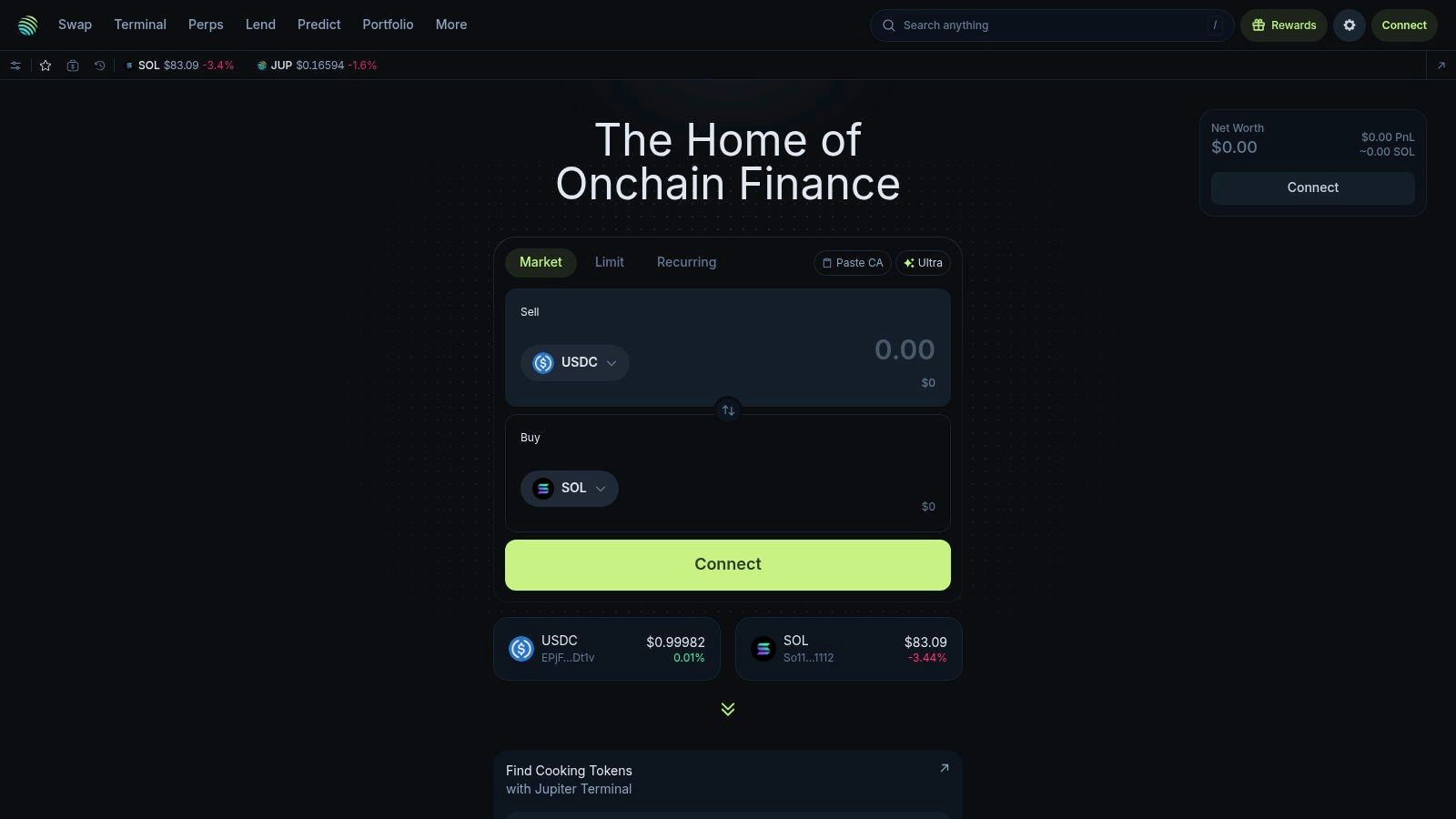
If I had to give one default answer for most Solana GOAT trades, it would be Jupiter. Not because it’s a pool itself, but because routing matters more than loyalty on Solana.
Jupiter’s job is simple. Find the best path across available Solana liquidity and save you from manually checking every venue.
Why aggregators win on Solana
Solana liquidity can fragment fast. A token may have action on Raydium, Orca, and other routes at the same time. Going direct to one venue without comparing paths is often just unnecessary self-sabotage.
That’s why Jupiter is such a strong first execution layer for dex for goats. It usually gives you the best chance of avoiding an avoidable bad fill.
What I like here is practical, not ideological:
- Routing: It scans across major Solana liquidity sources.
- Convenience: You don’t need to guess where the best fill lives.
- Safety prompts: The interface is usually more helpful than raw pool-hunting for catching obvious mistakes.
Where it can disappoint
Jupiter is only as good as the underlying liquidity it routes through. If the token has junk liquidity, no aggregator can make that healthy. It can only choose the least bad path.
Interface changes can also come quickly. That’s normal in crypto. It just means you should always double-check you’re on the correct domain and not some fake clone.
A routing engine can improve execution. It can’t fix a bad token.
My practical take
Use Jupiter when speed matters and you want the market to compete for your trade. Then inspect the route before confirming. If the path looks weird, the trade probably is too.
For most Solana meme traders, Jupiter should be the starting point and Raydium the venue you understand underneath it. That combination works well because you know both the router and the pool ecosystem it leans on.
Website: Jupiter
6. Orca
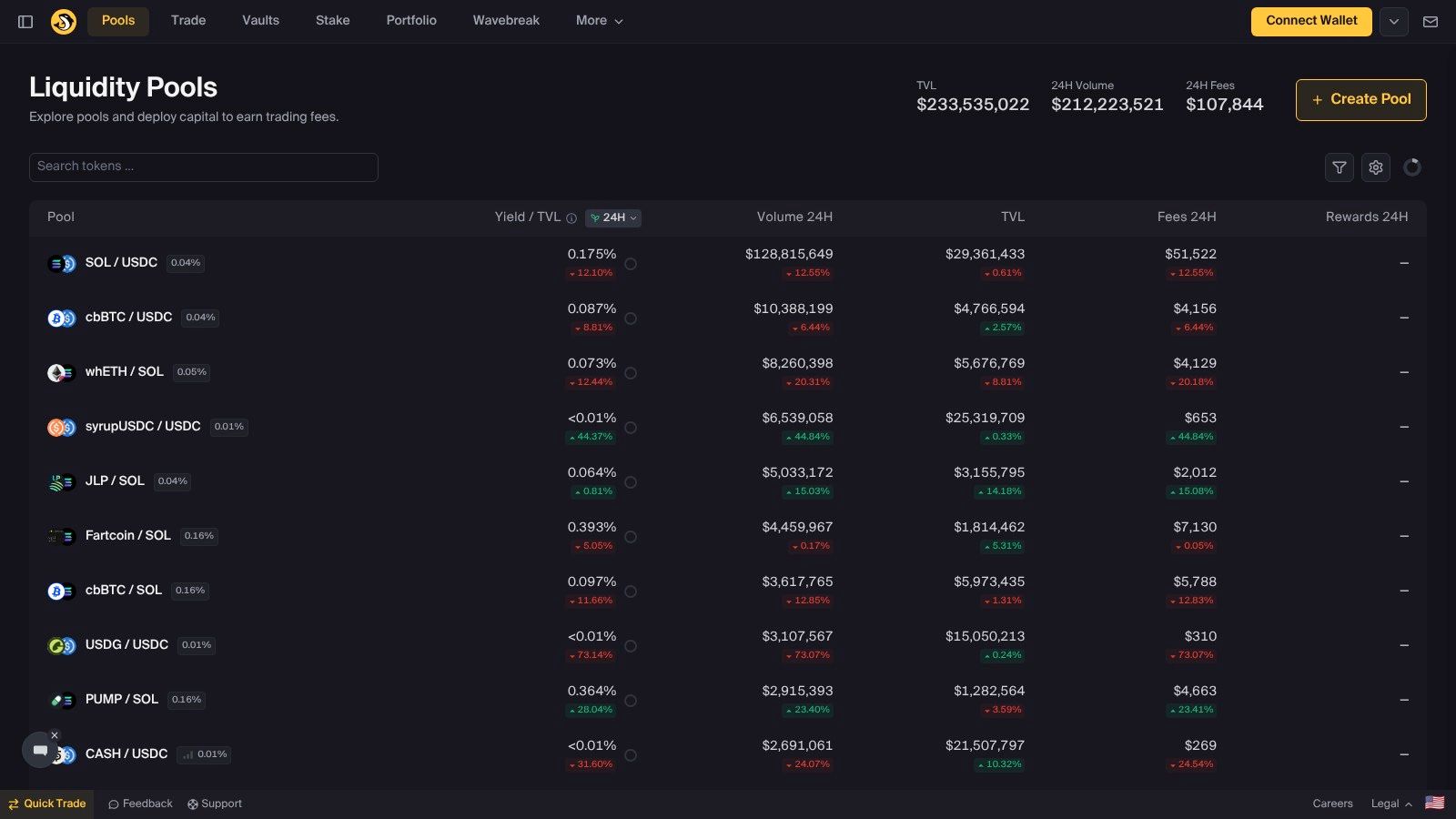
Orca is the cleaner, calmer side of Solana trading. When Raydium feels like the busy market, Orca feels like the venue built for traders who want less clutter and more confidence in the route they’re taking.
That doesn’t mean it’s better for every GOAT trade. It means it’s often easier to trust when the pair is established.
Where Orca is strong
Orca’s Whirlpool model is useful on pairs with real liquidity because it can keep execution efficient without making the interface feel overengineered. For a trader, that translates to a smoother experience when you’re not trying to hunt the absolute newest launch.
I’d favor Orca in these spots:
- Top Solana pairs: When the token has already graduated from pure launch chaos.
- Cleaner repeat trading: Better for scaling in and out when you don’t want a noisy interface.
- Wallet integration: Solid fit with common Solana wallet workflows.
Where Orca isn’t the first stop
If your edge comes from chasing the furthest edge of the long tail, Orca may not be where that token first comes alive. Raydium usually gets more attention for earlier and riskier listings.
That is the primary trade-off. Orca often feels better. Raydium often feels earlier.
For dex for goats, I’d keep Orca in the mix when the narrative token has already proven it can hold liquidity for more than a single burst. At that point, execution quality starts to matter more than novelty.
Practical use
I like Orca as a confirmation venue. If a GOAT token has enough depth to trade well there, that says something useful about quality. Not enough to make it safe, but enough to tell you it may be moving beyond pure launch noise.
Website: Orca
7. PancakeSwap
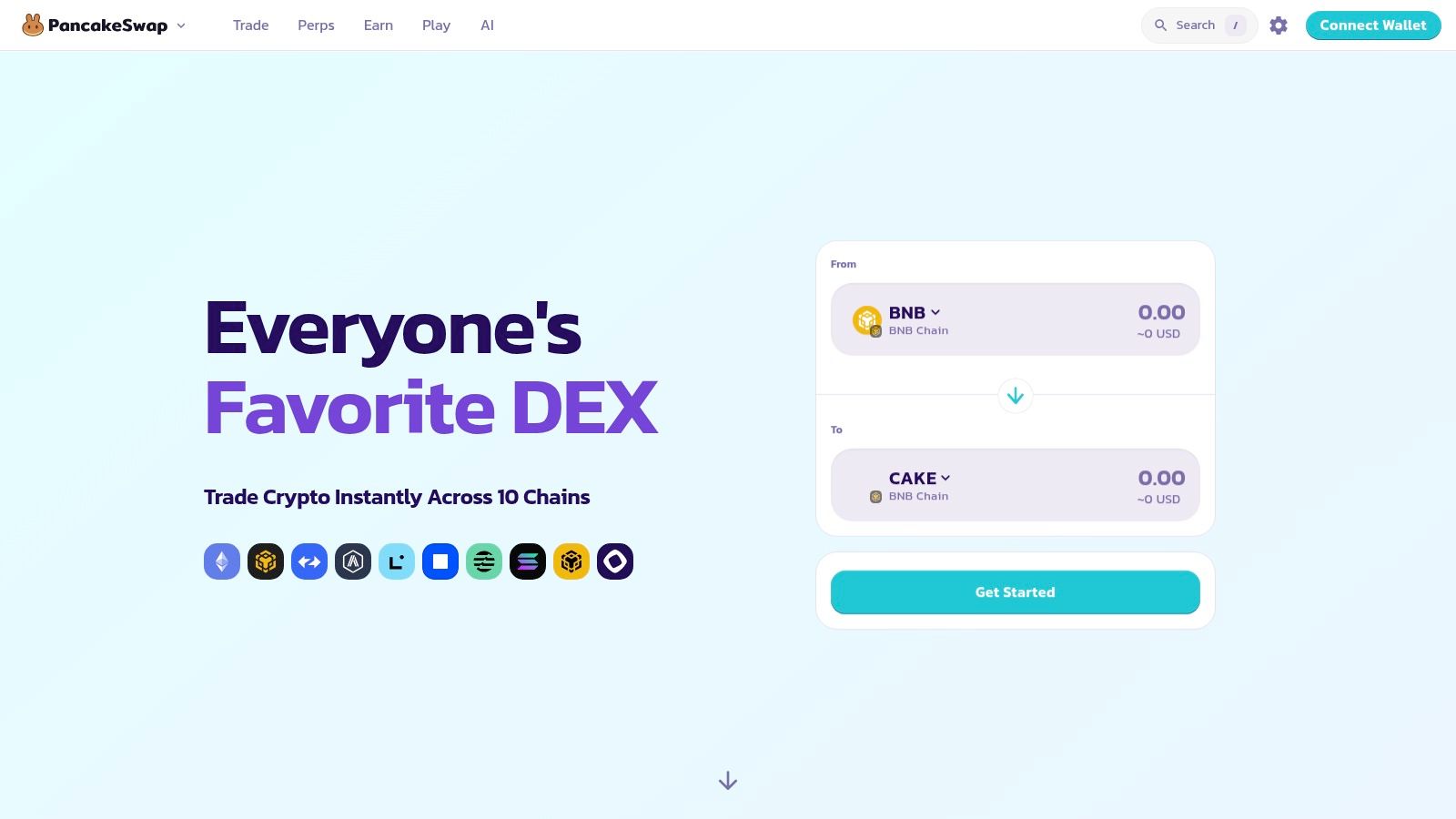
PancakeSwap is the venue I associate with cheap experimentation and high scam tolerance. That’s not an insult. It’s just the reality of BNB Smart Chain and multi-chain meme trading.
If a goat-themed token starts rotating on BSC, PancakeSwap is often the obvious place to check.
Why traders still use it heavily
The appeal is simple. Fees are low, the user base is huge, and small-cap tokens can get tradable quickly. That combination keeps PancakeSwap relevant even when traders complain about quality control.
For dex for goats, it’s useful when you want exposure to BSC-native meme flow without paying the kind of costs that make constant rotation impossible on Ethereum.
There’s also a Wallet Finder.ai article on the Pancake Swap app if you want a platform-specific walkthrough before connecting funds.
What can go wrong fast
BSC has always had a high noise-to-signal ratio. That means your contract verification process can’t be lazy. On chains with cheap deployment, copycats and throwaway launches are part of the terrain.
I’d treat PancakeSwap as high-opportunity, high-filtration.
- Good for: Cheap entries, rapid testing, BSC meme exposure.
- Bad for: Blind trust in token names or social links.
- Best habit: Cross-check the contract in multiple places before swapping.
Cheap fees don’t make a bad trade cheap. They just let you make the mistake faster.
My take
PancakeSwap works when you already know BSC’s culture. If you don’t, you need tighter rules than you think. The upside is speed and cost. The downside is that weak verification gets punished quickly.
Website: PancakeSwap
8. 1inch
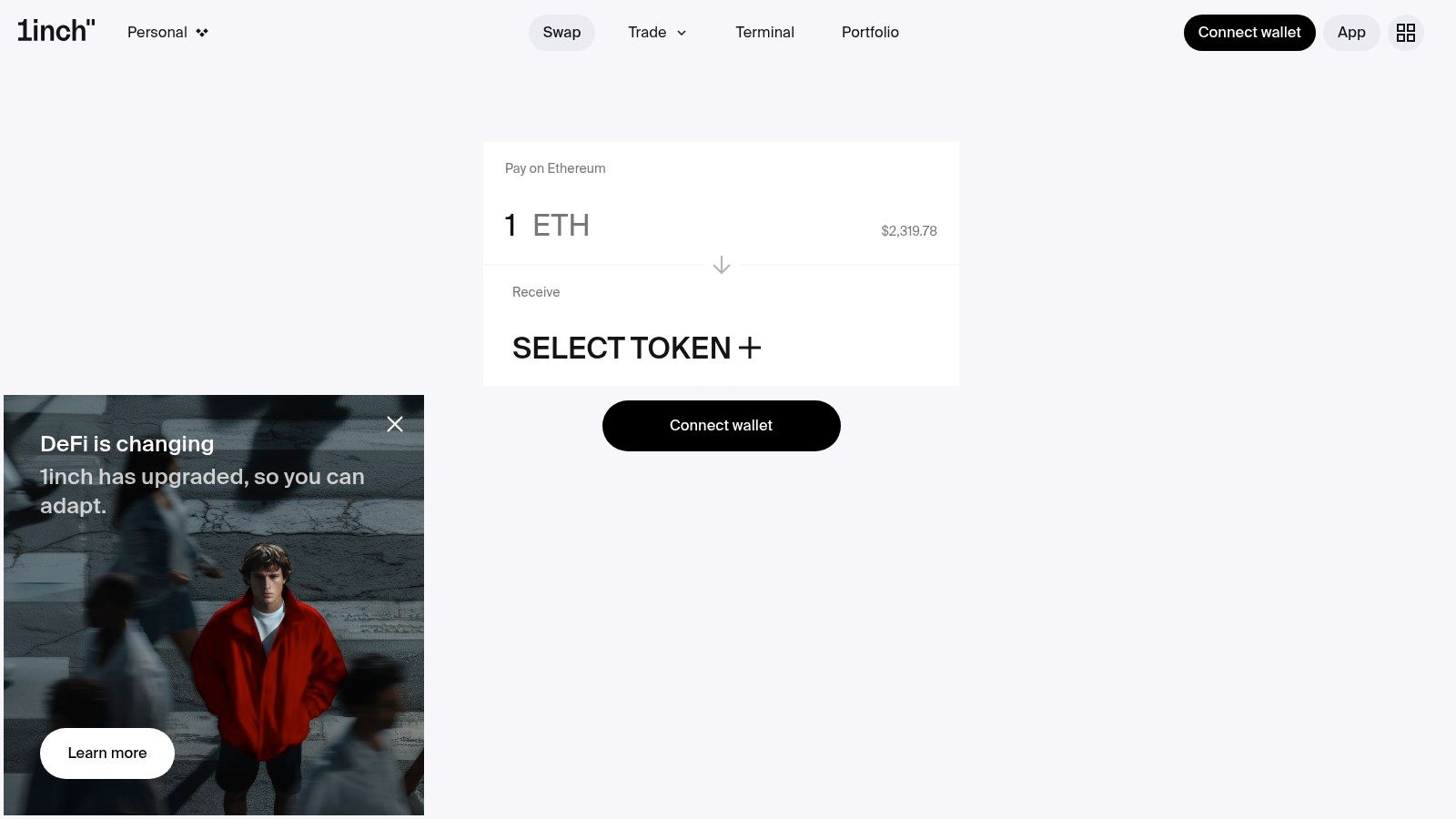
1inch is for traders who care about the route, not the brand of the DEX they land on. If a GOAT token trades across multiple EVM venues, 1inch is often one of the fastest ways to check whether the obvious route is the best one.
That matters more than people admit. Small price differences become large differences once slippage and size enter the picture.
Best use case
1inch shines when EVM liquidity is fragmented. A direct swap on Uniswap may be fine, but a split route across several sources can beat it. For a volatile meme asset, that can be the difference between an acceptable fill and an entry you regret immediately.
Its more advanced feel is both a feature and a bug.
- Feature: Better suited to traders who want more control over approvals, routes, and execution nuance.
- Bug: Beginners can get overwhelmed and ignore details they should understand before clicking.
What I’d watch
If you’re using 1inch for dex for goats, don’t get mesmerized by optimization for its own sake. The cleanest route is not always the safest route if the token itself is thin or suspect.
Also remember that aggregator logic can involve external liquidity sources and routing complexity. That’s powerful, but it means you should inspect what you’re approving and where the path is going.
When I’d choose it
I’d pick 1inch when I’m trading on EVM, size matters, and I want to compare serious execution quality instead of trusting the first native DEX I opened.
For quick beginner swaps, Matcha may feel friendlier. For power users, 1inch usually offers more room to work with.
Website: 1inch
9. Matcha
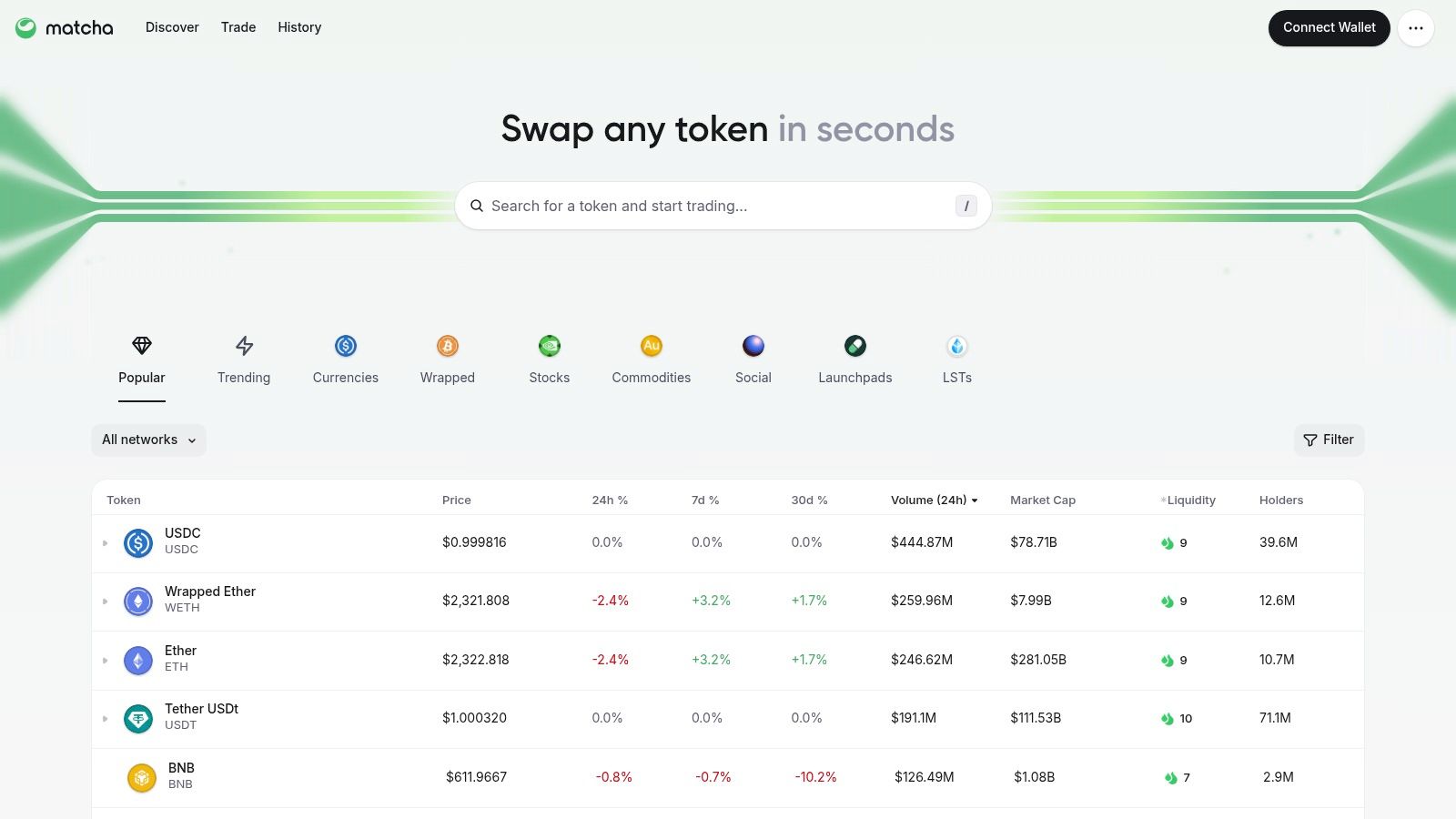
Matcha is what I’d hand to someone who understands meme risk but doesn’t want to fight the interface while managing it. It’s one of the more approachable EVM aggregators, which makes it useful when speed and clarity matter more than squeezing every possible routing nuance out of the trade.
Why it belongs on the list
A good dex for goats setup isn’t only about advanced tools. It’s also about making fewer avoidable mistakes. Matcha helps there because the interface is easier to read than many power-user alternatives.
That matters when you’re checking:
- The exact token
- Your slippage setting
- The quoted output
- Whether a limit order makes more sense than a market-style swap
A clean UI sounds boring until the market gets chaotic. Then it becomes a real edge.
The limitation
Matcha is mostly an EVM solution. If your GOAT action is on Solana, this isn’t the venue. It’s also simpler than tools aimed at traders who want deeper route control.
That’s why I’d frame Matcha as the disciplined retail choice. It won’t replace every advanced workflow, but it often reduces user error.
My practical opinion
If you’re comparing Matcha and 1inch, I’d put it this way. Matcha is what you use when you want good execution with less friction. 1inch is what you use when you want to inspect and optimize more aggressively.
For many EVM meme trades, easier and cleaner is the better decision.
Website: Matcha
10. CoW Swap
CoW Swap is the venue I’d check when I care less about speed and more about avoiding getting carved up by toxic execution. On Ethereum and supported L2s, that can matter a lot for volatile meme trades.
The appeal isn’t that it magically creates liquidity. It doesn’t. The appeal is how it handles order flow.
Why CoW Swap is different
CoW Swap uses a solver-based, intent-style approach that can reduce some of the worst execution problems EVM traders run into on fast-moving tokens. For goat-themed coins that attract bots and opportunistic MEV activity, that’s a serious feature.
This is the kind of tool you appreciate after you’ve been sandwiched enough times to stop pretending it’s bad luck.
When it’s the right move
I like CoW Swap in these conditions:
- Ethereum volatility: Especially when direct market swaps feel exposed.
- Larger EVM positions: Where execution quality matters enough to justify a more deliberate process.
- Cancel flexibility: Intent-based flow can be friendlier than committing gas to every unfilled idea.
The obvious limitation
It’s EVM-only. If your GOAT trade is on Solana, this doesn’t help. And if the underlying liquidity is weak, CoW Swap can’t invent depth that isn’t there.
Still, for Ethereum-side dex for goats trades, it fills a specific role no standard AMM really does. It gives you a path that’s often more defensive against hostile execution.
Website: CoW Swap
Top 10 DEXs for Goats, Quick Comparison
A GOAT trade usually breaks in two stages. Smart wallets start building early, then retail chases whichever pair has the easiest access and the loudest chart. The right setup is to identify the token first, then choose the venue that fits the chain, liquidity depth, and execution risk.
That is why this comparison is more useful as a workflow snapshot than a generic top-10 list. Wallet Finder.ai helps confirm which GOAT token is getting bought by credible on-chain traders. The DEXs below are the execution layer. Each one has a different edge depending on where the token lives and how aggressively you need to enter.
| Product | Best use for GOAT trades | Strengths | Trade-offs | Best fit |
|---|---|---|---|---|
| Wallet Finder.ai 🏆 | Finding which GOAT token is gaining traction before execution | Wallet tracking, multi-chain discovery, PnL history, alerts | Research tool first, not the place you execute swaps | Traders who want to follow smart money before picking a DEX |
| Uniswap | Trading GOAT pairs on Ethereum and major EVM networks | Deep liquidity, familiar interface, broad token coverage | Gas can get expensive, smaller meme pairs can still slip | EVM traders who want reliable access to established liquidity |
| Aerodrome | Trading Base-native GOAT tokens | Strong Base liquidity, good routing for local pairs, active incentives | Best only if the token’s real volume is on Base | Traders focused on Base memes and mid-cap rotations |
| Raydium | Catching early Solana GOAT listings | Fast execution, direct pool access, strong meme token presence | Pool quality varies, thin liquidity can punish size | Solana traders willing to move early |
| Jupiter | Getting the best route for Solana GOAT entries | Aggregation across Solana venues, efficient routing, useful order tools | Routing is only as good as the liquidity underneath it | Solana traders who care about execution quality |
| Orca | Trading cleaner Solana pairs with simple execution | Easy interface, solid pool design, good retail experience | Less useful than Jupiter if route comparison matters most | Traders who want a straightforward Solana DEX |
| PancakeSwap | GOAT trades on BNB Chain and supported networks | Cheap transactions, broad token coverage, familiar AMM flow | Quality control on long-tail tokens is mixed | Fast-moving meme traders on lower-fee chains |
| 1inch | Shopping for the best EVM route across multiple sources | Split routing, aggregator logic, good for larger orders | Interface and options can feel heavy for casual users | Traders optimizing entry on EVM |
| Matcha | Simple EVM execution with less clutter | Clean interface, easy token filtering, aggregator convenience | Less flexible for power users than more advanced routers | Traders who want simplicity without giving up routing help |
| CoW Swap | Defensive execution for volatile EVM GOAT trades | Solver-based execution, batch settlement, reduced MEV exposure | Slower feel than direct AMM trading, EVM only | Traders protecting larger or more sensitive entries |
Start tracking smart money today
Join thousands of traders using WalletFinder.ai to find profitable wallets and copy their trades.
Start Free Trial →

