10 Top BSC Honeypot Detector Tools for 2026
Avoid scams on the Binance Smart Chain. Our guide reviews the 10 best bsc honeypot detector tools, with feature comparisons and safety tips for traders.

May 6, 2026
Wallet Finder

May 6, 2026

You’re probably in the same spot most developing derivatives traders hit sooner or later. Price is moving, funding looks noisy, the chart has already run farther than feels comfortable, and your main question isn’t “what is Bitcoin doing?” It’s “who’s trapped here, and on which side?”
That’s the primary role of a good sentiment indicator. Price shows the result. Positioning shows the vulnerability behind the move.
The long short ratio is one of the fastest ways to read that vulnerability. Used badly, it turns into a lazy bullish-or-bearish label. Used well, it helps you spot crowded trades, likely liquidation paths, and the moments when following the crowd is the worst trade on the screen.
A lot of traders stare at candles as if price alone will confess what comes next. It won’t. A sharp rally can mean real conviction, or it can mean late longs chasing momentum just before a flush. A fast drop can mean trend continuation, or it can mean shorts piling in right before a squeeze.
That’s where sentiment data matters. The long short ratio gives you a quick read on how futures traders are positioned, which is often more useful than another indicator layered on top of price. It doesn’t tell you where the market must go. It tells you how one-sided the market has become.
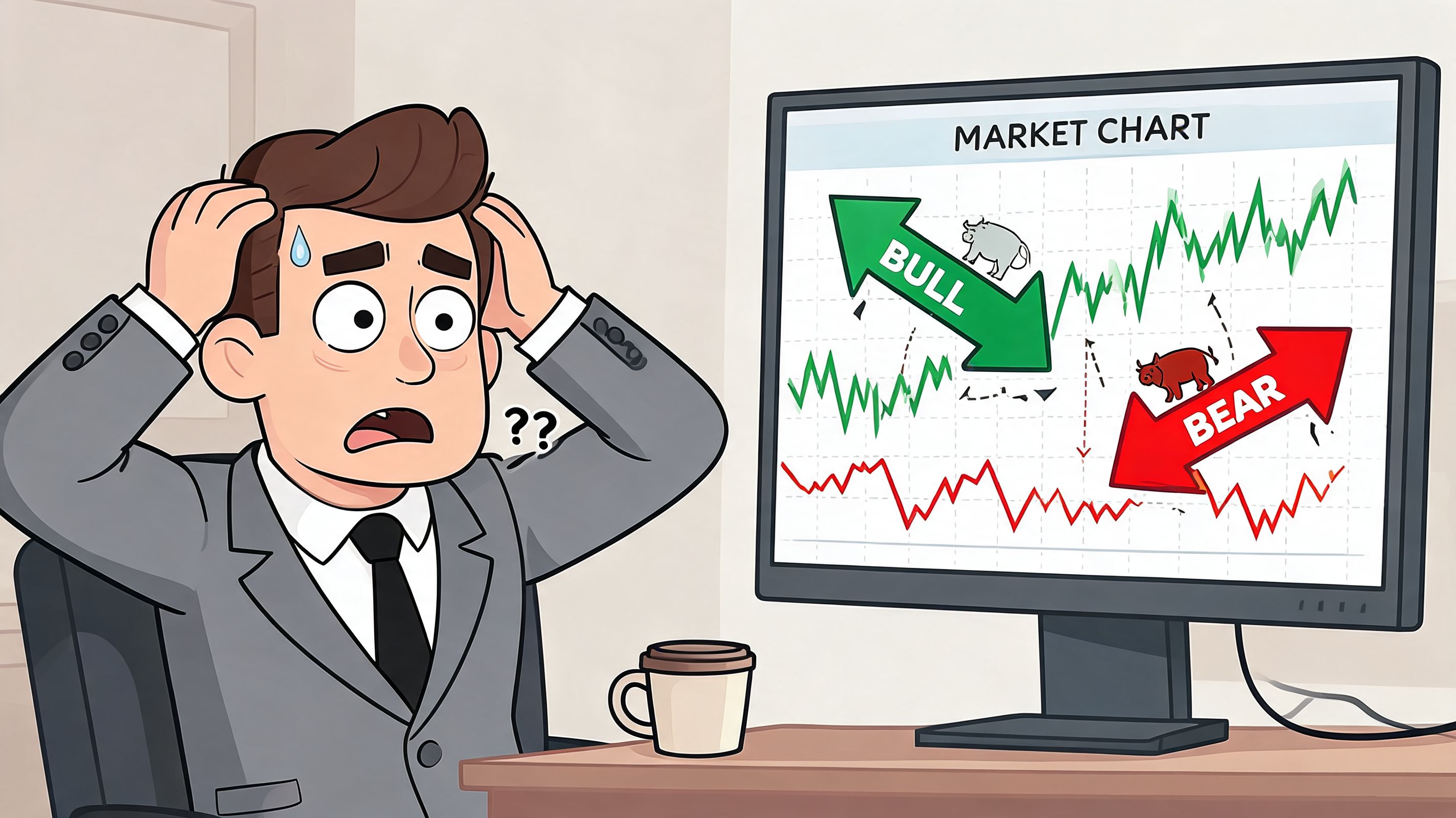
If you already track narratives, social chatter, and broad risk appetite, adding a proper crypto market sentiment analysis framework gives that process structure. The long short ratio fits into that framework as one of the clearest public signals of crowd positioning in derivatives.
Most bad reads come from one mistake. Traders assume that if many participants are long, the market is strong. Sometimes that’s true early in a trend. It often stops being true when everyone who wants to buy has already bought.
In practice, the ratio is less useful as a cheerleader and more useful as a stress test. If positioning leans too hard in one direction, the next move often comes from forced exits, not fresh conviction.
Practical rule: Don’t ask whether the crowd is bullish. Ask whether the crowd is already too bullish to keep paying up.
The goal isn’t to predict every swing. It’s to identify conditions where risk and reward stop being symmetrical.
A useful read on the long short ratio helps you answer three trader-grade questions:
Is the move supported or crowded
A rising market with balanced positioning behaves very differently from a rising market packed with late longs.
Where is the liquidation fuel
Crowded longs create downside fuel. Crowded shorts create upside fuel.
Should you trade with momentum or fade it
This is the big one. The ratio often tells you when trend-following still works and when contrarian thinking becomes the higher-quality trade.
The long short ratio measures the balance between bulls and bears in the futures market. It shows whether more accounts are positioned for upside or downside, which makes it one of the fastest public reads on crowd sentiment.

The formula is simple. Divide total long positions by total short positions.
A reading above 1.0 means more accounts are long than short. A reading below 1.0 means short exposure dominates by account count. Traders use it as a sentiment gauge because it answers a practical question fast. Which side of the derivatives crowd is getting crowded?
Amberdata’s long short ratio reference also shows why the metric is easy to use in practice. It is published as a straightforward ratio, and exchange datasets can provide frequent updates that make it useful for active futures trading.
The ratio usually comes from major derivatives exchanges and is tied to positioning data around open interest. For intraday traders, that matters. A slow sentiment indicator has limited value when perp markets can reprice hard in a few minutes.
Fast updates let you track whether traders are chasing a breakout, fading a move, or getting trapped on one side. Used well, the ratio gives context to price instead of replacing it.
That distinction matters.
The standard long short ratio usually reflects accounts, not position size or capital committed. A market can show more long accounts while larger players are still carrying the other side with more size.
That is why experienced traders treat the ratio as a crowd-positioning signal first. It is less reliable as a pure money-flow signal unless you pair it with other derivatives data such as crypto funding rate behavior in perpetual futures.
This is also where the contrarian edge starts to show. A high ratio does not mean a market is strong. It can mean the easy longs are already in, late buyers are paying up, and downside liquidation fuel is building. The same logic applies in reverse when the ratio gets heavily skewed to shorts.
Used on its own, the long short ratio tells you where the public is leaning. Used well, it helps you spot when that lean becomes vulnerable.
I pay more attention when the reading reaches an extreme and wallet activity from larger participants does not confirm the crowd. Public positioning can point one way while private wallet-tracking signals from Wallet Finder.ai show smart money reducing risk, distributing into strength, or absorbing panic selling. That mismatch is often more useful than the raw ratio itself.
Keep the base read simple:
The ratio is not powerful because it defines sentiment. It is powerful because crowded sentiment creates tradeable weakness.
Most traders overcomplicate this. You don’t need a dozen labels. You need a practical interpretation framework that separates normal positioning from dangerous crowding.
The cleanest first cut is simple. A ratio around 1.0 is balance. Above it, longs dominate. Below it, shorts dominate. According to JR Kripto’s explanation of long short ratio behavior, a ratio of 2.0 from 80 long positions divided by 40 short positions means twice as many accounts are long, and very high readings such as 70% long positions can signal overextension rather than healthy strength.
Here’s the framework I’d keep next to the chart.
| Ratio Value | Market Sentiment | Potential Implication |
|---|---|---|
| Below 1.0 | Bearish bias | More accounts are short than long. Watch for continuation if price confirms, but stay alert for squeeze conditions if positioning gets one-sided. |
| Near 1.0 | Balanced | Neither side is clearly dominant. Momentum signals from price and liquidity matter more here. |
| Above 1.0 | Bullish bias | More accounts are long than short. Trend continuation is possible if other metrics stay healthy. |
| Far above 1.0 | Crowded bullish positioning | Upside can become fragile. A pullback can trigger long liquidations and a sharper-than-expected reversal. |
| Far below 1.0 | Crowded bearish positioning | Downside can become fragile. A bounce can force shorts to cover and fuel a squeeze. |
The ratio works best when you treat it as a context tool. It helps answer whether a trend is building cleanly or getting overcrowded.
It fails when traders use it as a mechanical signal. “Ratio high, buy” is lazy. “Ratio low, short” is just the same mistake in reverse.
A better process looks like this:
Start with the ratio
Use it to classify the market as balanced, leaning, or crowded.
Check whether price agrees
If price is still pushing cleanly with no signs of stress, don’t fade just because longs are in control.
Add a second derivatives metric
Pair it with crypto funding rate behavior because funding tells you the carrying cost of that crowding. Rich funding with stretched long positioning is a very different setup from a mild long bias with calm funding.
Wait for the trigger
Extremes are conditions, not entries. The trade usually comes when price stalls, rejects, or starts cascading.
The market often hurts the largest cluster of weak-handed traders. That’s why extreme long short ratio readings are useful. They show where the herd is vulnerable.
When a ratio gets too one-sided, stop asking “who’s right?” and start asking “who gets liquidated first?”
That shift in mindset changes how you trade. You stop chasing consensus and start hunting imbalance.
The long short ratio becomes valuable when you see it behave like a warning light instead of a trend confirmation tool.

One of the clearest examples came during the May 2021 crypto flash crash. According to Mudrex’s review of long short ratio extremes, long short ratios on major derivatives platforms briefly exceeded 3.0 just before a $2 billion liquidation waterfall hit the market.
A ratio above 3.0 wasn’t just “bullish.” It was telling you bullish positioning had become crowded enough to turn unstable. Too many traders were leaning the same way at the same time.
That matters because crowded longs create a fragile structure. Once price slips, longs start closing. Some choose to exit. Others get forced out. Those liquidations push price lower, which triggers more liquidations. The move feeds itself.
This is why sentiment extremes often behave in a non-linear way. Mild bullishness can support a trend. Extreme bullishness can mark the point where the trend becomes easiest to break.
When you review events like this, pay attention to the order of signals:
Positioning gets heavily one-sided
The ratio climbs to an extreme and tells you the crowd is stacked in one direction.
Fresh upside gets harder to sustain
With so many already long, marginal buying power starts drying up.
A catalyst or liquidity gap appears
It doesn’t have to be dramatic. Once the structure is weak, a normal shock can do the damage.
Liquidations accelerate the move
What began as a pullback becomes a cascade.
That’s the difference between reading the market and just describing it after the fact.
A short explainer helps if you want to visualize how traders use this setup in practice.
Don’t wait for a historical event to repeat exactly. Use the pattern.
When the ratio reaches an extreme, your job isn’t to predict the exact candle that starts the reversal. Your job is to tighten risk, stop initiating late entries in the crowded direction, and look for the first signs of failure.
A good contrarian trade often looks uncomfortable at entry because the crowd still sounds confident. That’s normal. The edge comes from recognizing that confidence can be the risk, not the confirmation.
The best fades don’t happen when sentiment is mixed. They happen when one side thinks the trade is obvious.
The standard long short ratio has a key limitation: it tracks accounts, not capital.
That sounds minor until a market gets stressed. One side can dominate the account count while the other side holds more size, better entries, and more staying power. If you read the headline ratio without asking who is carrying real exposure, you can end up fading the wrong crowd.
A bullish ratio does not guarantee bullish control. It may only mean more traders are long.
That distinction matters in crypto because positioning is uneven by default. Retail accounts are numerous. Larger players are fewer, more selective, and often better hedged. So the cleaner question is not how many traders picked a direction. It is where the meaningful notional sits, and whether that capital is adding, defending, or reducing risk into the move.
A useful framework is simple:
Coinglass tracks a more refined version called the Large Accounts Position Value Long/Short Ratio. That metric weights positions by capital instead of just counting accounts, which makes it more useful when you want to know whether size is pressing in the same direction as the crowd. Their explanation of the methodology is laid out in Coinglass’s guide to the large account long short ratio.
The long short ratio then becomes a trading tool instead of a sentiment headline. If public accounts are aggressively long but larger capital is flat or leaning the other way, that is not confirmation. It is a warning that the visible consensus may be fragile.
I use that divergence as a filter. It helps separate broad participation from crowded, weak-handed participation.
Most misuse comes from asking one metric to do too much.
Using it alone
The ratio should sit beside price structure, funding, open interest, and liquidation levels. On its own, it is incomplete.
Ignoring exchange methodology
Venue data is not standardized. If one exchange reports account ratios and another emphasizes position value, a side-by-side comparison can create false conviction.
Treating every imbalance as a reversal signal
A mild long bias can persist in a healthy trend. The higher-value setup appears when positioning is stretched and the tape starts rejecting that consensus.
Fading the crowd before the market gives permission
Extreme sentiment is a condition, not an entry trigger. Waiting for failed continuation, loss of key support or resistance, or a shift in flows usually improves the trade.
The better process is layered. Start with the public ratio. Then check whether capital-weighted data agrees with it. After that, compare both against evidence of what stronger operators are doing on-chain.
That last piece matters because derivatives sentiment is public and crowded by definition. A good wallet tracker app for following smart money can show whether high-signal wallets are accumulating into public fear, distributing into public euphoria, or staying inactive while the crowd gets louder.
Desk note: When account-count sentiment looks bullish but larger size is reducing exposure, treat the public ratio as late, not smart.
The practical takeaway is straightforward. Keep using the long short ratio, but stop treating it as a complete map. It is the first read, not the final one.
The long short ratio tells you what the crowd in derivatives is doing. That’s public information. Useful, but crowded by definition.
The sharper edge comes from combining that public sentiment read with private workflow around on-chain wallet behavior. Through this combination, a trader can stop reacting to consensus and start tracking whether better operators are leaning with it, fading it, or stepping away.

Think of the signal stack in two layers.
The first layer is the crowd. That’s the long short ratio. It tells you whether public futures positioning is balanced, bullish, bearish, or crowded.
The second layer is smart-money behavior seen through wallet tracking. If top-performing wallets are accumulating while the public ratio stays skeptical, that can support a breakout thesis. If the ratio is screaming bullish while strong wallets are distributing or reducing exposure, that’s the kind of divergence worth paying attention to.
A clean operating process looks like this:
Scan for a one-sided ratio condition
You’re not looking for noise. You’re looking for a market where the public is visibly leaning.
Check top-wallet behavior
Use a wallet-tracking setup to see whether stronger on-chain actors are adding, trimming, rotating, or exiting.
Look for divergence, not agreement
Agreement is informative, but divergence is where the better trade often lives.
Set alerts before the market moves
If watched wallets start moving aggressively while public sentiment is still stuck in one direction, you want notification speed, not a delayed recap.
Say the long short ratio is high and the market narrative is loudly bullish. Newer traders usually read that as confirmation to keep buying. A better read is to ask whether better operators are still pressing risk.
If tracked wallets are discreetly selling strength, rotating out, or reducing exposure while derivatives positioning remains crowded long, you have a classic warning sign. Public traders may still be buying the story while more disciplined capital is preparing for mean reversion.
That doesn’t mean you slam a market short on sight. It means you get selective. You stop chasing upside. You tighten invalidation. You prepare for reversal triggers instead of assuming continuation.
Public sentiment data is available to everyone. Your edge doesn’t come from seeing the ratio. It comes from interpreting it better than the next trader.
Pairing it with a dedicated wallet tracker app for following profitable on-chain traders improves that interpretation because it gives context to the crowd signal. You’re no longer asking only what the herd is doing. You’re asking whether stronger operators are participating in that same move.
That’s a much better question.
A ratio extreme with no wallet divergence can still trend. A ratio extreme with visible smart-money opposition is where things get interesting fast.
The long short ratio is a sentiment tool, not a magic entry button. Its real value shows up when positioning gets crowded and the market becomes vulnerable to a move against consensus.
Keep the core ideas simple:
If you trade perps seriously, stop thinking of the long short ratio as a sentiment label and start using it as a positioning stress gauge. The crowd tells you where traders are leaning. Better data tells you whether that lean is strong or fragile.
That shift alone can keep you out of late entries and put you on the right side of reversals that trap most retail traders.
If you want to turn crowd sentiment into something you can trade, Wallet Finder.ai helps you track profitable wallets, monitor smart-money moves across major chains, and react faster when public positioning and on-chain behavior start to diverge.